July 27, 2026
Most roofing companies equate a correct measurement with a correct estimate. But measurement accuracy, cost accuracy, and margin accuracy are separate.
A precisely measured roof can still lose money on labor, waste, or overhead that was never fully accounted for.
Whether the job involves roof repairs or a full roof replacement, an accurate estimate depends on whether the roofing cost assumptions hold up through production, not simply whether the roof was measured correctly.
This article looks at why roofing estimates go wrong more often than contractors realize, where those errors typically hide, and how to start measuring estimate accuracy with real job data.
Key Takeaways
- A precise roof measurement does not guarantee an accurate roofing estimate.
- Estimate accuracy depends on measurement, cost, and margin accuracy.
- Roofing estimates often go wrong because of missing scope items, outdated pricing, incorrect waste assumptions, labor variance, and poor sales-to-production handoffs.
- Contractors should compare estimated costs with actual job costs by category, not just by the final project total.
- The goal is not to create a perfect estimate. It is to build a measurable process that improves with every completed job.
Why Roofing Estimates Go Wrong: What the Data Shows
A signed proposal only confirms that a customer agreed to a price but says nothing about whether that price will actually cover the job. Most estimate errors aren't caught at the point of sale; they surface later, in cost categories that ran over while the total looked close enough.
The most common failure points are inaccurate roof measurements, stale cost data, and estimating tools disconnected from actual job costing, which means many contractors don't discover a bad estimate until the margin is already gone.
Below, we walk through the research on why project data drives risk estimates, the most common places where roofing estimates break down, and how contractors can start tracking variance instead of guessing at it.
What Makes a Roofing Estimate Accurate?
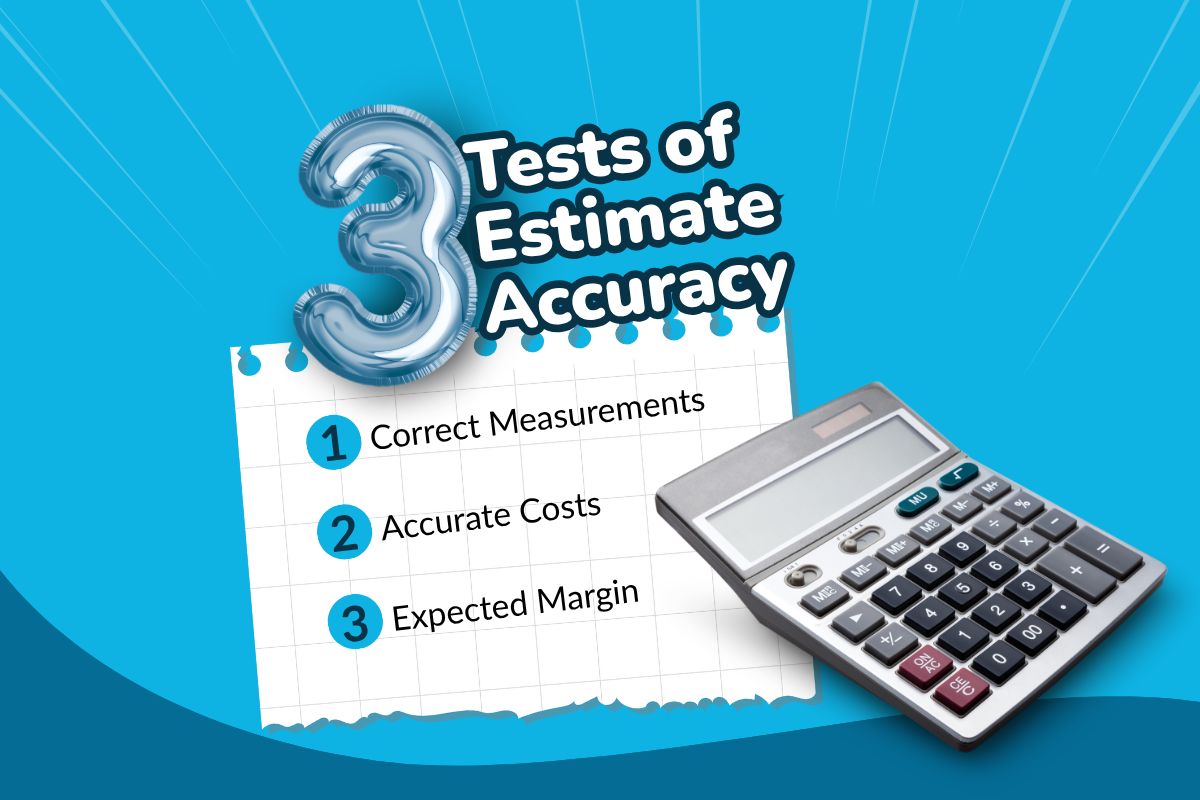
An accurate roofing estimate gets three things right: the roof’s physical dimensions, the cost required to complete the work, and the margin the completed job ultimately produces.
1. Measurement Accuracy: Roof Pitch and Square Footage
Measurement accuracy means the estimate correctly captures the roof’s square footage, roof pitch or roof slope, ridges, valleys, eaves, penetrations, sections, and overall geometry. Roofing area is commonly measured in roofing squares, with one roofing square equal to 100 square feet.
Accurate measurements support material takeoffs and production planning, but they do not account for incomplete scope, labor difficulty, or missing costs.
2. Cost Accuracy
Cost accuracy means the estimate correctly predicts what the roofing project will cost to complete. This includes roofing materials, labor costs, removal costs, disposal, equipment, permits, subcontractor expenses, delivery charges, transportation costs, and other job-specific costs.
For a roof replacement project, the roofing estimate should identify the selected roofing shingles or system, such as asphalt shingles, metal roofing, or tile roofing. It should also account for the roof’s underlayment, ice and water barriers, drip edge, pipe boots, fascia boards, and any requirements imposed by local building codes.
This is where many estimates begin to drift. A contractor may have the right square count but still use outdated supplier pricing, underestimate labor hours, miss flashing or accessory materials, or fail to account for site access and cleanup requirements.
3. Margin Accuracy
Margin accuracy means the completed job produces the gross profit margin expected when the proposal was sold.
This is the final test of the estimate. Even if the total price looked reasonable and the job was completed successfully, the estimate was not truly accurate if the actual margin came in far below the target margin.
For example, a contractor may correctly measure a 30-square roof but still underprice labor, flashing, disposal, and accessory materials. The measurement is accurate, but the estimate is not. The job may still sell, but it may not protect the margin the business expected.
What the Available Data Actually Shows
Available construction research shows that poor project data, incomplete information, and weak cost controls create measurable financial risk. It does not establish a universal roofing-estimate error rate.
1. Poor Project Data Creates Measurable Costs
Construction research has repeatedly linked poor project data and miscommunication to avoidable costs.
Autodesk and FMI research estimated that decisions made using bad data cost the global construction industry $88.69 billion in rework alone in 2020, accounting for 14% of all rework that year. The same research estimated the broader cost of bad data to the industry at $1.84 trillion in 2020.
That does not mean the same percentage applies directly to roofing estimates. But it does support a broader point: when project information is incomplete, outdated, or disconnected, the cost shows up later.
In roofing, the same data-quality problem can appear in estimating inputs such as inspection notes, measurements, scope details, supplier pricing, labor assumptions, production records, and actual job costs.
If those inputs are wrong or disconnected, the estimate may look accurate at the proposal stage but fail once the job is produced.
2. Roofing Contractors Need Their Own Estimate-Accuracy Data
External research can show that poor data creates risk, but it cannot tell an individual roofing contractor how accurate their estimates are.
Only completed-job comparisons can reveal an individual contractor’s estimate accuracy. Contractors should track where estimates consistently miss materials, labor, disposal, equipment, overhead recovery, and gross margin.
The point is not to prove that “roofing estimates are always wrong" but to build enough internal data to see where estimate variance is coming from.
3. There Is No Universal “Acceptable” Estimate Error Rate
There is also no single acceptable estimate error rate that applies to every roofing company or job type. In broader cost-estimating practice, estimate accuracy depends on project definition, scope maturity, risk, available cost information, and the purpose of the estimate.
A simple residential reroof with clear access and current supplier pricing should usually have tighter cost expectations than a complex insurance restoration job with hidden decking risk, product substitutions, or uncertain labor conditions.
Roof replacement cost can vary depending on roof style, material choice, access, building codes, and site conditions. A roof replacement cost calculator may provide a ballpark estimate, but it cannot define acceptable variance for a contractor’s final scope.
Why Roofing Estimate Errors Often Go Undetected
Many roofing estimate errors are not obvious when the proposal is signed. They usually appear later, after production begins, materials are ordered, crews spend more time on the job than expected, or accounting reviews the final costs.
The problem is not always that contractors ignore errors. Often, the business lacks sufficient visibility into where the estimate broke down.
1. Contractors Notice Large Mistakes but Miss Small Variances
Major estimating mistakes are usually easy to see. A missing tear-off, a major material shortage, or an obvious scope omission gets attention quickly.
Smaller variances are harder to notice.
Additional crew hours, extra dump runs, forgotten accessories, delivery charges, processing fees, and minor discounts may appear insignificant individually. Across multiple jobs, however, they can create substantial margin leakage.
This is why contractors need to review estimate accuracy by cost category, not just by whether the job “felt close enough.”
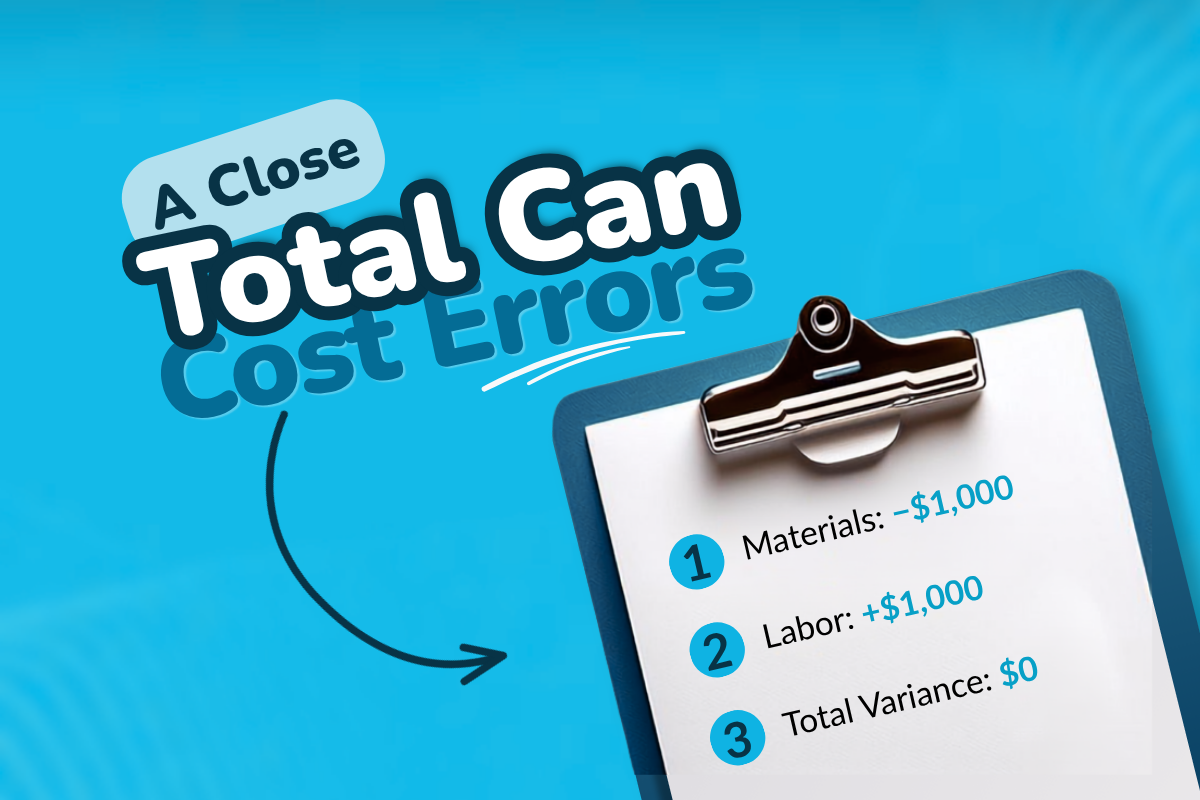
2. Overestimates and Underestimates Can Cancel Each Other Out
A job’s total cost may appear close to the estimate even when individual cost categories were inaccurate.
For example, lower-than-expected material costs may offset overruns in labor or disposal. The final total looks acceptable, but the assumptions behind those categories remain unreliable.
Contractors should therefore review variance by cost category rather than relying only on the overall job total.
3. Change Orders Can Hide Preventable Omissions
Not every change order means the original estimate was wrong. Some changes come from genuinely hidden conditions, customer-requested upgrades, or unexpected site issues.
Hidden roof decking damage or an existing roof with more than one layer of old shingles may not become visible until tear-off begins. These conditions are different from scope items that should reasonably have been identified during the inspection.
But some change orders are really preventable omissions. These are items that could reasonably have been identified during the inspection, scope review, or estimating process.
Contractors should separate:
- Genuinely unforeseeable conditions
- Customer-requested scope changes
- Items that should have been caught before the proposal was sold
If every added cost is treated as an unavoidable change order, the company loses the opportunity to identify recurring estimating weaknesses.
4. Actual Costs Are Never Reconciled With the Estimate
Estimate errors remain hidden when actual material, labor, disposal, equipment, and subcontractor costs are recorded but never matched back to the sold estimate.
Without a consistent post-job review, sales, production, and accounting may each hold part of the information without anyone seeing where the estimate failed.
Where Roofing Estimates Most Commonly Go Wrong
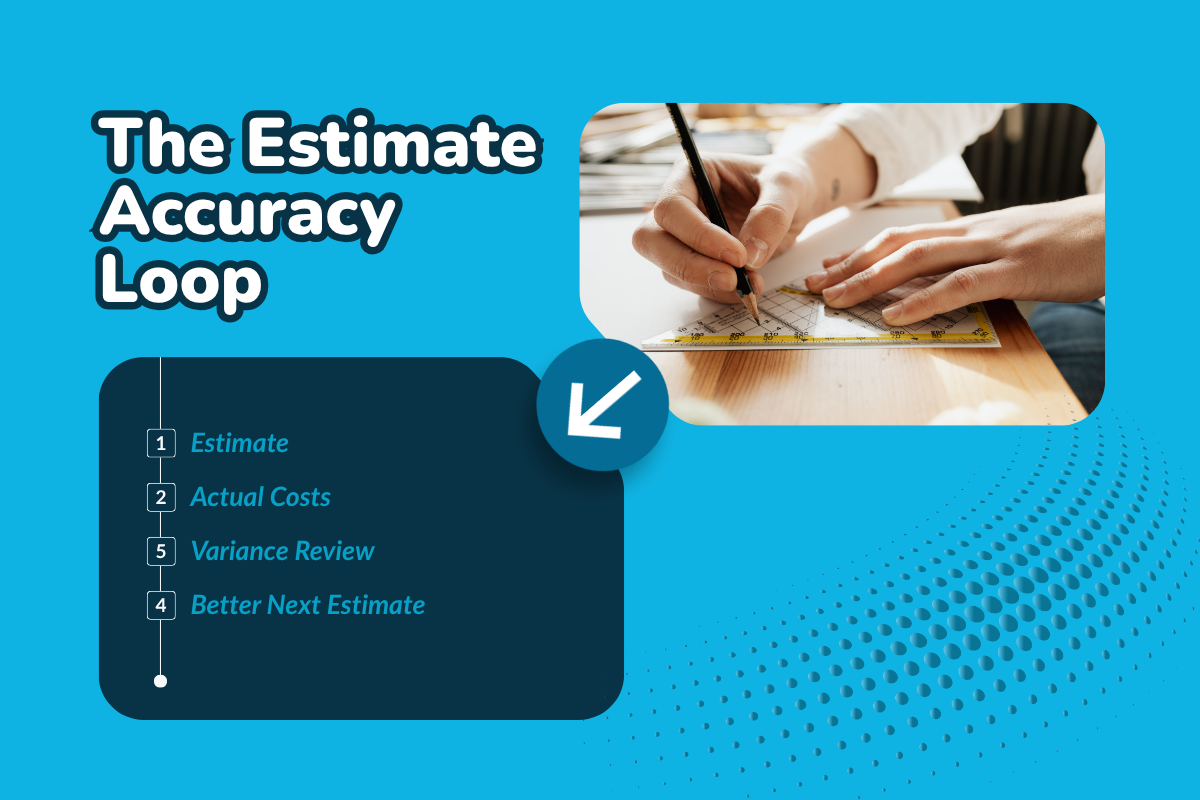
Estimate variance rarely comes from one dramatic mistake. More often, several assumptions are slightly wrong at the same time: the roof is measured correctly, but labor is too low, the waste factor is generic, or important costs never make it into the final price.
1. The Measurement Misses Production Complexity
A roof measurement can be technically accurate and still fail to capture how difficult the job will be to produce.
Steeper slopes, height, complex geometry, existing layers, difficult access, and staging requirements can create higher labor costs as well as additional equipment and safety expenses.
The problem is not limited to manual measurements. A digitally measured roof can still produce an inaccurate estimate if the inspection, scope, or takeoff does not reflect the actual production conditions.
See how today’s innovative roof measurement tools make things easier for roofing contractors by eliminating guesswork, boosting accuracy, reducing rework, and increasing profits.
2. The Same Waste Factor Is Used for Every Job
A standard waste percentage may be useful as a starting point, but it should not be applied automatically to every roof. Actual waste depends on roof design, materials, and installation practices.
For a relatively simple gable roof, many roofing contractors use 10–15% as a starting waste allowance. A steep roof or more complex design may require substantially more, so the final factor should still reflect the specific job.
Waste assumptions should reflect the specific roof and installation method, not just a default setting in the estimating template.
3. Labor Costs Are Estimated Only by Roof Size
Per-square labor rates are simple to use, but two roofs with the same square count may require very different amounts of work.
A steep or high roof will not produce at the same rate as a low-slope, easily accessible roof. Factors like access, setup, and overall job complexity can all affect the actual hours required.
The estimate should account for expected crew hours and production conditions, not only total roof area.
When labor repeatedly runs over budget, the problem may not be the crew. The original production assumptions may have been unrealistic.
4. Roofing Materials and Scope Costs Are Missing or Outdated
Correct quantities do not guarantee correct costs. Prices change, and additional charges or services may not be included.
Common gaps include supplier-price changes, delivery charges, taxes, fuel surcharges, minimum orders, dump fees, equipment, subcontractor rates, permits, flashing, ventilation, cleanup, and detach-and-reset work.
The scope may also miss predictable work that should have been accounted for.
Each missing cost reduces the amount available to complete the job and protect the expected margin. Price books, assemblies, and scope templates should therefore be reviewed regularly rather than treated as fixed references.
5. Overhead, Markup, and Margin Are Miscalculated
Direct job costs are only part of what the selling price must recover. The estimate may also need to cover overhead costs such as administrative expenses, insurance, and equipment.
Confusion between markup and gross margin can create another pricing error. Markup is calculated against cost, while gross margin is calculated against the final selling price. A 30% markup therefore does not produce a 30% gross margin.
If overhead recovery and target margin are not built into the price correctly, the job may cover its direct costs while still earning less profit than expected.
6. The Estimate Changes During the Sales-to-Production Handoff
An estimate can be accurate when approved and become unreliable later if the final information does not reach production.
Production may receive an outdated scope, while sales notes or customer selections remain buried in messages. Material orders may use different quantities, revisions may not appear in the work order, or field teams may work from an older document version.
A reliable handoff should pass the final scope, quantities, and revisions into production without requiring teams to rebuild the job.
Connect Roofing Estimates With Real Job Data
See how RooferBase helps contractors connect estimates, proposals, work orders, production records, and actual job costs in one place.
How to Measure Roofing Estimate Accuracy
Once a job is complete, estimate accuracy should be measured against the final job results. Looking only at whether the total cost was “close enough” can hide problems in labor, materials, disposal, or margin.
The most useful review compares the estimate with actual results at four levels: total cost, individual cost categories, labor performance, and gross margin.
1. Calculate Total and Category-Level Cost Variance
Start with the percentage difference between the estimated and actual job cost:
Cost Variance % = (Actual Job Cost − Estimated Job Cost) ÷ Estimated Job Cost × 100
For example, if a job was estimated to cost $20,000 but ultimately cost $22,000, the cost variance is 10%.
A positive result means the job cost more than estimated. A negative result means the job cost less.
However, regularly coming in below estimate is not automatically a good result. Consistent overestimation may make proposals less competitive or indicate that pricing assumptions are too conservative.
Break the total variance down into primary materials, accessory materials, labor, subcontractors, equipment, disposal, permits, commissions, and other job-specific costs.
A job may finish only 2% over the estimate overall while labor runs 15% over and materials come in below budget. Category-level variance exposes that difference.
2. Compare Estimated and Actual Labor Performance
Labor-cost variance alone does not show whether the problem came from wage rates, crew productivity, or an inaccurate estimate of the time required.
For each completed job, compare estimated crew hours with actual crew hours, then compare estimated labor cost with actual labor cost.
If the hours repeatedly exceed the estimate, the company may be using unrealistic production rates or failing to account for pitch, access, staging, tear-off difficulty, or roof complexity.
If the hours are close but labor costs still run over, the cause may be overtime, wage changes, crew composition, or subcontractor pricing.
3. Compare Estimated and Actual Gross Margin
A job can remain profitable while still missing its expected margin by a significant amount.
For example, a job sold at an expected 35% gross margin may finish at 24%. The company still earned a profit, but the estimate did not meet expectations.
Margin variance reveals whether the completed job delivered the profitability expected when it was sold, even when direct costs appear reasonably close.
4. Track Absolute Variance
Averages can make estimating performance appear more accurate than it is.
Suppose one job finishes 10% over the estimate and another finishes 10% under. Their average signed variance is 0%, but neither estimate was accurate.
Absolute variance measures the size of each error without allowing positive and negative results to cancel each other out. In this example, the average absolute variance is 10%.
Contractors should therefore track both signed variance, which shows whether estimates tend to run high or low, and absolute variance, which shows the typical size of the error.
5. Assign a Reason to Every Significant Variance
The variance shows where the estimate was wrong. A reason code explains why.
Common reasons include measurement errors, scope omissions, outdated pricing, incorrect waste assumptions, labor-productivity differences, hidden conditions, customer-requested changes, ordering mistakes, production deviations, and document-version errors.
The review can be recorded in one table:
| Cost Category | Estimated Cost | Actual Cost | Variance | Variance % | Reason |
|---|---|---|---|---|---|
| Materials | |||||
| Labor | |||||
| Disposal | |||||
| Equipment | |||||
| Other costs |
Avoid assigning vague explanations such as “miscellaneous” when a specific cause can be identified.
Once this information is recorded consistently, recurring patterns across jobs become visible.
What Estimate Variance Reveals About the Business
A single variance may be unusual. Repeated patterns usually point to a process, pricing, training, or data-quality problem.
| Recurring Pattern | Likely Cause |
|---|---|
| Material costs exceed estimates | Low waste assumptions, incomplete takeoffs, missing accessories, or outdated pricing |
| Labor costs run over | Unrealistic production rates, roof complexity, access issues, or crew differences |
| Disposal costs are underestimated | Incorrect layer counts, debris volume, dump trips, or regional fees |
| Costs are close, but margins are low | Weak overhead recovery, discounting, commissions, fees, or incorrect margin calculations |
| Variance clusters around certain jobs or teams | Problems tied to an estimator, salesperson, crew, roof type, material, location, or job category |
Reviewing these patterns across completed jobs helps contractors identify recurring weaknesses instead of treating each overrun as bad luck.
How to Build a More Accurate Roofing Estimating Process
Estimate accuracy improves when information stays consistent from inspection through job completion.
1. Before the Estimate Is Created
Start with a standardized but editable scope template. Verify the roof’s age, measurements, inspection notes, and photographs of conditions that may affect labor, materials, access, or the installation method.
Use current supplier and subcontractor pricing, apply a job-specific waste factor, and document assumptions, allowances, and exclusions. The final price should include direct job costs, overhead recovery, and the target profit margin.
2. After the Estimate Is Approved
Create one approved estimate version and use it to build the production work order.
Customer selections, sales notes, material quantities, and assumptions captured during the sales process should transfer with the job. Any later change should be documented and approved so production, purchasing, and accounting continue working from the same information.
3. After the Job Is Completed
Record actual material, labor, disposal, equipment, and subcontractor costs, then compare them with the estimate.
Assign reasons to significant variances and use the findings to update price books, production rates, assemblies, waste assumptions, and scope templates.
Reviewing these patterns across multiple completed jobs turns estimate accuracy into an ongoing process rather than a one-time calculation.
Where Roofing Estimating Software Helps and Where It Does Not
Roofing estimating software can make a strong process more consistent, but it cannot correct weak assumptions or missing information on its own.
What Roofing Estimating Software Can Improve
Software is most useful when it reduces variation in how estimates are created, approved, and reviewed.
| Capability | Practical Benefit |
|---|---|
| Standardized templates and itemized costs | Reduces missed scope and inconsistent pricing |
| Stored measurements and pricing | Keeps estimating inputs connected |
| Version control and work-order handoff | Helps sales and production use the approved scope |
| Actual-cost tracking | Makes estimated-versus-actual review possible |
| Variance reporting | Reveals recurring cost and margin problems |
What Software Cannot Fix by Itself?
Software cannot compensate for an incomplete inspection, unrealistic labor assumptions, outdated price books, inconsistent cost coding, missing actual-cost data, or a lack of post-job review.
If inaccurate inputs are entered into the system, the resulting estimate will still be inaccurate.
Roofing estimating software can automate a reliable process, but it can also automate inaccurate assumptions faster.
The greatest value comes when the approved estimate remains connected to proposals, work orders, production records, and actual job costs throughout the project.
How RooferBase Helps Connect Estimates With Real Job Costs
RooferBase connects estimates with the information teams need to carry a roofing job from sale through completion.
With RooferBase, contractors can:
- Reduce version errors by keeping proposals, approved scopes, customer details, and work orders connected.
- Improve production handoffs by giving office and field teams access to the same job information.
- Track job costs and profitability as the project moves through production.
- Improve future estimates by comparing sold assumptions with actual job results.
Instead of rebuilding information across separate tools, contractors get one connected job record that makes variance easier to identify and margins easier to protect.
Conclusion: The Goal Is Not a Perfect Estimate, but a Measurable One
No roofing estimate can predict every hidden condition, weather delay, or customer-requested change. What contractors can do is separate unavoidable surprises from preventable omissions and recurring estimating failures.
The companies that improve accuracy are the ones that consistently compare estimates with actual job results and use those findings to improve the next estimate.
The fix isn't more careful guessing; it's closing the gap between the estimate and the actual job cost, so pricing mistakes surface immediately instead of thirty days later.
RooferBase connects estimating directly to job costing, scheduling, and reporting on one platform, so the numbers a crew works from reflect real material and labor costs, not last quarter's pricing sheet.
Schedule a live walkthrough to see how RooferBase estimating software keeps your estimates accurate as costs change.
Frequently Asked Questions
How Accurate Should a Roofing Estimate Be?
There is no universal accuracy percentage. Contractors should set acceptable variance by job type and cost category, using tighter tolerances for known costs and documented allowances for uncertain conditions.
Why Do Roofing Estimates Change After Work Begins?
Estimates may change because of hidden decking damage, additional roof layers, product substitutions, customer requests, or conditions missed during inspection. Not every change means the original estimate was inaccurate.
What Should Be Included in a Roofing Estimate?
A roof replacement estimate should include a detailed description of the roof installation scope, specific products and quantities, labor, tear-off, disposal, permits, taxes, and cleanup. It should also document allowances for unexpected damage, the estimated start date and timeline, payment and change-order terms, and material and workmanship warranties.
How Do Roofing Contractors Measure Estimate Accuracy?
Contractors compare estimated and actual total costs, category-level costs, labor hours, gross profit, and gross margin after the job is completed.
Do Aerial Roof Measurements Make Roofing Estimates More Accurate?
Some aerial roofing calculators use high-resolution aerial imagery and 3D modeling to calculate roof area, pitch, and waste. They can improve measurement consistency and speed, but they cannot identify every site condition, labor requirement, pricing change, or scope omission.