March 31, 2026
Timing often determines who wins the job in roofing sales. Homeowners tend to make decisions quickly once they feel confident about a contractor. The challenge is that many roofing companies lose that momentum between the inspection and the proposal.
Your sales team, however, often moves slowly because of process gaps. Inspections are done in the field, but proposals are built later in the office, photos are in WhatsApp, measurements are noted in notebooks, and even pricing waits for approval. That gap between inspection and proposal is where most roofing deals die.
A homeowner feels excited during the site visit. They picture the new roof, they ask questions, and they trust the rep. Then they hear, “We will send the quote soon,” and hours pass, days pass, and another contractor shows up. Momentum fades, and the deal cools off.
This is not only a sales problem. It is an operations problem. Speed to close depends on how fast your system supports your people. That's where the roofing software comes into the picture. It protects profit by cutting waste, delays, and missed chances.
How Roofing Software Improves Sales Speed for Roofing Contractors?
Roofing CRM software combines CRM, estimating, proposal creation, and follow-ups into a single flow that protects buyer urgency. It helps roofing companies respond faster, look more professional, and close more work without cutting prices.
Roofing sales software is a tool that helps roofers quote, send, and close jobs quickly from the field, instead of waiting days to move a deal forward. This guide shows how roofing software helps close jobs faster without lowering margins. You will see where deals slow down, why most teams struggle, what fast teams do differently, and how platforms like RooferBase turn urgency into a repeatable sales system.
Key Takeaways
- Most roofing businesses are won or lost in the first two days after the inspection. If the quote takes too long, the homeowner starts talking to someone else.
- Closing faster is about having the right roofing app, not pushing your sales team harder. When the process flows, deals move on their own.
- Jumping between different tools for leads, estimates, and proposals wastes time. Keeping everything in one place keeps jobs from slowing down.
- Creating the proposal while you are still on site keeps the homeowner interested and ready to make a decision.
- Right Roofing software is not just for tracking jobs. It helps you sell better, move quicker, and protect your profit.
Watch how roofing software helps you close jobs faster than your competitors! Book a call with RooferBase today.
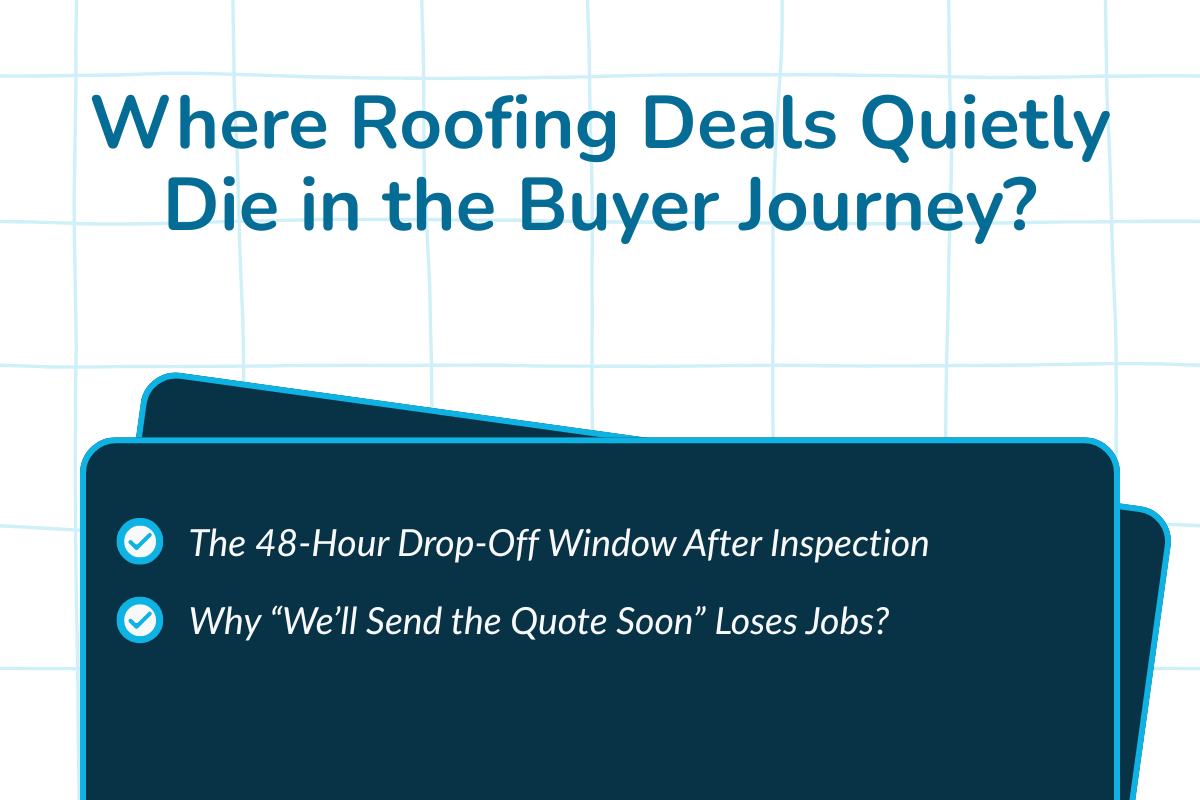
Where Roofing Deals Quietly Die in the Buyer Journey?
The most critical moment comes right after the roof inspection, when homeowners are actively thinking about the repair or replacement and expecting quick next steps.
If you put things on hold for even a day or two, that urgency fades. Most roofing contractors say this drop-off window is make-or-break: follow-up must happen within 24–48 hours or you lose momentum.
For example, sales research shows odds of reaching a lead drop by about 80% if you wait more than 24 hours. This makes the 48-hour window absolutely critical.
A. The 48-Hour Drop-Off Window After Inspection
After an inspection, the homeowner's interest is highest in all in one solution. The practical advice is simple: get a quote or roof report back quickly. Best roofing experts urge roofers or the support team to follow up within a day or two to keep the conversation alive and win more jobs. If you delay beyond that, homeowners grow anxious or distracted. They start comparing options or calling other roofing apps. In short, missing this 48-hour window means you usually miss the sale and lose track.
B. Why “We’ll Send the Quote Soon” Loses Jobs?
Empty promises don't save deals. If you reply slowly, competitors fill the gap. In roofing, the bottom line is clear: lagging on follow-ups costs jobs.
Many residential roofing contractors warn that when quotes “sit in an inbox” for hours, “jobs are lost before they even begin”. Homeowners usually hire the first contractor who seems responsive and ready to help.
C. How Slow Follow-Ups Create Trust Gaps?
Delays aren’t just inconvenient; they also break trust. When you leave a homeowner hanging, they begin to doubt your commitment to professional estimates.
To a homeowner, a quick reply is a game-changer. Even a short text (like “Thanks, we’re on it!”) can make the homeowner feel remembered and build confidence that you’re on top of their project. By contrast, prompt contact shows you care and keeps the homeowner engaged.
Why Roofing Teams Often Move Slower Than Their Buyers?
Homeowners are usually ready to make a decision soon after the roof inspection. They want clear aerial measurements, a clear timeline, and simple next steps. Many roofing teams, however, are still working through slow systems that create delays. That gap between buyer speed and company speed is where deals get lost.
1. Field and Office Work Separately
After an inspection, reps often send photos and notes to the office staff. Someone else then rebuilds the accurate measurements later. This back-and-forth takes time.
Job details may need clarification; questions go back to the rep, and each small delay reduces momentum. What could have taken minutes turns into hours.
2. All the Tools Slow Down the Process
Many companies use different tools for new leads, estimating, payment processing, proposals, and scheduling. This means customer data gets entered more than once.
Copying data from one place to another increases mistakes and wastes time. So, rather than moving the deal forward, the team is busy managing systems.
3. Professional Proposal Creation Takes Too Long
Manual pricing and formatting slow the process. If approvals are needed before sending the quote, the wait becomes longer. While the team prepares the proposal, the homeowner waits, and they often start looking at more contractors and a user-friendly mobile app.
4. No Clear View of Stalled Deals
Without proper tracking, no one knows which proposals are sitting unopened. Follow-ups depend on memory. Good leads can quietly go cold because no one notices the delay. When there is no visibility into the sales pipeline, small slowdowns become lost jobs.
You need a single platform for roof measurements and accurate proposal templates, along with integrations such as roofing CRM features to drive more sales.
What High-Velocity Roofing Sales Teams Do Differently?

Strategy 1: Close the Loop on the Same Day
- After finishing the inspection, the salesperson doesn’t wait until later to work on the estimate. They start right away, while the details are fresh and the homeowner is still engaged in the conversation.
- The goal is simple: send the proposal the same day. When homeowners get a fast quote, they feel prioritized and taken seriously.
- Even if the full estimate needs a little more time, the rep sends a quick message to let the homeowner know. That small touch keeps trust strong and prevents the lead from going cold.
- Being the first company to respond often makes the strongest impression. It keeps the homeowner focused on you rather than shopping around, saving valuable time.
Strategy 2: Keep Everything in One Workflow
- All customer details, photos, notes, and measurements are saved in one tool, so nothing gets lost between the field and the office.
- Sales reps save time re-typing addresses or re-entering information. The system carries everything forward automatically.
- If the homeowner had a previous quote or past job, that information is easy to see, which helps the rep have a more informed and confident conversation.
- By keeping everything connected, the team avoids confusion, reduces mistakes, and moves jobs ahead with full efficiency.
Strategy 3: Standardize What “Fast” Looks Like
- Instead of saying “we try to be quick,” they set clear expectations, for example, every quote goes out within a certain number of hours after inspection.
- Every new lead gets a follow-up call or message within a specific time frame, so no inquiry is forgotten.
- Everyone on the team understands these standards and works toward them daily.
- Because speed is clearly defined, it becomes part of the company culture rather than something optional.
Strategy 4: Let Software Do the Chasing
- After sending a proposal, the system automatically sends reminders if the homeowner hasn’t responded.
- The team is notified when a quote is opened, helping them follow up at the right time.
- This removes the pressure of remembering every detail manually. The system keeps leads warm in the background.
- As a result, sales reps spend more time talking to homeowners and less time chasing paperwork, and project management time is saved.
82% of roofers report tech boosts profitability; CRM users see 29% sales increase and 34% productivity gains.
Roofing Software Capabilities That Actually Move Deals Forward
| Capability | What It Does | Business Impact |
|---|---|---|
| On-Site Proposal Creation | Let's reps generate accurate estimates at the property with auto-calculations and ready templates. | Keeps momentum high and increases close rates by delivering pricing immediately. |
| One-Click Sending & E-Sign | Sends instant estimates via email or text with built-in digital signatures. | Speeds up approvals and shortens the sales cycle. |
| Automated Follow-Ups | Triggers reminders based on the deal stage if proposals remain unsigned. | Improves conversion by keeping every lead warm. |
| Centralized CRM & Job Data | Stores leads, estimates, and job details in one connected system. | Reduces errors, saves time, and provides full pipeline visibility in a single platform. |
Who Actually Needs Speed-to-Close Roofing Software the Most?

I. Growing Roofing Businesses
As roofing companies expand, more roofing contractors and more leads create coordination gaps. A centralized system keeps every inquiry tracked, every proposal visible, and every follow-up moving on time. Speed protects growth and keeps revenue predictable.
II. Storm-Response Roofing Crews
After severe weather, homeowners move fast. The first roofer to inspect and send a clear quote often secures the contract. A rapid proposal process turns high lead volume into booked jobs, while competitors respond more slowly.
III. Owner-Operators and Small Teams
Small roofing businesses are often run by owner-operators who juggle multiple responsibilities every day. From roof inspections and estimates to customer calls and project coordination, a lot of the work falls on the same person or a very small crew.
In these situations, administrative tasks can easily pile up and take time away from actual selling. Roofing software that organizes proposals, automates follow-ups, and speeds up the quoting process helps lighten that load.
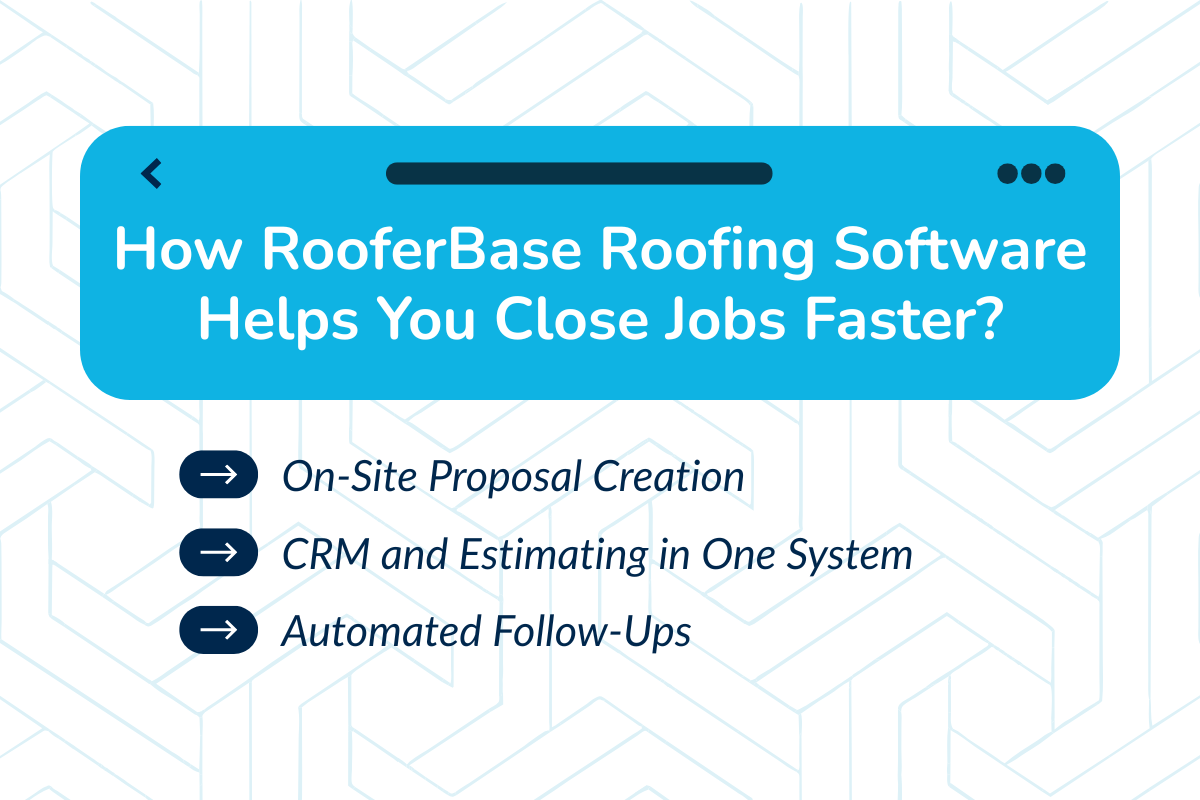
How RooferBase Roofing Software Helps You Close Jobs Faster?
1. On-Site Proposal Creation
RooferBase enables reps to create and send professional, branded proposals directly from the job site, eliminating delays between inspection and quote delivery. With automated pricing calculations based on materials, labor, and project scope, homeowners receive accurate estimates instantly—while their intent is still high, significantly increasing the chances of closing on the spot.
2. CRM and Estimating in One System
All customer data—contact details, inspection notes, images, measurements, and proposals—lives in a single, centralized system. This eliminates the need to switch between tools or re-enter data, reducing errors and saving time. It also ensures that every team member has complete visibility into the deal, improving coordination from the first interaction to final contract signing.
3. Automated Follow-Ups
RooferBase keeps deals moving by automating follow-ups at critical stages. The system sends reminders for pending proposals, notifies reps when a homeowner views a quote, and prompts timely re-engagement. This reduces the risk of leads going cold and ensures consistent communication without relying on manual tracking or memory.
4. Mobile-First Workflow
Designed for field teams, RooferBase allows reps to manage the entire sales process from their mobile devices. From capturing inspection data to generating proposals and collecting digital signatures, every step happens on-site. This reduces turnaround time, minimizes back-and-forth, and helps reps close deals faster without returning to the office.
5. Real-Time Deal Visibility
Managers gain complete visibility into the sales pipeline through a centralized dashboard that tracks every deal stage. They can quickly identify stalled proposals, monitor rep performance, and intervene when needed. This level of transparency enables proactive decision-making and ensures no opportunity slips through the cracks.
Final Take: Roofing Software Is a Sales Weapon, Not Just an Ops Tool
In roofing sales, speed creates a real competitive edge. The time between inspection and a signed agreement often decides who wins the job. When you respond quickly with a clear, professional proposal, you stay top of mind while other contractors are still preparing numbers.
Protecting those first 48 hours increases your chances of closing because homeowners stay engaged and confident in your process. Faster response leads to more signed jobs from the same pool of leads.
Speed also shapes how customers view your business. Quick follow-ups and organized communication signal professionalism from day one. Homeowners feel reassured when they see structure and clarity, and that confidence often supports stronger pricing. In practical terms, moving faster helps you close more deals while protecting your margins.
And roofing sales software helps you stay ahead with CRM features, roofing estimating tools that generate more jobs with greater accuracy, and streamlined business operations. RooferBase is one of the best roofing CRM solutions, helping you build trust and manage multiple locations with ease. Book a demo now.
FAQs
1. Is roofing software useful for small roofing businesses?
Yes. Small roofing teams and owner-operators benefit the most because software reduces administrative work, organizes leads, and automates follow-ups, allowing them to focus more on inspections and sales.
2. What software do roofers use?
Roofers typically utilize estimating software (estimating), a CRM (customer relationship management), project management (job), and accounting software (books). Many roofers will combine their roofing CRM with other tools, such as measurement software and accounting software (QuickBooks).
3. What features should roofing software have for faster sales?
Roofing companies looking to close jobs faster should prioritize tools that support on-site estimating, proposal templates, digital signatures, automated follow-ups, and a centralized CRM. These features remove delays between inspections and signed contracts.
4. How quickly should a roofing contractor send a quote after an inspection?
Most roofing sales are won within 24–48 hours after the inspection. If a proposal takes longer, homeowners often contact other contractors. Fast teams either send the estimate the same day or within the next business day to maintain momentum.