February 9, 2026
Measuring a roof once meant climbing ladders, pulling out tape measures, and relying on a bit of guesswork. It took time, involved safety risks, and often led to rechecks that slowed down estimates. Today, roofing contractors have better options.
Modern roof measurement tools make the process faster, safer, and far more accurate. From mobile measurement apps to drone imagery and automated reports, contractors can measure roofs without repeated site visits and deliver quotes much faster.
Accurate measurements also lead to better estimates, smoother insurance claims, and more professional proposals.
This blog walks through the essential roof measurement tech and tools every contractor should know about to simplify measurements, save time, and stay competitive in a changing roofing industry.
The Essential Tech and Tools Contractors Need for Easy Roof Measurements
If you have ever seen a roofer balancing on a steep slope with a tape measure and notepad, you already know the risk. For years, many roofing contractors have depended on manual roof measurements. It feels familiar, but it is slow, unsafe, and often inaccurate.
Climbing ladders, walking on unstable surfaces, and rechecking numbers back at the office leave plenty of room for error.
One small mistake in the roof area or pitch can throw off an entire estimate, leading to pricing issues, material shortages, and unhappy homeowners.
Today, technology has changed the game. Contractors can measure roofs remotely, generate accurate reports in minutes, and create professional estimates without stepping on the roof. Apps, drones, and automated tools help crews work faster, safer, and more profitably.
Key Takeaways
- Manual roof measurements increase safety risks for crews and take more time on-site than necessary.
- Digital measurement tools reduce roof takeoffs from hours to minutes without sacrificing accuracy.
This allows contractors to respond to leads faster and keep sales moving. - Drones, apps, and automated roof measurement reports improve accuracy by removing manual guesswork.
- Modern measurement technology streamlines the sales process by connecting measurements to estimates.
- RooferBase
helps contractors turn roof measurements into practical estimates and job plans.
Measurement data flows directly into workflows instead of sitting unused in reports.
Still measuring roofs the old way?
See how modern roofing teams turn measurements into same-day estimates, accurate material plans, and smoother job execution.
Take a quick look at how smarter tools and RooferBase help you move faster without adding risk.
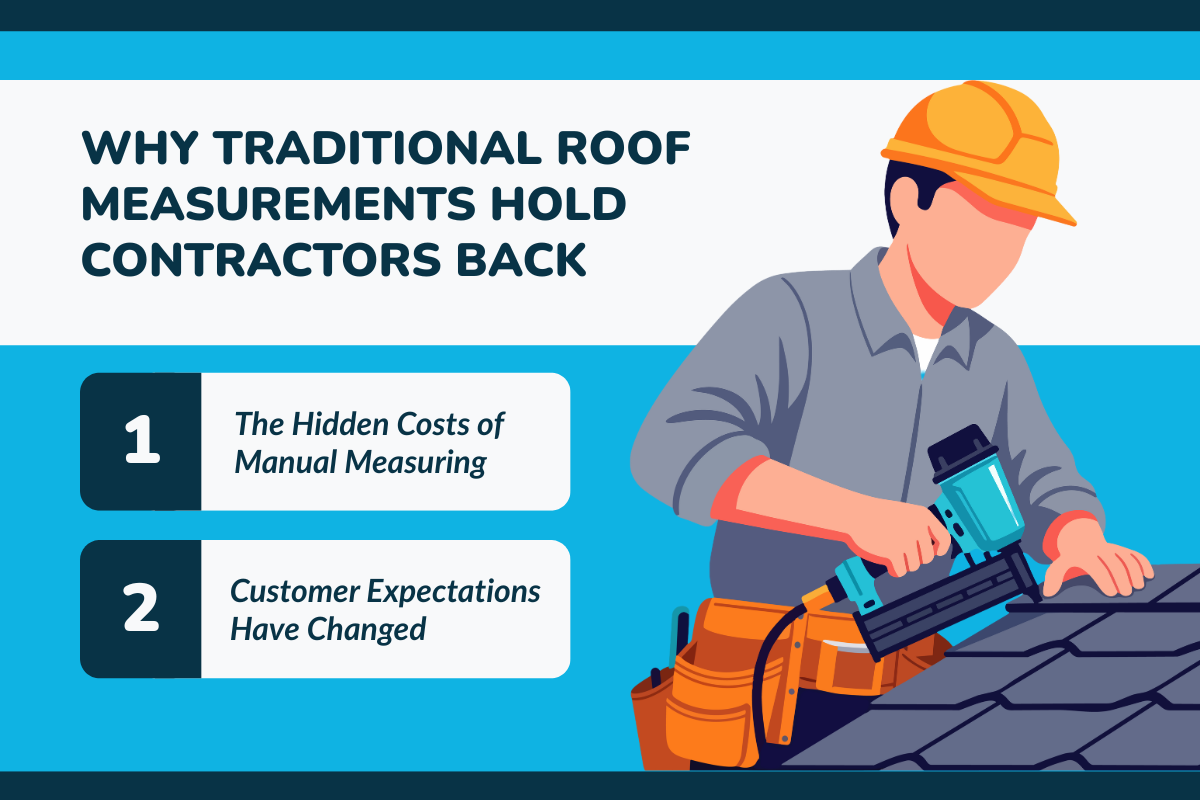
Why Traditional Roof Measurements Hold Contractors Back?
Traditional roof measuring methods may feel familiar, but they were designed for a slower, less competitive market.
Today, they quietly add risk, slow estimates, and hold contractors back from winning jobs quickly.
> The Hidden Costs of Manual Measuring
Manual measuring feels inexpensive at first. All you need is a ladder, a tape, and time. But the real cost shows up later.
Walking on roofs increases the risk of slips and falls, especially on older houses or steep slopes. One injury can shut down a job site, delay projects, and cost far more than any tool subscription.
Accuracy is another issue. Human measurements vary. So, two people measuring the same roof can come back with different square footage. Roof pitch calculations are often estimated instead of measured precisely. This leads to inaccurate material counts and pricing errors.
Manual measuring also slows turnaround time. Contractors often need a site visit, followed by a second visit to remeasure or verify details. That can turn a two-hour task into multiple days, especially when crews are stretched thin.
Scaling becomes difficult, too. When every estimate requires physical presence, it limits how many projects a team can handle.
> Customer Expectations Have Changed
Homeowners want quick responses, clear pricing, and professional-looking proposals. When a contractor sends a clean, branded estimate the same day, it immediately builds trust and confidence.
Tools like GAF QuickMeasure help create polished reports that leave a strong impression.
On the other hand, delays hurt credibility. Waiting days for an estimate can make even good contractors seem disorganized. In today’s sales process, speed and clarity matter.
Contractors using modern roof measurement tools consistently see higher conversion rates because they respond faster and present information in a way customers understand and trust.
The Digital Transformation of Roof Measurements
Roof measurement is no longer just about climbing ladders with a tape measure. Today, affordable digital tools are changing how contractors measure roofs, build estimates, and plan jobs, making speed and accuracy achievable even for smaller teams.
With remote measurement tools, contractors can enter a property address and generate roof measurements without stepping on-site, which makes quoting faster and easier.
How Measurement Technology Is Evolving?
Roof measurement technology has advanced quickly over the past few years. Contractors today have access to tools that make measuring roofs faster, safer, and more practical than ever before, including:
1. Mobile apps that measure roof area from satellite imagery
These apps allow contractors to calculate roof area, pitch, and square footage remotely, making it easier to send quick estimates without an initial site visit. Most apps can be downloaded directly from the app store, installed in a few taps, and set up by signing in.
2. Drones that capture precise roof dimensions safely
Drones collect high-resolution images of complex or hard-to-access roofs, helping contractors reduce on-site risk while still getting accurate data for both residential and commercial projects.
3. Automated roof measurement reports with pitch, slope, and material calculations
Automated reports turn raw measurements into clear, professional documents that support pricing, material planning, and customer communication. Ordering reports online is fast and convenient, with detailed property data delivered in as little as a few hours.
4. Laser and LiDAR tools for on-site verification
Handheld laser tools provide accurate line-of-sight measurements, making them useful for renovations, extensions, and detailed verification when on-site confirmation is needed.
These tools are no longer limited to large companies. Even small crews can now measure roofs remotely, qualify leads faster, and spend more time focused on installation work.
See how one good roofing software can handle all your business problems single-handedly: Roofing Software that Handles Estimates, Measurements & Install Tracking
Must-Have Tools Every Roofing Contractor Should Be Using Today
Modern roofing work demands more than manual tools and rough calculations. Accurate roof measurements are crucial for contractors to order the correct amount of common roofing materials, such as shingles and metal roofing, ensuring efficient project planning and cost control.
Shingles, one of the most widely used roofing materials, are typically sold in bundles, so estimating the correct quantity is essential for accurate bids and material orders.
Today’s contractors rely on innovative measurement technology to work faster, stay safer, and deliver accurate estimates that help them win and manage more jobs.
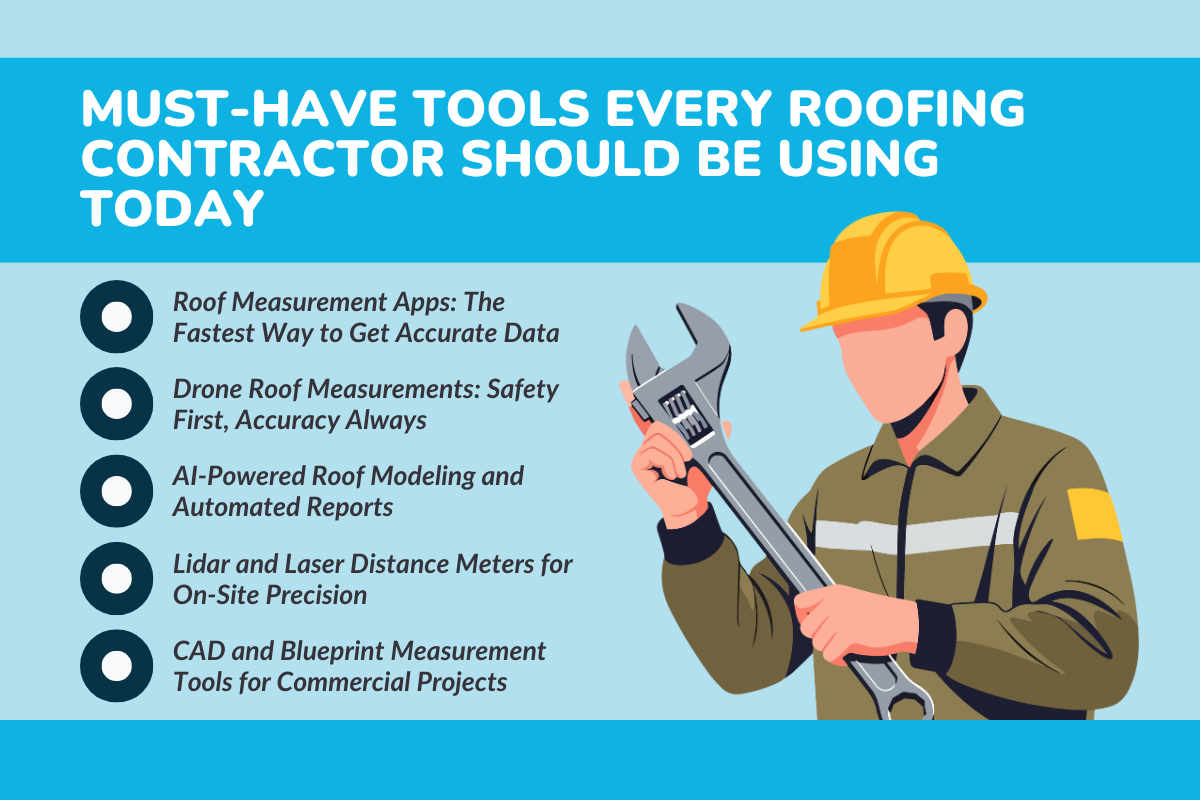
1. Roof Measurement Apps: The Fastest Way to Get Accurate Data
Roof measurement apps are often the first upgrade contractors make when moving away from manual methods. They let teams measure roofs remotely using satellite images, without visiting the property.
With a few clicks, these apps calculate roof area, pitch, slope, and perimeter, and many generate ready-to-use measurement reports with material estimates.
These tools are perfect for quick quotes, early lead qualification, and faster homeowner responses. Contractors can send estimates sooner and reduce unnecessary site visits. The only limitation is image quality, which can vary by location.
For that reason, many teams use apps for initial measurements and confirm details later when needed.
2. Drone Roof Measurements: Safety First, Accuracy Always
Drones have transformed how contractors measure complex roofs. Instead of walking on steep or damaged surfaces, teams can capture high-resolution images safely from the air.
Drones excel at:
- Hard-to-reach roofs
- Large commercial projects
- Complex roof shapes
They provide detailed visuals that help create precise measurements and support insurance claims.
Using drones and satellite roof measurement tools also saves time and gas by reducing the need for in-person site visits. Some platforms provide accurate roof measurements and high-resolution imagery for single-family homes in under an hour.
Today, contractors must comply with FAA regulations, including drone registration and flight permissions. While there is a learning curve, the safety and accuracy benefits are worth it, especially for high-value roofing jobs.
3. AI-Powered Roof Modeling and Automated Reports
Automated modeling tools convert images into 3D roof models. These systems automatically identify ridges, hips, valleys, and roof pitch.
The result is a detailed report that removes human error and improves consistency across teams. Estimators no longer rely on guesswork or assumptions.
These tools are handy for contractors handling high volumes of estimates where speed and repeatability matter most.
4. LiDAR and Laser Distance Meters for On-Site Precision
When physical verification is required, laser distance meters provide quick and accurate measurements without extensive climbing.
These tools are ideal for:
- Renovation projects
- Add-on roofing jobs
- Retrofit work
They allow contractors to measure roofs safely from the ground or minimal access points. Lidar integration adds extra accuracy for complex structures.
5. CAD and Blueprint Measurement Tools for Commercial Projects
Commercial jobs often come with drawings instead of finished roofs. CAD tools allow contractors to measure directly from blueprints using scale conversions.
This is essential for tender submissions, BOQs, and planning large projects accurately before construction begins.
To get an idea of how to give a precise estimate before you commit, take a look at this: Roofing Estimate Checklist: What Goes Into a Professional Quote
Choosing the Right Measurement Tech: What Contractors Should Evaluate
With so many tools available, the real challenge is not access, but choosing what actually fits your business. Accurate roof measurements are crucial for reliable cost estimation and project planning.
The right measurement tech depends on your project mix, team capability, and how smoothly it connects with the rest of your workflow. It is vital to confirm final quotes with an on-site measurement or a paid aerial/3D report.
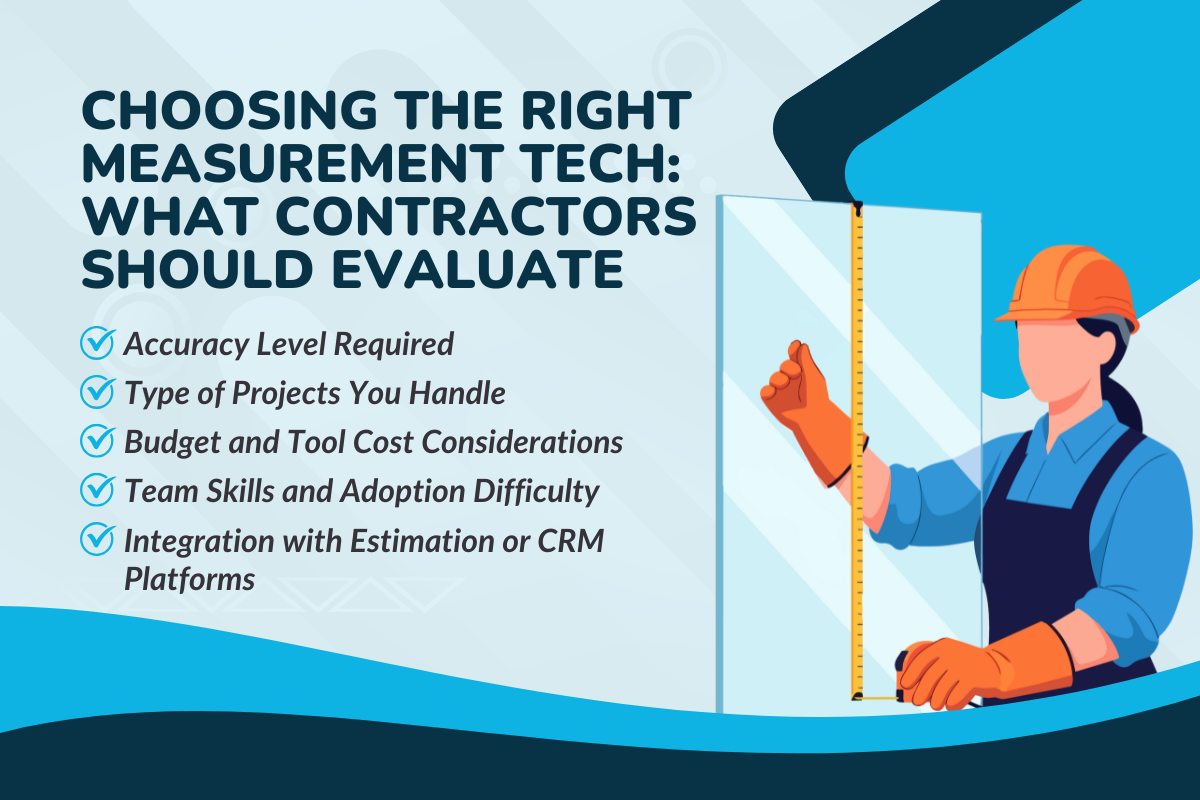
1. Accuracy Level Required
Every roofing job requires precise measurements, but the risk of error varies by project type. On residential reroofing projects, even small measurement mistakes can lead to material waste, job delays, or uncomfortable price adjustments.
On larger or more complex roofs, such as commercial projects or steep multi-facet designs, those same errors scale into significant cost overruns and scheduling issues.
Therefore, contractors should evaluate pitch accuracy, total roof area accuracy, and consistency across users to ensure measurements remain reliable regardless of project size or complexity.
2. Type of Projects You Handle
Residential houses, commercial properties, and industrial buildings all require different tools. Simple roofs differ greatly from complex layouts with multiple slopes and penetrations.
3. Budget and Tool Cost Considerations
Some tools require subscriptions, while others involve upfront investment in hardware like drones. Some measurement tools allow contractors to perform roof measurements at a fraction of the cost compared to traditional methods.
These tools help save money by reducing expenses and improving efficiency. Contractors should balance cost against time saved, risk reduced, and additional jobs won.
4. Team Skills and Adoption Difficulty
Technology only works if teams use it. Simple apps are easier to adopt than complex systems. Training time and comfort level should factor into decisions.
5. Integration with Estimation or CRM Platforms
Measurement data should flow directly into estimates, material lists, and scheduling. Tools that integrate with CRM systems eliminate double data entry and save hours each week.
The Business Impact of Switching to Digital Roof Measurements
Switching to digital roof measurements does more than speed up estimating. By providing quick and accurate estimates, digital measurement tools help contractors qualify for and secure more work, making them a valuable resource for expanding business opportunities.
It directly improves how roofing businesses operate, sell, and protect their teams, with benefits that show up quickly on both the top and bottom lines.
Roof measurement tools can also help roofing contractors qualify high-value leads faster by providing quick estimates.
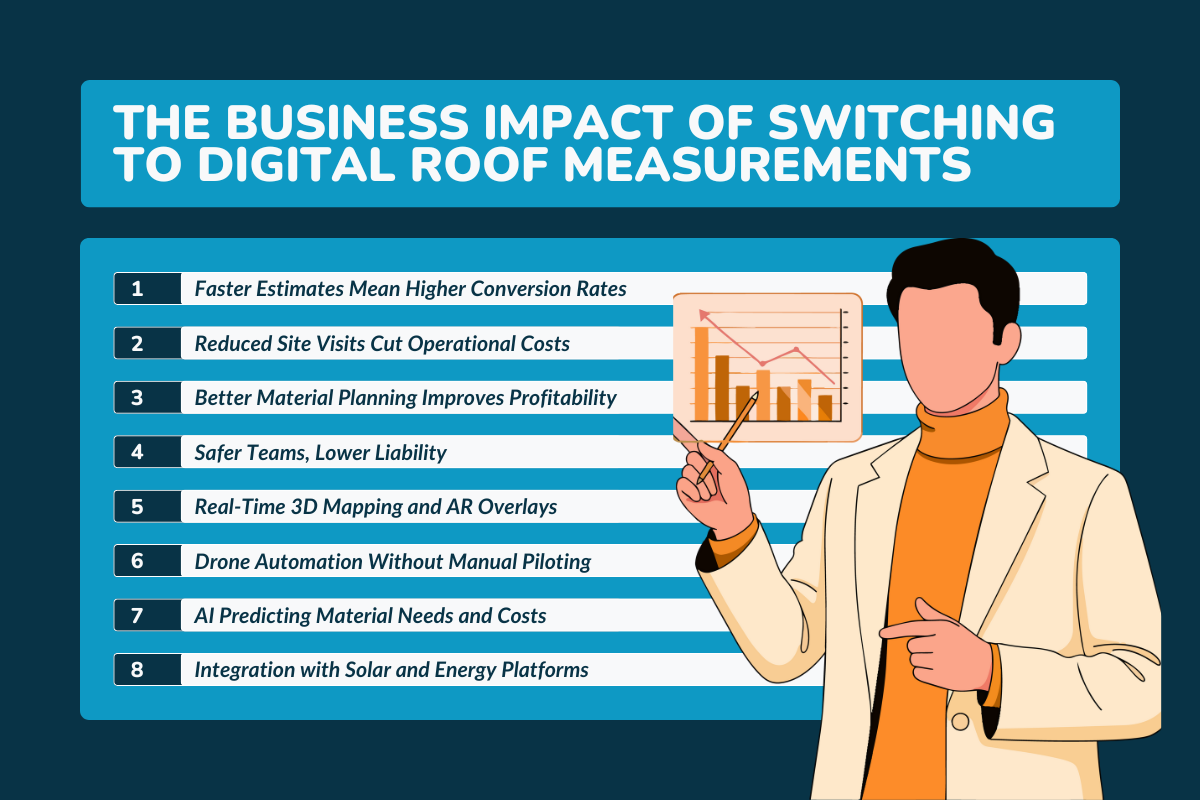
A. Faster Estimates = Higher Conversion Rates
When homeowners reach out, they are usually speaking to more than one contractor. Digital measurements let you send clean, professional estimates within hours instead of days, keeping the momentum alive.
Faster responses build confidence and often tip the decision in your favor, leading to noticeably higher win rates.
B. Reduced Site Visits Cut Operational Costs
Relying less on repeated physical site visits has a direct impact on operating expenses.
- Fewer physical visits mean lower fuel expenses and less time lost in traffic.
- Crews spend more hours working on active jobs instead of measuring roofs.
- This efficiency allows teams to take on more projects without hiring additional staff.
C. Better Material Planning Improves Profitability
Accurate measurements translate directly into precise material calculations. Contractors order exactly what is needed, avoiding overbuying and last-minute shortages. Over time, reduced wastage and tighter planning add up to meaningful cost savings on every job.
D. Safer Teams, Lower Liability
Minimizing time spent walking roofs significantly reduces safety risks.
- Spending less time walking on roofs significantly reduces the risk of slips and falls.
- Fewer incidents lead to lower insurance claims and less downtime for crews.
- A safer work process also improves team morale and long-term workforce stability.
Future Trends in Roof Measurement Technology
Real-Time 3D Mapping and AR Overlays
Contractors will be able to view roofs as live 3D models on their phones or tablets, whether on-site or in the office. This makes planning more accurate and helps teams spot problem areas before work begins.
It also improves customer communication by visually showing scope, measurements, and changes instead of explaining them verbally.
Drone Automation Without Manual Piloting
Pre-programmed drone flights will follow the same path every time, ensuring consistent measurements. Reports will be generated automatically after each flight, with minimal manual input. This means less hands-on flying reduces labor effort and speeds up the entire measurement process.
AI Predicting Material Needs and Costs
Measurement tools will move beyond calculating roof area alone. They will account for pitch, waste factors, and labor requirements to estimate full project costs. This allows contractors to price jobs more confidently and avoid surprises during installation.
Integration with Solar and Energy Platforms
Roof measurement data will flow directly into solar design and energy planning software. Contractors can use the exact measurements to quote both roofing and solar work without remeasuring. This makes it easier to offer bundled services and increase revenue per property.
If confused in choosing the right roofing software for your business, go through this: Best Roofing Estimating Tools for 2026: Side-by-Side Features
How RooferBase Integrates Roof Measurements into Roofing Workflows?
Roof measurements only add value when they flow into the rest of the job. RooferBase helps contractors carry measurement data through estimating, scheduling, and billing without extra steps or duplicate work, so information stays consistent from start to finish.
Why Measurement Tools Alone Aren’t Enough?
Measuring a roof is just the starting point. Contractors still need to turn that data into estimates, material plans, schedules, and invoices.
However, when measurements live in separate tools or PDFs, teams end up re-entering data, making assumptions, or missing details. That is where delays, errors, and margin loss usually begin.
Key RooferBase Capabilities That Support Measurement Workflows
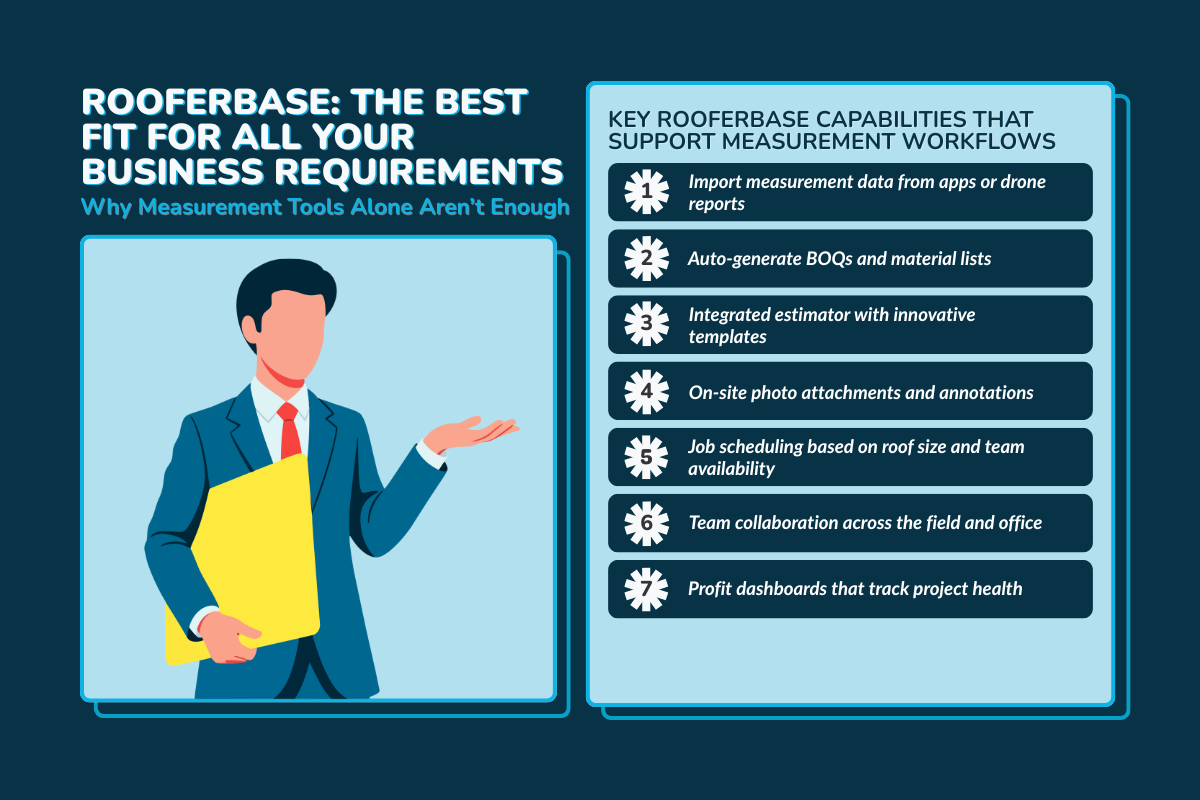
- Import measurement data from apps or drone reports: Bring roof measurements straight into your workflow, so teams are not wasting time re-entering numbers or fixing avoidable mistakes.
- Auto-generate BOQs and material lists: Use roof data to quickly create material lists that reflect what the job actually needs, not rough guesses.
- Integrated estimator with innovative templates: Build clear, consistent estimates faster using templates your team already understands and trusts.
- On-site photo attachments and annotations: Attach photos and notes to measurements so everyone sees what is happening on the roof, not just the numbers.
- Job scheduling based on roof size and team availability: Schedule jobs using real roof details and crew capacity instead of relying on assumptions.
- Team collaboration across the field and office: Make sure sales, field crews, and office staff are all working from the same information at every stage of the job.
- Profit dashboards that track project health: See how costs, margins, and progress are shaping up while the job is still running, not after problems appear.
Together, these features are why RooferBase turns roof measurements into tangible, measurable business outcomes.
Bringing It All Together
Roof measurements no longer need to be slow, risky, or inaccurate. Modern tools allow contractors to measure roofs safely, accurately, and remotely.
By adopting digital measurement technology and connecting it to platforms like RooferBase, contractors save time, reduce risk, and win more jobs. The future of roofing belongs to teams that work smarter, not harder.
Ready to simplify roof measurements and speed up your estimates with RooferBase?
See how RooferBase helps contractors measure, estimate, and manage roofing jobs from one powerful platform. Book your demo today with RooferBase.
FAQs
1. Are roof measurement apps accurate enough for estimates?
Yes. Reputable roof measurement apps and aerial reports are highly accurate for estimating and quoting, especially when combined with on-site verification for complex roofs.
2. How long does it take to get a roof measurement report?
Depending on the tool, reports can be generated instantly, within a few hours, or by the next business day, much faster than traditional manual measuring.
3. Do insurance companies accept digital roof measurements?
Yes. Many insurance adjusters and carriers accept professional aerial and drone-based measurement reports, especially for claims and storm damage assessments.
4. How does RooferBase help with roof measurements?
RooferBase connects measurement data to estimates, materials, schedules, and job management in one system.
5. Is roof measurement software worth it for small roofing companies?
Yes. Even small crews benefit from faster estimates, fewer site visits, improved safety, and more professional proposals, which often lead to higher close rates.