March 11, 2026
Roof measuring used to be pretty straightforward. You climbed up, pulled out a tape measure, scribbled numbers on a notepad, and double-checked everything before climbing back down.
But even with skilled crews, mistakes still happen. One section is missed, the pitch is misread, or someone rushes through the site visit because the schedule is tight. And that small error can snowball fast.
If the measurements are off, the quote is also off. Materials get ordered wrong, crews show up, and realize something does not line up. Suddenly, the job takes longer, costs more, and creates unnecessary stress for everyone involved.
That is why modern roof measuring tools have become such a big deal. Not because they are “cool tech,” but because they make the numbers more dependable. When you trust the measurements, everything else runs smoother, from estimating to installation.
The End of Guesswork in Roof Measurements: How Modern Tools Get It Right
Climbing onto a roof with a tape measure and a notepad often feels straightforward. Walk the edges, write down a few numbers, and move on.
In reality, what seems like a quick task can stretch into hours, with plenty of opportunities for small measurement mistakes to slip through unnoticed.
And it still happens in 2026. A ladder shifts slightly, a dormer gets missed, and a pitch is rounded the wrong way. Small slips like these quietly turn into bigger problems.
Estimates drift, materials arrive short, crews lose hours on the job site, and customers start asking uncomfortable questions.
Accurate roof measurements are no longer just a technical step. They shape your pricing, schedules, sales process, and reputation.
The good news is modern tools now remove guesswork and help contractors move faster without sacrificing accuracy.
Key Takeaways
- Why traditional roof measuring methods fail on modern jobs
Manual measurements often miss complexity, leading to errors, rework, and underestimated costs. - How new measurement tools eliminate assumptions and rework
Digital and aerial tools deliver precise data upfront, reducing guesswork and costly corrections. - Where different roof measurement technologies fit best
Each tool serves a purpose, from quick residential takeoffs to complex commercial layouts. - How accurate measurements improve estimates, installs, and margins
Better measurements lead to cleaner estimates, smoother installs, and stronger profit margins.
Stop Guessing. Start Measuring With Confidence.
See how modern roof measurement tools like RooferBase help you eliminate errors, speed up estimates, and protect margins before problems ever reach the job site. So book your demo ASAP.
Why Roof Measurement Errors Are Still a Major Problem?
Before talking about solutions, let's understand the cost of getting measurements wrong. The consequences often stay hidden until the project is already underway.
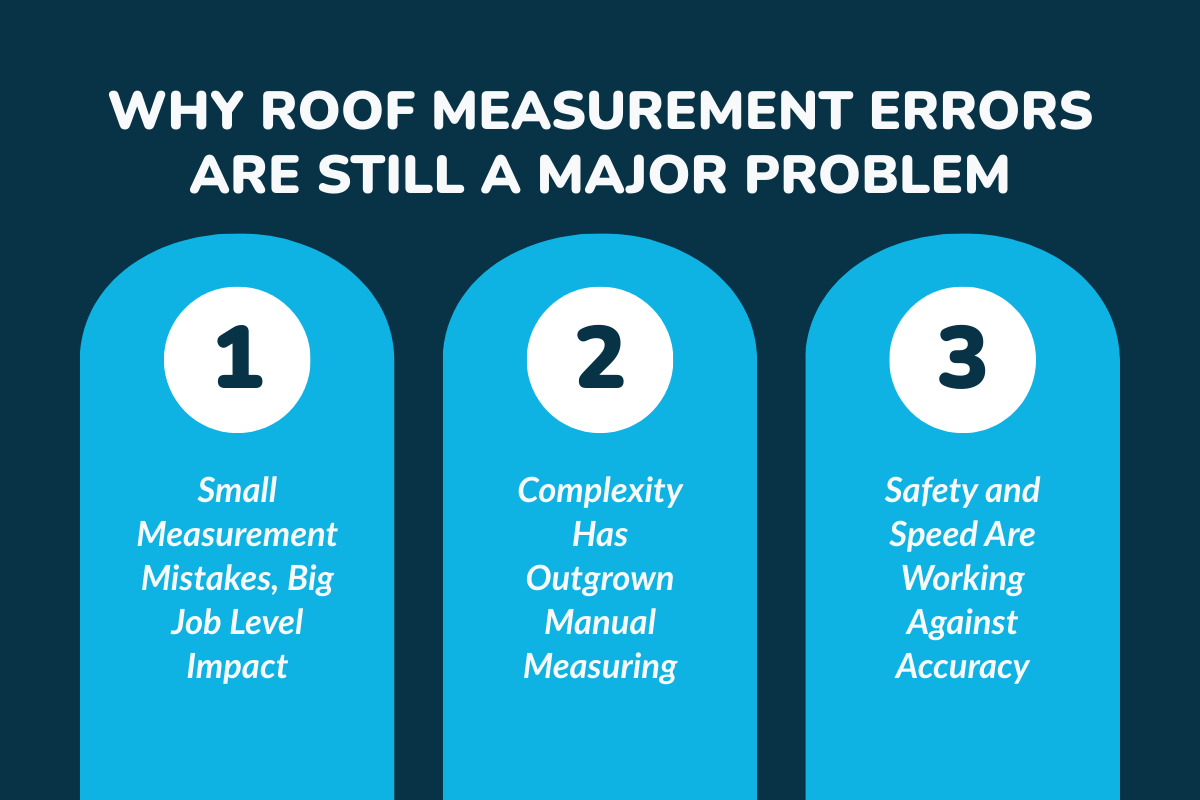
1. Small Measurement Mistakes, Big Job Level Impact
A half-inch error on one edge might not seem like much. Multiply that across several facets, and suddenly your material order is short a bundle of shingles. Now someone is driving back to the supplier, burning gas, losing hours, and delaying installation.
Inaccurate measurements lead to:
- Material shortages or over-ordering
- Extra trips and wasted labor
- Delayed turnaround time
- Lost money on every job
On busy weeks, these problems stack up fast. One mistake can ripple across several roofing jobs and eat into margins without anyone noticing right away.
2. Complexity Has Outgrown Manual Measuring
Roofs are no longer simple rectangles. Today’s projects include steep pitches, multiple valleys, skylights, solar mounts, dormers, and tight access points. Commercial jobs add even more layers of complexity.
Trying to calculate area and pitch with a tape and eyeballing fractions is risky. The more complex the roof, the greater the chance that something will be missed.
3. Safety and Speed Are Working Against Accuracy
Crews are under pressure to move fast, sales teams want instant estimates, and small crews want to save time and avoid repeat site visits. That rush leads to shortcuts.
Measurements get rounded, areas get estimated instead of calculated. This ultimately increases the risk every time someone climbs without enough time to double-check their work.
How Roof Measurements Used to Be Done (And Why That No Longer Works)?
For decades, manual measuring was the only option. It worked well enough when projects were simpler and expectations were lower.
Tape Measures, Ladders, and Visual Guesswork
The classic routine looked like this:
Step 1: Climb the roof
Contractors would physically climb onto the roof, often dealing with steep slopes, heat, and safety risks, just to obtain basic measurements.
Step 2: Measure edges and ridges
Using a tape measure, they would walk the perimeter and ridgelines, hoping nothing was missed or misread along the way.
Step 3: Sketch rough diagrams on paper
Back on the ground, those numbers were quickly translated into hand-drawn roof shapes, heavily reliant on memory and estimation.
Step 4: Calculate the square footage later in the office
Only after leaving the site would everything be calculated, which meant errors were often discovered too late to fix easily.“Good enough” was often accepted.
What Changed in Roofing Projects?
A lot has changed. Prices are tighter, and insurance work demands precision. Customers search online, compare professional estimates, and expect accuracy.
The sales process moves faster, which means crews handle more jobs with fewer people. Manual measuring simply cannot keep up with the scale and speed modern roofing contractors need.
Which is why contractors are moving to top-rated roofing software to boost efficiency in roof measurements, estimates, and seamless project tracking, designed to save time and make more money.
Modern Roof Measurement Tools: What Contractors Actually Use Today
Technology has reshaped how contractors collect data and create measurement reports. Instead of one tool trying to do everything, most teams use a mix depending on the job.
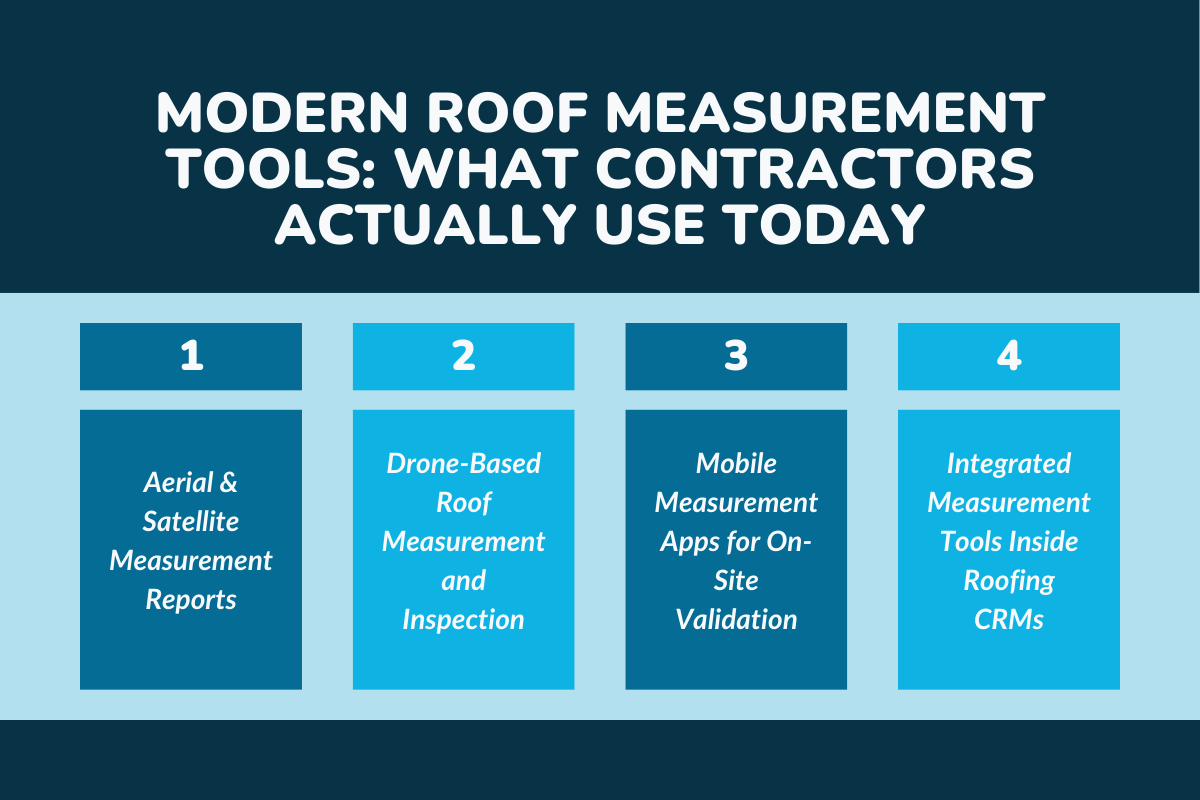
1. Aerial & Satellite Measurement Reports
Remote measurements have become a favorite for quick quoting and lead qualification. With an address and a few clicks, contractors can download roof measurement reports that include:
- Area and facet calculations
- Pitch estimates
- Ridge and valley lengths
- A detailed roof diagram
These reports help qualify leads, create instant estimates, and shorten turnaround time. They work especially well for residential work and early-stage sales.
2. Drone-Based Roof Measurement and Inspection
Drones shine in complex operations and commercial applications. They capture high-resolution images, measure hard-to-reach sections, and create accurate models without putting crews at risk. Drones also document damage for insurance claims and create visual proof customers can trust.
3. Mobile Measurement Apps for On-Site Validation
Measurement apps turn a phone or tablet into a flexible tool on the job site. Crews can:
- Re-measure questionable areas
- Validate aerial reports
- Adjust measurements in real time
- Capture photos tied to measurements
These apps support human judgment rather than replace it.
4. Integrated Measurement Tools Inside Roofing CRMs
Some platforms connect roof measurements directly to estimating, scheduling, and accounts. This setup creates one source of truth and data flows from report order to estimate to installation without re-entry.
How Modern Tools Remove Guesswork From Roof Measurements?
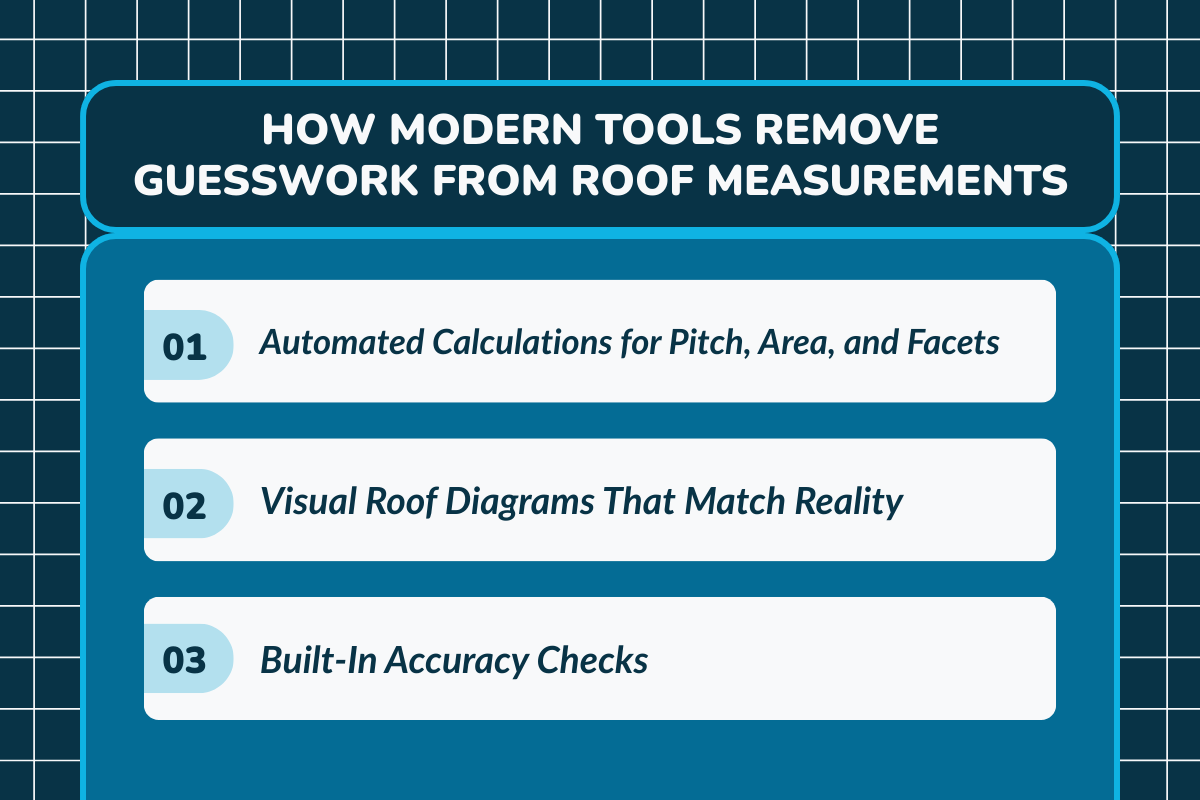
Accuracy improves when tools handle the math and consistency, while humans focus on judgment and planning.
1. Automated Calculations for Pitch, Area, and Facets
One of the biggest advantages of modern roof measurement tools is consistency. Instead of relying on mental math or experience-based shortcuts, the system handles the calculations the same way every time. That means fewer surprises and far less second-guessing during estimating.
- Pitch, slope, and surface area are calculated automatically
- Every estimator uses the same formulas across all jobs
- No rounding errors or missed fractions
- Easier to review and verify numbers before sending estimates
2. Visual Roof Diagrams That Match Reality
Modern tools replace hand-drawn sketches with clear, accurate roof diagrams that accurately reflect the property's actual structure.
These visuals help everyone involved understand the job before anyone sets foot on the roof.
- Clean layouts showing facets, ridges, valleys, and edges
- Diagrams that match the roof’s true shape and complexity
- Easier for crews to plan installs and material placement
- Fewer questions and less confusion on the job site
3. Built-In Accuracy Checks
Many roof measurement systems include checks that catch problems early, before they affect pricing or materials. This extra layer of review helps prevent small errors from turning into costly issues later.
- Flags unusual dimensions or missing sections
- Identifies overlapping or inconsistent facets
- Helps verify reports before estimates are finalized
- Reduces rework, delays, and unexpected cost overruns
Accuracy Doesn’t Stop at Measurement: Downstream Benefits
Accurate roof measurements do more than improve your takeoff. They ripple through the entire job, helping you estimate faster, order smarter, and keep installs running smoothly without costly surprises.
1. Cleaner Estimates With Fewer Revisions
Accurate measurements remove uncertainty from the estimating process. When areas, pitch, and roof complexity are measured accurately, pricing is based on real data rather than assumptions. This makes estimates easier to explain and harder to challenge.
- Labor and material quantities are calculated correctly from the start
- Fewer change orders caused by missed or mismeasured sections
- Estimates align closely with final invoices
- Faster approvals because homeowners trust the numbers
- Higher win rates due to clear, confident pricing
2. More Predictable Material Ordering
When roof measurements are accurate, material ordering becomes far more reliable. Contractors can plan deliveries with confidence, rather than padding orders or reacting to shortages mid-job.
- Correct quantities of shingles, underlayment, flashing, and accessories
- Reduced material waste and fewer returns
- Fewer emergency supplier trips that waste time and fuel
- Better scheduling of deliveries to match installation timelines
- Improved cash flow by avoiding over-ordering
3. Smoother Installs and Fewer Mid-Job Surprises
Good measurements set crews up for success before they arrive on site. Installers know what to expect, what tools they need, and how the roof is laid out, which keeps work moving without disruption.
- Crews arrive with the right materials and equipment
- Clear understanding of roof layout, valleys, and transitions
- Less on-site decision-making and guesswork
- Fewer delays caused by missing materials or incorrect assumptions
- Jobs finish closer to schedule and within budget
How Can Someone Choose the Right Roof Measurement Method For Their Business?
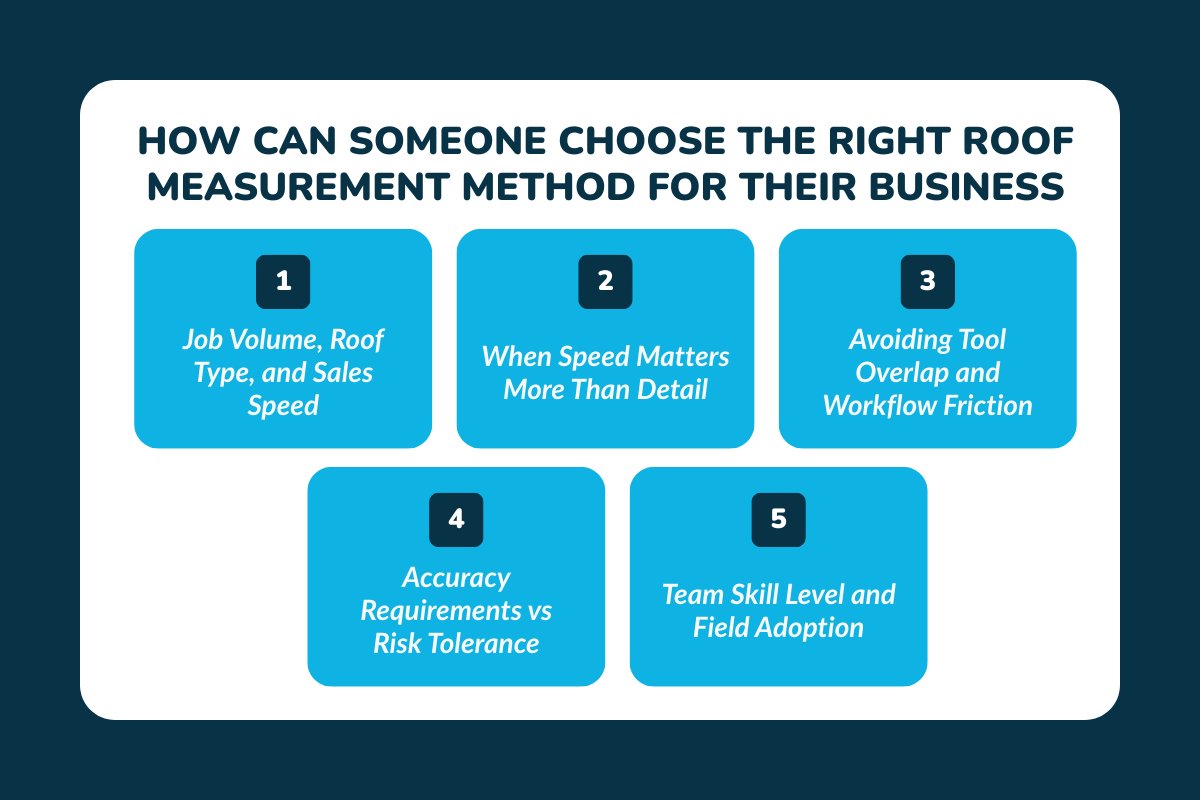
There is no single best tool for every contractor. The right choice depends on how you work. Let's look at the factors:
1. Job Volume, Roof Type, and Sales Speed
The number of jobs you run and the type of roofs you work on should drive your measurement approach. High-volume residential contractors need speed to keep estimates moving, while complex or commercial projects require more detail and verification.
Fast remote measurement reports work well for simple residential roofs and early quoting. Drones and on-site validation make more sense for large buildings, steep pitches, or roofs with multiple penetrations where accuracy matters more than speed.
2. When Speed Matters More Than Detail
Speed plays a critical role at the top of the sales funnel. Quick measurements help qualify leads, set expectations, and deliver instant estimates before competitors respond.
As a project moves closer to contract and installation, accuracy becomes more important than speed. Detailed measurements protect margins, prevent rework, and ensure crews arrive prepared. Successful contractors use fast methods early and more detailed methods before work begins.
3. Avoiding Tool Overlap and Workflow Friction
Using multiple disconnected tools often creates new problems instead of solving old ones. Measurements get re-entered, files are misplaced, and teams work from different versions of the same data.
The right setup connects roof measurements directly to estimating, material ordering, and scheduling. This reduces manual entry, limits mistakes, and keeps everyone aligned from sales to installation.
4. Accuracy Requirements vs Risk Tolerance
Not every job carries the same level of risk. Insurance claims, steep roofs, and tight margin projects demand higher measurement accuracy because mistakes are costly and difficult to fix later.
Lower-risk projects may allow for faster, less detailed measurements without major consequences. Understanding where precision is critical helps contractors choose the right level of detail for each job.
5. Team Skill Level and Field Adoption
The best roof measurement tool is the one your team actually uses correctly and consistently. If a system is too complex, crews may avoid it or rely on old habits instead.
Choose tools that fit your team’s experience level and workflow. Clear interfaces, simple processes, and quick training lead to better adoption, more consistent data, and fewer measurement-related errors across jobs.
What Are The Common Roof Measurement Mistakes Contractors Still Make?
Even as measurement tools get smarter, roof takeoffs still go wrong in predictable ways. Most mistakes come from using the wrong approach for the roof and missing small details that turn into big job costs.
Relying on One Method for Every Roof
One of the most common mistakes contractors still make is using the same measurement method for every job. While it feels efficient, it often creates blind spots on complex or higher-risk roofs.
Simple residential roofs may work well with remote measurement reports. Steep pitches, unusual layouts, or commercial buildings often require drones or an on-site inspection.
Contractors who adjust their approach based on roof type reduce errors, protect margins, and avoid surprises during installation.
Ignoring Waste, Overhangs, and Complexity
Another costly mistake is focusing only on surface area while ignoring the small details that affect material needs. Overhangs, waste factors, flashing, hips, and trim often get underestimated or missed entirely.
These details may seem minor, but they directly impact material orders and labor time. When they are overlooked, contractors end up short on materials, crews lose hours, and profit quietly slips away one small mistake at a time.
How RooferBase Turns Accurate Measurements Into Better Jobs?
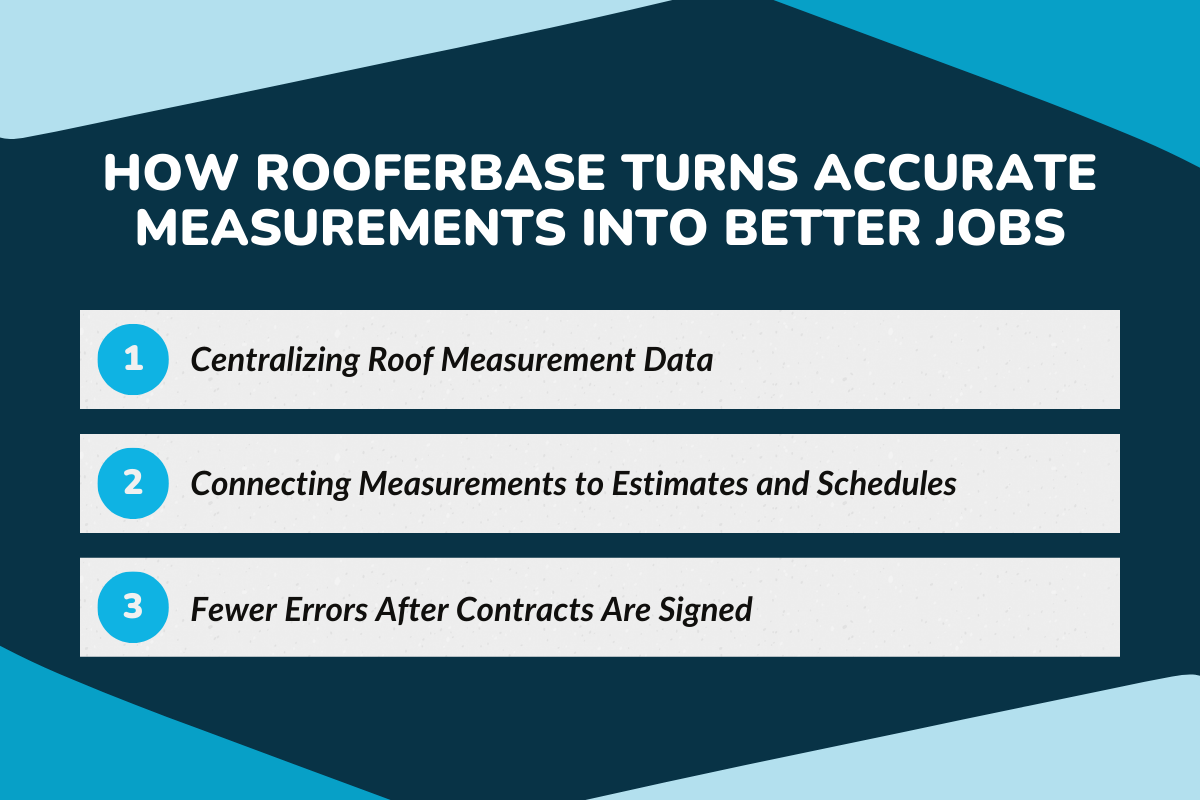
Getting accurate roof measurements is great. But the real win is what happens after you get them. RooferBase does not just store measurements; it connects them to everything your team does next, so your jobs run smoother from quote to install.
1. Everything Stays in One Place (So Nobody Is Guessing)
Instead of measurements being spread across emails, screenshots, PDFs, and someone’s phone, RooferBase keeps it all organized in one spot.
That means your team can quickly pull up:
- measurement reports and roof diagrams
- photos and inspection notes
- pitch, square footage, edges, and valleys
So whether it is your sales rep, estimator, or crew lead, everyone is looking at the same roof data.
2. Measurements Flow Straight Into Estimates and Scheduling
This is where accuracy starts saving real time. With RooferBase, roof measurements can feed directly into estimating and job planning, so your office doesn't waste hours re-entering numbers or double-checking details.
That leads to:
- faster quotes with fewer errors
- material orders based on real measurements
- schedules that match the true job size and scope
So your calendar stays realistic, and your crews are not walking into surprises.
3. Fewer Headaches After the Customer Says “Yes.”
Most roofing mistakes do not happen during the measurement. They happen later, when information gets lost or miscommunicated.
RooferBase keeps everything consistent from start to finish, which means:
- Crews show up with the right materials
- fewer mid-job changes and costly delays
- smoother installs and better profit margins
In short, it helps you deliver cleaner jobs because the planning is cleaner from day one.
Conclusion: Roof Measurements Are the Foundation of Every Profitable Job
Accurate roof measurements protect margins, reduce risk, and build trust. They save time, reduce waste, and help contractors scale without chaos.
If you want more work, fewer surprises, and happier customers, start with better measurements. Everything else gets easier from there.
Ready to upgrade how you measure roofs and run your business with RooferBase?
If inaccurate measurements, slow handoffs, or scattered tools are holding your team back, it’s time to rethink the system behind your growth.
Book a quick demo today and see how precision, speed, and structure can transform your next project and every project after that.
FAQs:
1. Why are detailed roof measurements so important before ordering roofing material?
Detailed roof measurements help you order the right roofing material, avoid shortages, and reduce waste before the job starts.
2. How does a roofing contractor use detailed roof measurements to create accurate estimates?
A roofing contractor uses detailed roof measurements to calculate area and material requirements, ensuring pricing remains accurate and customers trust the estimate.
3. Can detailed roof measurements really help a roofing contractor avoid costly mistakes?
Yes. Detailed roof measurements catch errors early and prevent wrong roofing material orders, rework, and lost money.
4. How often should a roofing contractor update detailed roof measurements during a project?
A roofing contractor should update detailed roof measurements after each site visit or design change to keep material orders accurate.