December 31, 2025
Roofing software has become essential as the industry is growing more competitive and customer expectations are rising. On top of that, manual workflows and scattered tools only slow teams down and create errors.
Roofing contractors often rely on separate tools for measurements, estimating, scheduling, project tracking, and customer communication.
When those workflows are disconnected, teams spend more time switching between systems, re-entering information, and trying to keep job details consistent.
Modern roofing software can bring those workflows together, helping contractors manage measurements, estimates, proposals, job progress, and field communication from a more connected system.
Modern Roofing Software to Manage Estimates, Measurements & Install Tracking in One Place
Integrated roofing software gives contractors a central place to manage key parts of the job lifecycle, from initial measurements and estimates through scheduling, project updates, and installation tracking.
This guide explains where disconnected roofing workflows create problems, how integrated software can help, and what contractors should look for when evaluating a roofing platform.
Key Takeaways
- Using separate tools for measurements, estimating, scheduling, and job tracking can create duplicate work and fragmented project data.
- Manual measurements and calculations can increase the risk of estimating errors when processes are not standardized.
- Centralized project tracking gives office and field teams better visibility into job status and responsibilities.
- Connected communication and job data can reduce delays caused by teams working from different information.
- Integrated roofing software can combine key workflows such as measurements, estimating, proposals, scheduling, project tracking, and customer communication.
Ready to simplify your roofing operations?
If you are tired of manually managing spreadsheets and calls, then see how smart roofing teams stay organized. Book your demo now.
What Are The Problems With the Traditional Roofing Process?
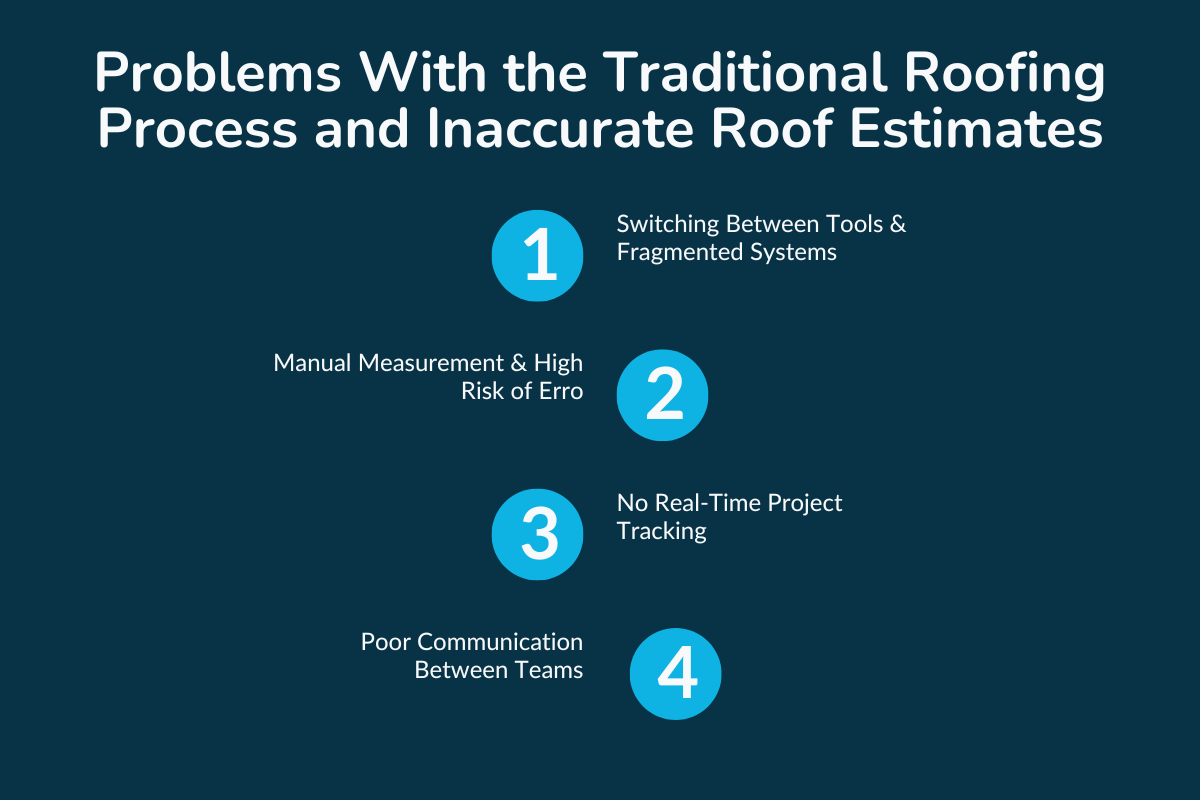
While many contractors still rely on traditional workflows, these methods often create bottlenecks that slow down operations and increase the chance of errors. Here are the most common challenges roofing teams face:
1. Switching Between Tools & Fragmented Systems
Roofing teams may use different apps for measurements, estimating, photos, scheduling, and customer communication.
When those systems do not share information, teams spend more time switching between tools, re-entering job details, and checking which version of the information is current.
2. Manual Measurement & High Risk of Error
Manual roof measurements and calculations depend heavily on the accuracy of the inspection and the information entered into the estimate.
Errors in roof dimensions, pitch, waste assumptions, or quantities can affect material planning, pricing, and the final proposal.
Digital measurement and estimating tools can help standardize parts of this process, but the underlying job information still needs to be accurate.
3. Limited Visibility Into Job Progress
When job updates are tracked through calls, messages, spreadsheets, or separate project tools, office teams may not have a clear view of what is happening in the field.
A centralized workflow can make it easier to see job status, schedules, assigned responsibilities, photos, and progress updates without relying on repeated check-ins.
4. Communication Gaps Between Office and Field Teams
Sales reps, office staff, project managers, and field crews all need access to current job information.
If customer selections, scope changes, schedules, photos, or production notes are stored in different places, teams can end up working from outdated or incomplete information.
Keeping those updates connected to the same job record helps reduce unnecessary back-and-forth and keeps everyone working from the same details.
What is Integrated Roof Management Software?
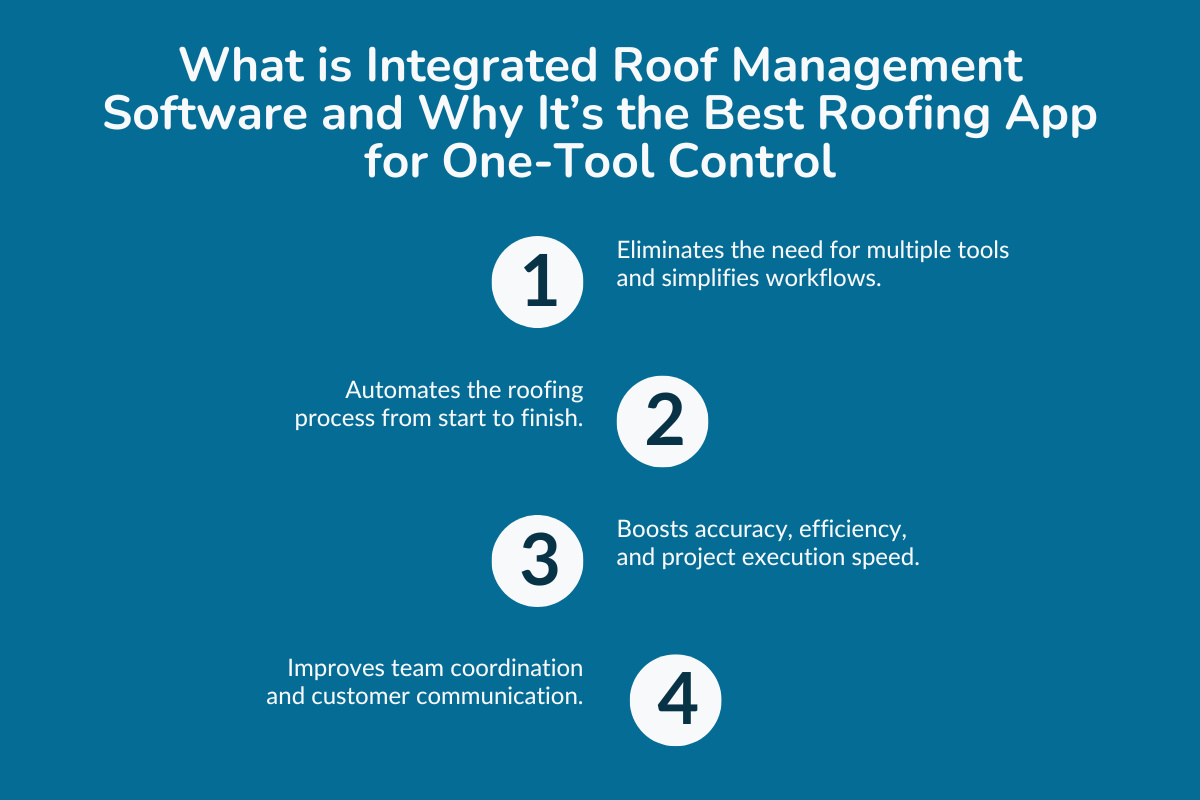
Integrated roofing software brings multiple parts of the roofing workflow into one connected system. Depending on the platform, that can include measurements, estimating, proposals, scheduling, job tracking, reporting, customer communication, and field updates.
The main advantage is not simply having more features in one place. It is reducing the number of times teams have to re-enter information, switch between tools, or reconcile different versions of the same job data.
Why Contractors Use Connected Roofing Software
- Reduce duplicate work: Customer, job, measurement, and estimating information can move between workflows without being entered repeatedly.
- Keep job information consistent: Sales, office, and field teams can work from the same customer records, scope details, schedules, and project updates.
- Improve workflow visibility: Managers can see job status, assigned work, schedules, and field activity without piecing information together from separate systems.
- Support office and field coordination: Mobile access and centralized updates make it easier for crews and office teams to share current job information.
- Simplify the software stack: A connected platform may reduce reliance on separate tools for every stage of the roofing workflow, depending on the contractor’s needs and existing integrations.
- Create a smoother customer experience: Connected estimates, proposals, approvals, documents, and communication can make it easier to keep homeowners informed throughout the job.
Check out: The Ultimate Guide to Roof Measurements: Tools, Tech, and Tips
How Roofing Software Supports Key Stages of the Roofing Workflow
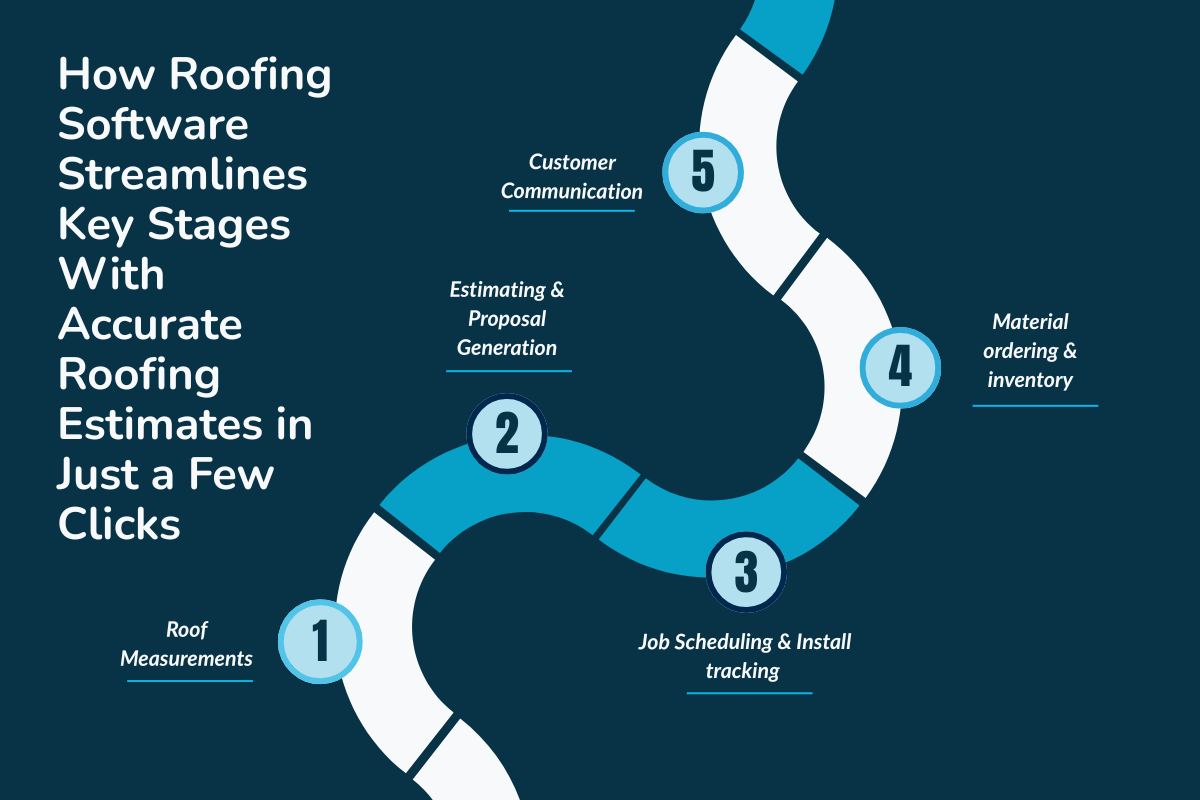
A connected roofing platform can help contractors manage key stages of the job without moving information manually between separate systems.
1. Roof Measurements
Roofing software may connect with aerial imagery, measurement reports, or other digital measurement tools to help contractors capture roof dimensions and use that data in estimating workflows.
Digital measurements can reduce some manual work, but contractors should still review the measurements and job conditions before relying on them for the final estimate.
2. Estimating and Proposal Generation
Estimating tools can help teams apply standardized pricing, material quantities, labor assumptions, waste factors, overhead, and markup more consistently.
Reusable templates and connected measurement data can also reduce the amount of repetitive entry required when building proposals.
3. Job Scheduling and Installation Tracking
Scheduling and project-management tools can help office teams assign crews, organize appointments, track job stages, and review field updates from one system.
Field teams may also be able to upload photos, notes, and progress updates so the office has better visibility into active jobs.
4. Material Planning and Ordering
Connected estimating workflows can help contractors generate material lists based on the quantities included in the estimate.
Where supplier integrations are available, teams may also be able to move those material requirements into the ordering process without recreating the list manually.
Contractors should still review quantities, product selections, and job-specific requirements before placing orders.
5. Customer Communication
CRM and communication tools can help contractors keep homeowners informed as the job moves from estimate to approval, scheduling, and production.
Depending on the platform, teams may be able to send proposals, appointment reminders, status updates, and follow-up messages while keeping those interactions connected to the customer record.
| Stage | Manual Workflow | Automated Workflow |
|---|---|---|
| Measurements | Physical site inspections using ladders, tape measures, and hand sketches; high dependency on technician skill | AI-powered or drone-based digital measurements with automated roof sketches and takeoff reports |
| Estimates | Created using spreadsheets and manual calculations, it often involves rechecking values | Instantly generated from measurement data; pricing rules and markups applied automatically |
| Install Updates | Coordination through phone calls, WhatsApp, or SMS; updates are often delayed or forgotten | Live tracking via mobile app with real-time status updates, images, and task completion alerts |
| Data Accuracy | Vulnerable to manual entry errors and miscalculated dimensions | Centralised data ensures consistent, error-free information across all workflows |
| Material Planning | Materials are estimated manually, increasing the risk of over-ordering or shortages | Auto-generated material lists aligned to measurements and estimates |
| Customer Communication | Updates are shared irregularly; customers often call for progress confirmations | Automated notifications and customer portals provide transparent tracking |
| Collaboration | Office and field teams often work in silos | Unified system ensures everyone works from the same data |
| Error Rate | High risk of duplicate work and documentation errors | Minimal due to automation and system-level validation |
| Time Taken | Slow and repetitive; frequent back-and-forth required | Faster execution with streamlined workflows |
| Profit Impact | Delayed billing and rework reduce margins | Faster invoicing and accurate estimates increase profitability |
What Are The Benefits of Using a Roofing Platform?
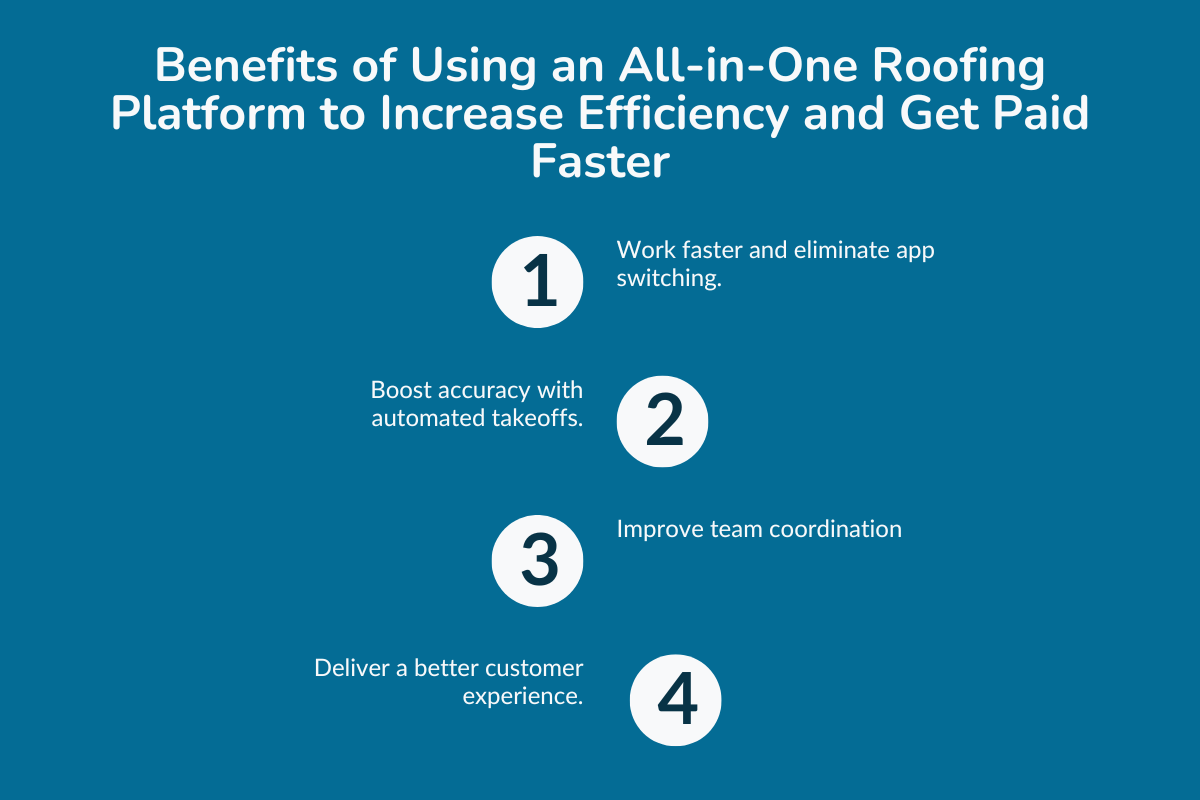
A unified roofing platform doesn’t just simplify tasks; it transforms how a roofing business operates, communicates, and delivers roofing projects from start to finish.
1. Work faster and eliminate app switching
With one roofing software solution, contractors can manage roof measurements, estimates, scheduling, and communication in just a few clicks, rather than juggling multiple tools.
2. Boost accuracy with automated takeoffs
Automated takeoffs, powered by accurate measurements and unified data, ensure precise roofing estimates, fewer errors, and consistent results across both residential and commercial roofing projects.
3. Improve team coordination
Both office teams and field crews stay aligned with real-time updates at the job site, improving project management, workflow efficiency, and overall team productivity.
4. Deliver a better customer experience.
Faster turnaround times, clear communication, professional proposals, and smooth project flow impress clients, help you win more jobs, and build long-term trust.
Also check out: Roofing CRM Software – The Ultimate Solution for Roofing Contractors.
Common Mistakes When Choosing Roofing Software
Choosing the right roofing software can be challenging, and many businesses overlook key factors that affect long-term success.
Avoiding these common mistakes can save time, reduce costs, and ensure smoother adoption:
- Focusing only on price: Choosing the cheapest option often means missing essential features and incurring costly upgrades later.
- Ignoring mobile accessibility: Software without strong mobile tools slows field teams and causes communication gaps.
- Overlooking integration needs: Systems that don’t integrate with CRMs, accounting, or measurement tools create double work.
- Choosing feature overload: Complex platforms with unnecessary tools increase training time and lower adoption rates.
- Skipping scalability considerations: Software that cannot grow with your business results in frequent switching and disruptions.
Roofing Software Built for Accurate Estimates and Faster Jobs: RooferBase
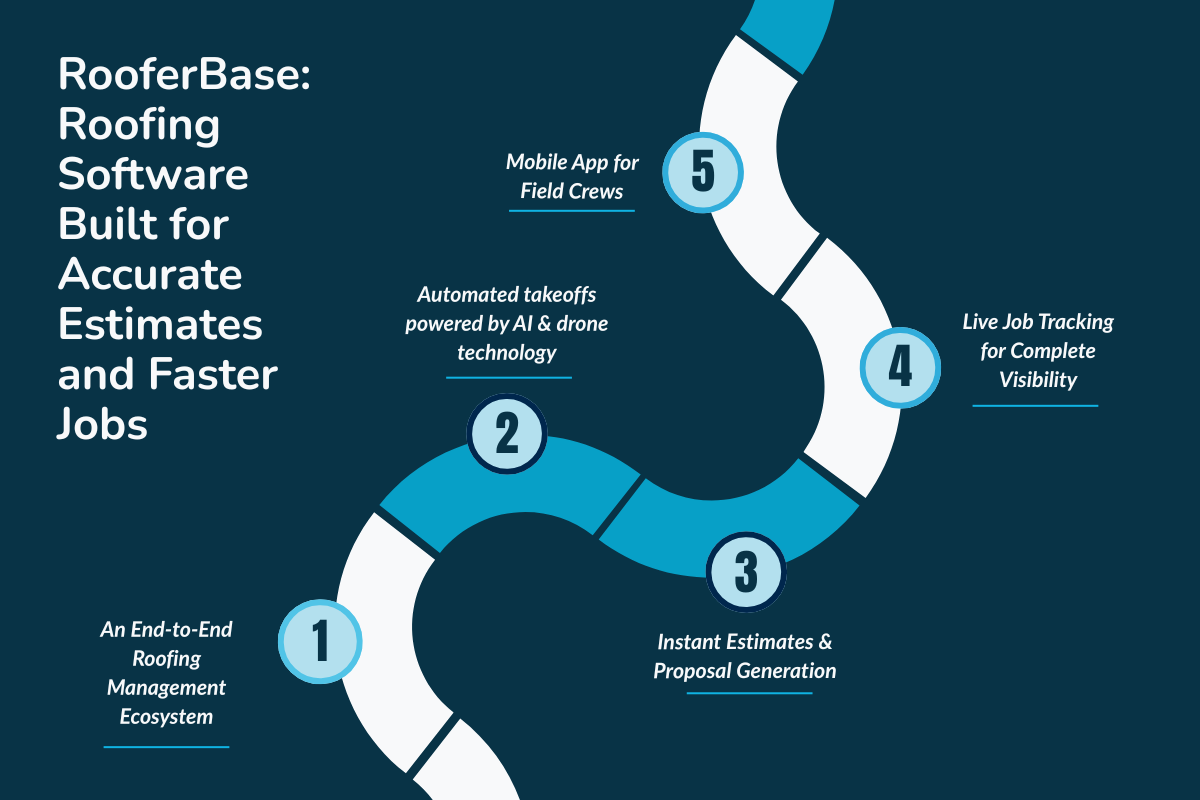
RooferBase brings key roofing workflows together in one connected platform, helping contractors move from lead and measurement data to estimates, proposals, scheduling, and production without relying on separate systems for every stage.
Key capabilities include:
- Roof measurements and estimating: Use measurement data to calculate material needs, labor, waste, overhead, markup, and job pricing.
- Proposals and approvals: Create branded proposals, present pricing and project details, collect digital approvals, and track proposal activity.
- CRM and customer management: Keep leads, customer information, follow-ups, appointments, estimates, and proposals connected to the same record.
- Scheduling and project tracking: Assign jobs, manage crews and timelines, upload field updates, and track project progress from the office or field.
- Connected workflows: Move information from sales and estimating into production without repeatedly rebuilding job details across different tools.
For roofing contractors trying to reduce app switching and keep estimating, sales, and production information connected, RooferBase provides a more centralized way to manage the job lifecycle.
Conclusion
Roofing businesses today are no longer measured just by how well they install roofs, but by how efficiently they manage information, time, and communication. But relying on manual workflows and disconnected tools only increases the risk of errors, delays, and missed opportunities.
This is where a unified roofing software solution brings everything together: estimates, measurements, proposals, payments, and project tracking.
So, teams can work more efficiently and deliver a smoother experience on every job. With one tool supporting the office and the field, companies can save time, improve accuracy, and scale their roofing business with confidence.
In the end, it’s not about abandoning traditional roofing skills; it’s about supporting them with the right technology so your business can grow without chaos and deliver consistent results on every project.
About RooferBase: Measurements + Estimates + Install Control
RooferBase brings roof measurements, estimating, scheduling, and installation tracking into one connected roofing platform. Instead of juggling spreadsheets, calls, and multiple apps, teams work from a single system that keeps job data consistent from the first quote to final installation.
So, if you are looking to eliminate chaos from your roofing projects, book a demo and experience a roofing platform that keeps your workflow clear, fast, and connected.
FAQs
1. How does roofing software improve measurement accuracy?
Many roofing platforms integrate with aerial imagery, satellite measurements, drone data, or digital measurement reports to reduce reliance on manual measuring and data entry. Contractors should still review measurement data and job conditions before using it in a final estimate.
2. How is an all-in-one roofing platform different from generic CRM tools?
Generic CRMs primarily focus on leads, contacts, and customer communication. Roofing platforms may also connect estimating, proposals, scheduling, project tracking, field updates, invoicing, measurements, and other contractor-specific workflows, depending on the software.
3. Is roofing software difficult to learn?
That depends on the platform and the complexity of the contractor’s workflow. Look for software with straightforward navigation, mobile access, onboarding support, training resources, and workflows that match how your team already works.
4. Can roofing software be used for small roofing companies or startups?
Yes. Smaller roofing businesses can use roofing software to organize leads, estimates, customer communication, scheduling, and job information without relying on separate spreadsheets and apps. The right platform should match the team’s current needs and allow room to scale as the business grows.