February 2, 2026
Preparing a roof estimate today isn’t just about plugging numbers into a form. Homeowners are comparing contractors, reading reviews, and expecting fast replies with pricing they can actually understand. And on your side, those numbers matter. One small mistake can cut into your profit or turn into a headache once the job begins.
Whether it’s a quick repair or a full replacement, your estimate is often the first real impression a homeowner gets of your business. It shows how professional you are and how easy you’ll be to work with. Speed matters too. When estimates take too long or feel unclear, customers usually move on.
Tightening your estimating process helps you respond faster, avoid costly errors, and turn more quotes into signed jobs.
How to Create Fast and Accurate Roof Estimates: A Complete Contractor Guide
If you have been in the roofing business for a while, you know how competitive quoting has become. Homeowners rarely contact just one contractor anymore.
They collect multiple estimates, compare timelines, and often go with the roofer who responds quickly and sounds confident. In many cases, the fastest and most accurate estimate wins the job.
Traditional estimating methods slow down this process. Manual measurements, handwritten notes, and scattered pricing sheets make it easy to miss details. One wrong square footage or a forgotten disposal cost can quickly eat into profits.
While online roofing cost calculators can give homeowners a rough idea, they are no replacement for a clear, detailed quote from a professional contractor.
Therefore, in this guide, we'll understand how successful roofers create accurate estimates quickly, avoid costly mistakes, and use modern tools to protect margins while closing more jobs.
Key Takeaways
- Balanced estimates come from moving fast without cutting corners, so homeowners get quick quotes while you keep accuracy and pricing under control.
- The right numbers make all the difference because precise measurements, realistic labor costs, and updated material prices protect your margins from shrinking later.
- A clear presentation builds trust instantly when homeowners can understand your pricing, see what’s included, and feel confident choosing your company.
- Better tools help your team finish takeoffs faster, avoid manual errors, and send polished estimates before competitors even follow up.
- RooferBase advantage gives growing contractors a dependable way to create consistent, professional estimates that scale with their business and protect long-term profit.
Still relying on slow or inconsistent estimates? See how top roofing contractors create fast, accurate quotes without guesswork. Explore how modern tools and RooferBase help you measure smarter, price correctly, and win more jobs without the stress.
Why Fast and Accurate Roof Estimates Matter More Than Ever?
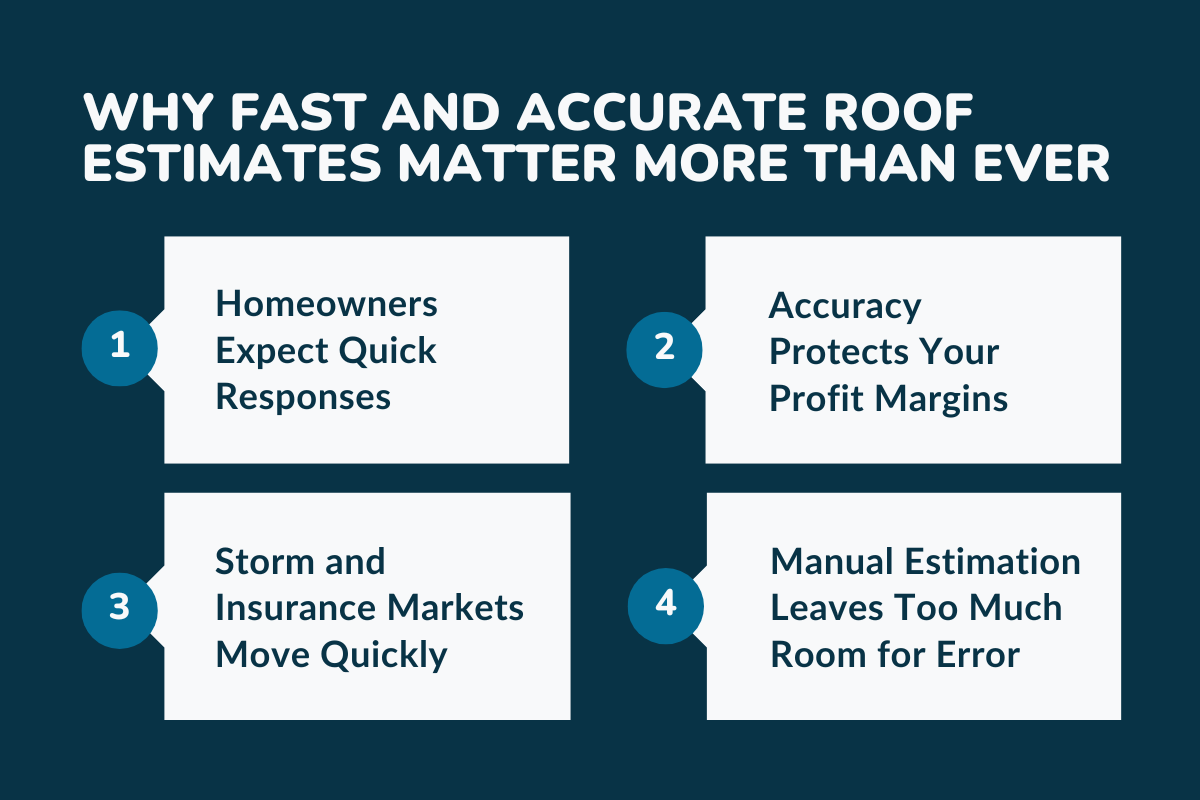
In today’s roofing market, the contractors who win more jobs and protect their margins are the ones who can deliver fast, accurate estimates without cutting corners.
1. Expect Quick Responses
Homeowners move fast. When someone submits their home address for a roof replacement quote, they usually do so with multiple roofing companies at once. A slow response sends the wrong message. It signals disorganization, even if your workmanship is excellent.
Fast estimates create momentum. They show professionalism and respect for the homeowner’s time. Contractors who deliver instant roof estimates or same-day quotes often lock in appointments before competitors even respond.
2. Accuracy Protects Your Profit Margins
Speed without accuracy is dangerous. Overestimating roof replacement costs pushes homeowners toward cheaper options. Underestimating is worse. It leads to higher labor costs, rushed roofing work, and uncomfortable change order conversations.
An accurate estimate accounts for roof size, pitch, multiple layers, disposal costs, and labor requirements. It prevents surprises during installation and protects your bottom line.
3. Storm and Insurance Markets Move Quickly
Storm seasons amplify everything. When demand spikes, contractors who can inspect, estimate, and submit paperwork quickly dominate the market.
Insurance-driven roof replacement jobs reward speed and accuracy. Missing supplements, inspection fees, or vulnerable areas in the estimate can cost thousands.
4. Manual Estimation Leaves Too Much Room for Error
Tape measures, memory-based pricing, and handwritten calculations leave too much to chance. A missed pipe boot, incorrect slope, or ignored roof decking issue can snowball into delays and lost money. Manual estimating does not scale, and it rarely stays consistent.
Components of a Professional Roofing Estimate
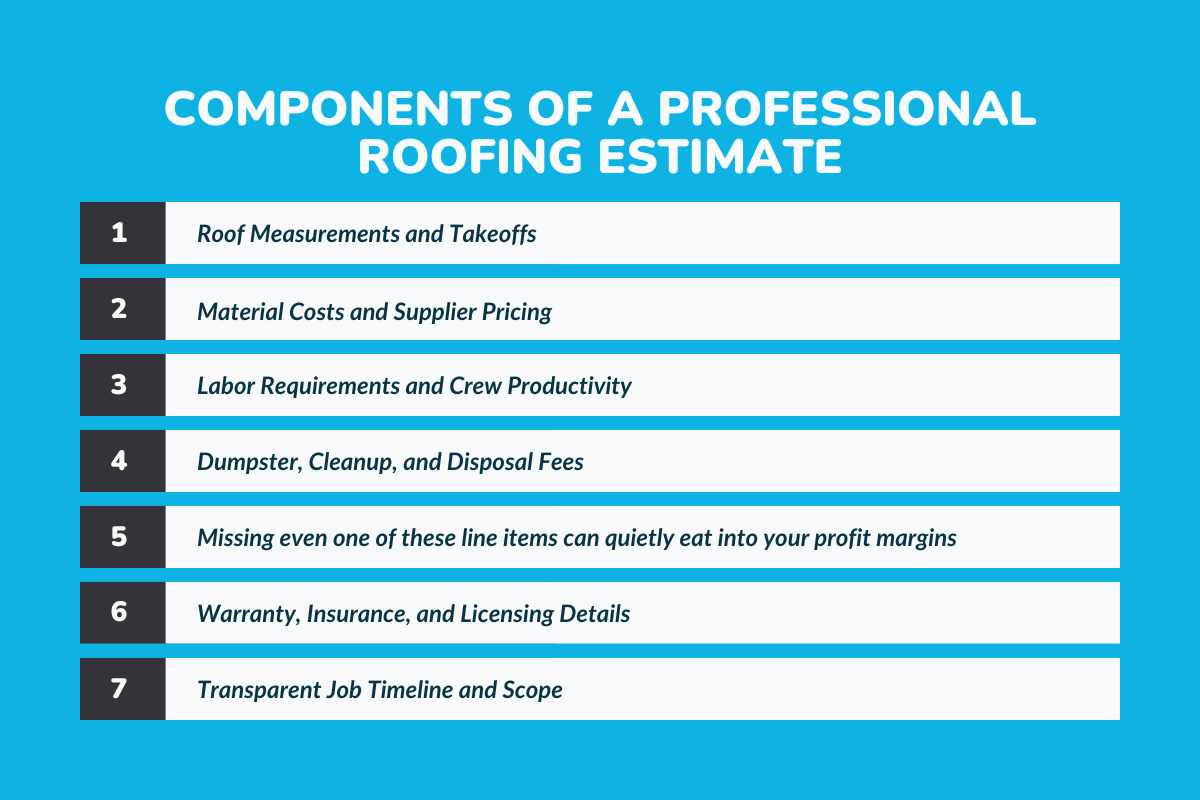
A professional roofing estimate goes beyond a single price and breaks down every cost, detail, and assumption so homeowners understand exactly what they’re paying for and contractors protect their margins.
Roof Measurements and Takeoffs
Every accurate estimate starts with correct measurements. Contractors must account for roof area, square footage, pitch, facets, valleys, hips, and overhangs. Waste factors vary based on roof type, slope, and complexity. Satellite imagery and aerial tools dramatically reduce measurement errors.
Material Costs and Supplier Pricing
Roofing materials go far beyond shingles. The choice of roofing material, such as asphalt, metal, or tile, significantly affects both the price and longevity of a new roof.
In 2026, the average cost for roof replacement in the U.S. ranges from $7,000 to $14,500, and due to new 2025 tariff laws, costs for specific roofing materials have increased by 10–25%. Here are typical cost ranges for different roofing materials:
| Roofing Material Type | Typical Cost Range |
|---|---|
| Asphalt shingles | $6,000 – $9,000 (about $3.50 – $6.00 per sq ft) |
| Metal roofing | $10,245 – $41,640 |
| Tile roofing | $10,665 – $20,900 |
| Wooden shakes and shingles | $10,230 – $15,500 |
| Slate roofing | $39,925 – $54,020 |
A professional estimate includes underlayment, roof flashing, pipe boots, nails, vents, drip edge, ice and water shield, and gutters when applicable. Pricing must reflect real supplier costs, not outdated spreadsheets.
Labor Requirements and Crew Productivity
Labor costs depend on roof pitch, height, tear-off difficulty, and multiple layers. A steep slope or old roof with water damage requires more time and skill. Higher labor costs should be reflected clearly to avoid profit erosion.
Dumpster, Cleanup, and Disposal Fees
Disposal costs are often underestimated. Old shingles, underlayment, and debris add up quickly, especially during complete replacement jobs. Removing and disposing of the existing roof can cost between $0.40 $2.00 per square foot.
| Additional Roofing Cost Item | Typical Cost Range |
|---|---|
| Roof decking replacement | $2.20 – $3.00 per sq ft |
| New underlayment | $1.50 – $2.10 per sq ft |
| Ice and water barrier | $1.87 – $2.53 per sq ft |
| Fascia board replacement | $4.25 – $8.62 per linear ft |
| Soffit replacement | $2.80 – $5.28 per linear ft |
| Roof flashing | $9.00 – $11.00 per linear ft |
| Pipe boots | $63.00 – $85.00 each |
Missing even one of these line items can quietly eat into your profit margins.
Warranty, Insurance, and Licensing Details
Including workmanship warranty details builds trust. Homeowners want to know their roof is protected. Insurance and permit notes also reduce approval friction during decision-making.
Transparent Job Timeline and Scope
A clear scope explains what is covered and what is not. It outlines installation steps, project duration, and assumptions. Transparency prevents misunderstandings later.
Here's everything you need to know about roofing, read this one: The Ultimate Guide to Roof Measurements: Tools, Tech, and Tips
Step-by-Step Process: How Contractors Create Accurate Roof Estimates
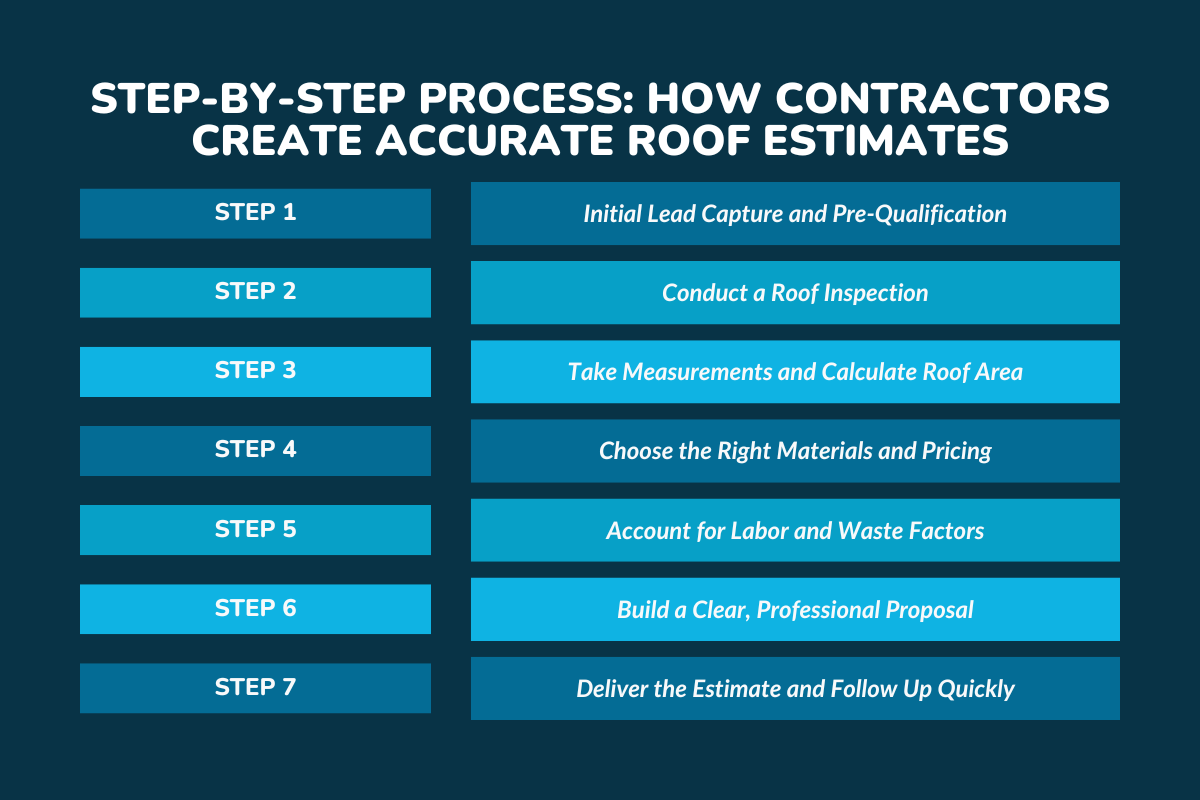
Creating a solid roof estimate is about more than just numbers. It’s a structured process that helps contractors price jobs accurately, avoid surprises, and build trust with homeowners. Here’s how most professionals do it, step by step.
Step 1: Initial Lead Capture and Pre-Qualification
Every accurate estimate starts with the right information. Before anyone climbs a ladder or opens a measurement tool, contractors gather key details to understand the scope of the job.
This usually includes:
- Property address and roof type
- Whether the job is a repair, full replacement, or insurance claim
- Homeowner concerns like leaks, the age of the roof, or storm damage
Getting clarity early helps avoid wasted site visits and ensures the inspection focuses on what actually matters.
Step 2: Conduct a Roof Inspection
Next comes the inspection, either in person or remotely. Contractors look beyond surface damage to understand the roof’s true condition.
A proper inspection covers:
- Shingles, flashing, valleys, and gutters
- Signs of leaks or water damage
- Decking and underlayment condition
- Attic ventilation and overall roof age
Many contractors now use drone photos or satellite imagery to capture clear visuals without climbing every roof, especially on steep or complex structures.
Step 3: Take Measurements and Calculate Roof Area
Accurate measurements are the backbone of a reliable estimate. Contractors measure:
- Total roof area
- Pitch and slope
- Ridges, hips, valleys, and penetrations
Modern measurement tools automatically calculate square footage and factor in waste percentages, eliminating guesswork and reducing costly errors.
Step 4: Choose the Right Materials and Pricing
Material selection depends on the roof type, homeowner preference, and budget. Whether it’s asphalt shingles, metal roofing, or specialty materials, pricing should be based on up-to-date supplier libraries. Using consistent pricing avoids underquoting and ensures every estimate reflects real material costs.
Step 5: Account for Labor and Waste Factors
Labor is more than just installation. Contractors factor in:
- Tear-off and disposal
- Safety equipment and setup
- Roof complexity and number of layers
Waste percentages vary depending on roof design, and disposal or dump fees are often included as a separate line item so homeowners understand the full cost upfront.
Step 6: Build a Clear, Professional Proposal
A strong estimate is easy to understand. The best proposals include:
- Photos and simple diagrams
- Clear line-item pricing
- Good, better, best options for materials
This helps homeowners compare choices confidently while keeping expectations aligned on cost and scope.
Step 7: Deliver the Estimate and Follow Up Quickly
Speed can make or break the deal. Sending the estimate quickly and following up ensures your company stays top of mind while the homeowner is still deciding.
Automated reminders and financing options can significantly improve close rates, especially when homeowners are comparing multiple contractors.
Tools and Techniques That Speed Up Roofing Estimates
Speed and accuracy don’t come from working faster; they come from using the right tools. Modern estimating technology removes manual steps, reduces errors, and helps contractors deliver clear, professional quotes in far less time.
1. Aerial and Drone Measurement Tools
Aerial and drone measurement tools allow contractors to capture accurate roof data without climbing every structure. Using satellite imagery, teams can measure roof area, pitch, and edges in minutes instead of hours.
This not only improves accuracy but also reduces safety risks and delays caused by weather or access issues.
2. Roof Measurement Apps and Takeoff Software
Roof measurement apps automate complex calculations that are easy to get wrong when done manually. Area, slope, and material quantities are generated instantly based on the roof design.
This standardization ensures that every sales rep produces estimates using the same logic, keeping pricing consistent across the entire roofing business.
3. Material Pricing Integrations
Material pricing integrations connect estimates directly to supplier cost data. Instead of relying on outdated spreadsheets, contractors always quote current prices.
This prevents margin loss during price fluctuations and ensures every estimate reflects real market conditions.
4. Digital Proposal Builders
Digital proposal builders turn raw numbers into clear, professional documents that homeowners can easily understand. Clean layouts, images, and structured pricing explain the value of the roofing work without overwhelming the customer. A well-presented proposal builds confidence and reduces hesitation during the decision process.
5. CRM and Workflow Tools for Faster Turnaround
CRM and workflow tools keep the entire estimating process organized from first contact to signed job. Leads are tracked automatically, follow-ups are never forgotten, and sales and production teams stay aligned. With fewer handoffs and less manual coordination, estimates move faster and close rates improve.
To avoid costly mistakes and boost accuracy in your estimates, have a look at this: Roofing Estimating Tips: Getting the Details Right
What Are The Biggest Mistakes Contractors Make When Estimating Roofs?
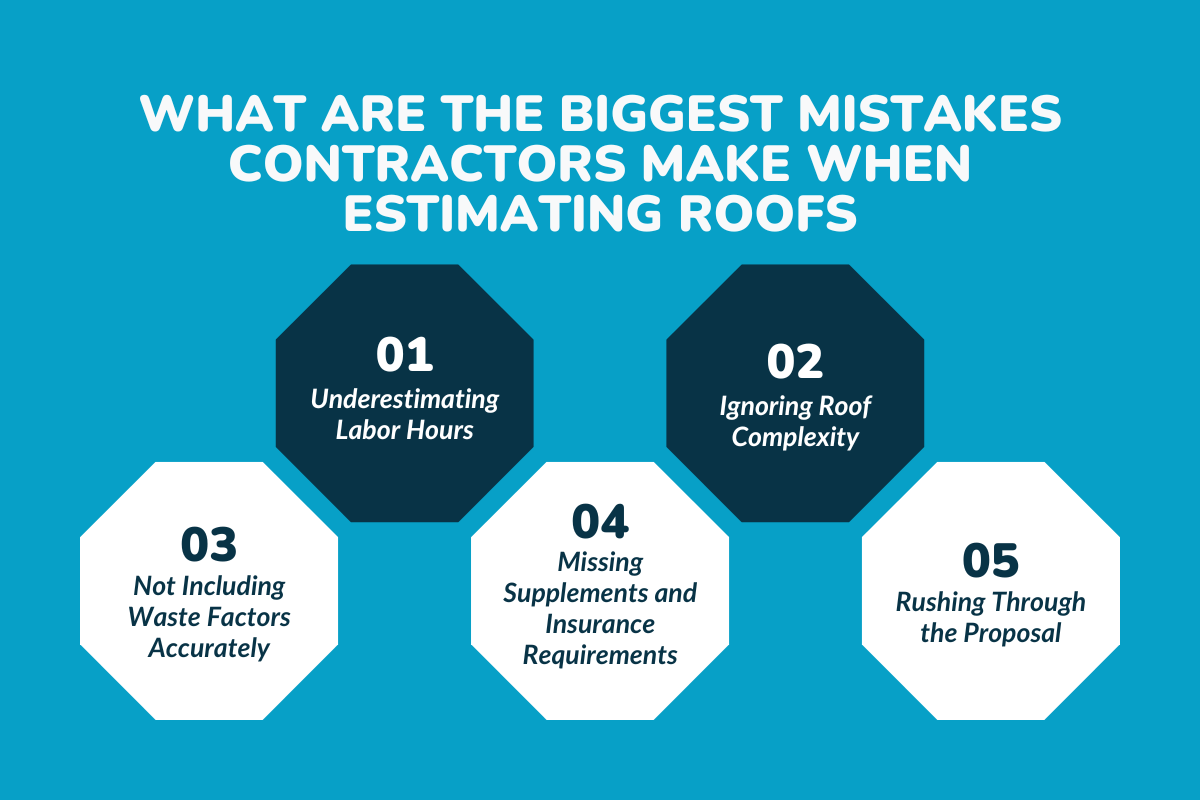
Small estimating mistakes can quietly drain profits, and knowing where contractors go wrong is the first step to creating accurate, reliable roof estimates.
A. Underestimating Labor Hours
- Labor is often the most considerable expense in a roofing job and the easiest to misjudge.
- Rushed schedules lead to installation errors, overtime costs, and crew burnout.
- Accurate labor forecasting should factor in tear-off difficulty, roof height, safety setup, and crew experience.
- Pricing labor correctly keeps projects on schedule and protects profit margins.
B. Ignoring Roof Complexity
Valleys, dormers, skylights, and vulnerable areas increase time and materials. Ignoring them creates costly surprises.
Additionally, the size, pitch, and height of the house significantly influence roof replacement costs, as larger or steeper roofs generally require more labor and materials.
C. Not Including Waste Factors Accurately
- Using a flat 10 percent waste factor does not work for every roofing project.
- Steep slopes, cut-heavy layouts, and multiple layers require higher waste allowances.
- Material type and roof design influence the amount of waste realistically needed.
- Accurate waste calculations prevent material shortages and last-minute purchases.
D. Missing Supplements and Insurance Requirements
Insurance work demands detail. Missing supplements reduce payouts and delay payments. It's also important to check local building codes and ensure the roof estimate accounts for necessary permits and compliance with specific fasteners or shields required in 2025.
E. Rushing Through the Proposal
- Even a well-priced estimate can lose if the proposal looks rushed or unclear.
- Homeowners want simple explanations, clean formatting, and confidence in the scope of work.
- Missing details or poor presentation reduces trust, even at competitive pricing.
- A professional proposal helps homeowners feel comfortable moving forward.
How the Right Software Makes Roof Estimates Faster and More Accurate?
Modern roofing software removes the guesswork from estimating by combining speed, accuracy, and automation into one streamlined process.
Automated Measurements and Takeoffs
Automated measurement tools eliminate the need to climb every roof while delivering accurate square footage and pitch data. They account for cuts, edges, and roof complexity with far less human error.
This speeds up estimating and keeps every quote consistent across jobs.
Built-In Pricing Libraries
- Preloaded material pricing keeps every estimate aligned with current supplier rates.
- When prices change, updates happen instantly without rebuilding estimates.
- This protects margins and removes pricing inconsistencies between sales reps.
Proposal Templates That Sell
- Professionally designed templates make estimates easy for homeowners to understand.
- Multiple pricing options, deposits, and financing details reduce hesitation.
- Clear presentation helps homeowners move from review to approval faster.
Instant Follow-Ups and Lead Nurturing
- Unread estimate alerts notify reps when homeowners haven’t reviewed a quote.
- Automated reminders keep conversations moving without manual effort.
- Faster follow-ups lead to higher close rates and fewer lost opportunities.
Job Tracking and Conversion Analytics
- Contractors can see which estimates convert and where deals slow down.
- Performance data highlights top reps and training opportunities.
- Clear analytics turn estimating into a predictable, repeatable process.
The Fastest Way to Create Roof Estimates That Win Jobs RooferBase
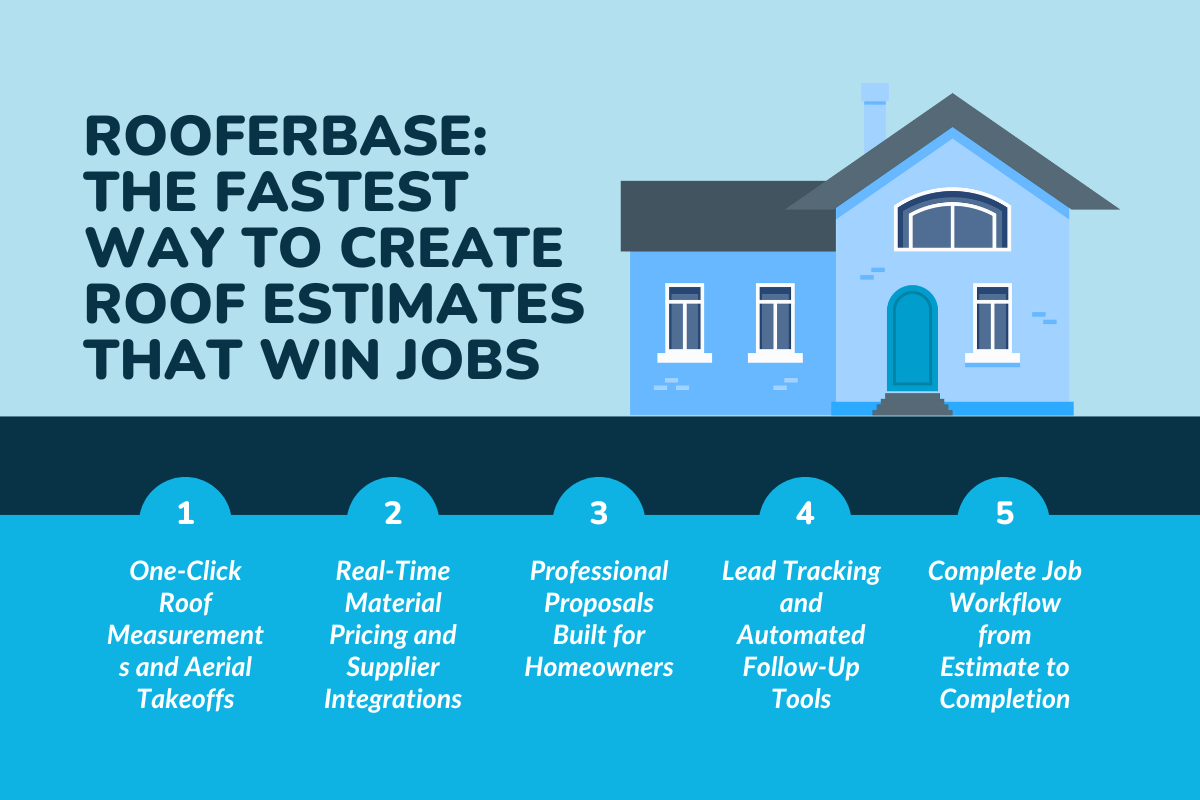
RooferBase helps contractors create fast, accurate roof estimates by bringing measurements, pricing, proposals, and follow-ups into one connected system.
1. One-Click Roof Measurements and Aerial Takeoffs
Generate accurate roof measurements in minutes using aerial imagery and automated takeoff tools. This eliminates manual measuring errors, reduces time on ladders, and helps contractors produce consistent estimates across every roofing project.
2. Real-Time Material Pricing and Supplier Integrations
RooferBase keeps material pricing synced with your suppliers so quotes stay accurate as costs change. This protects profit margins, removes guesswork, and ensures every estimate reflects current market prices.
3. Professional Proposals Built for Homeowners
Create clean, easy-to-understand proposals that include photos, diagrams, warranty details, and digital signatures. A professional presentation builds trust, shortens decision time, and helps homeowners feel confident moving forward.
4. Lead Tracking and Automated Follow-Up Tools
Every lead is tracked from first contact to signed job, with automated follow-ups ensuring no opportunity is missed. Faster responses keep your company top of mind and increase close rates without extra admin work.
5. Complete Job Workflow from Estimate to Completion
Manage scheduling, materials, job photos, invoicing, and payments in one connected system. This end-to-end visibility keeps teams aligned, reduces delays, and helps projects move smoothly from estimate to final payment.
Bringing It All Together
Fast and accurate roof estimates are no longer optional. Contractors who modernize their estimating process close more jobs, protect margins, and deliver a smoother homeowner experience. Precision builds trust and speed wins attention. The right tools turn estimating from a bottleneck into a competitive advantage.
Turn Faster, More Confident Estimates Into More Roofing Jobs.
If your estimates feel slow, inconsistent, or stressful, it may be time to rethink your process. Streamlining how you measure, price, and present your roofing work can be the difference between chasing jobs and choosing which ones you want.
Book a quick demo and get more jobs.
FAQs:
How long should a roof estimate take?
With modern measurement and pricing tools, most roofing contractors can deliver a clear, accurate estimate within a few hours, sometimes the same day.
What causes inaccurate roof estimates?
Inaccurate estimates usually come from incorrect measurements, outdated material pricing, overlooked labor or disposal costs, and reliance on manual calculations.
Do instant roof estimates reduce accuracy?
Instant roof estimates remain accurate when built on reliable measurement data, updated pricing libraries, and standardized estimating workflows.
Why do some estimates lose money?
Estimates lose money when labor hours, waste factors, roof complexity, or disposal costs are underestimated during the quoting process.
Is roofing software worth the cost?
Most contractors see substantial returns from faster quote delivery, fewer pricing mistakes, improved close rates, and healthier profit margins.