March 9, 2026
“Roofing CRM is the difference between a missed opportunity and a booked job.”
Roofing CRM software becomes essential when lost leads aren’t due to low demand but due to missed follow-ups, scattered notes, and unclear lead ownership.
And as competition in the roofing industry increases, relying on spreadsheets or siloed roofing apps makes it harder for roofing contractors to manage leads, track jobs, and keep job-site activity aligned across teams.
This is where a roofing management system becomes essential. Purpose-built solutions centralize lead management, job tracking, follow-ups, and project workflows all in one place.
Roofing CRM Software Built to Grow Your Roofing Business
Roofing CRM software helps roofing businesses grow by centralizing new leads, phone calls, and job details into one system built for the roofing industry.
With a mobile app that works on any device, teams can capture qualified leads faster, respond more quickly, and manage more jobs without losing track of follow-ups.
In this blog, we cover how features like aerial measurements, pre-built templates, and crew scheduling help roofing contractors save time, manage material orders, and boost cash flow while closing more sales efficiently.
Key Takeaways
- Roofing CRM software helps roofing companies and contractors track leads, manage jobs, and follow up efficiently, minimizing lost opportunities.
- Tools like aerial measurements, pre-built templates, and crew scheduling streamline the sales process and save time at the job site.
- Integrations for material orders, customizable dashboards, and financing improve cash flow and overall efficiency for a growing roofing operation.
- Mobile-enabled roofing software keeps teams connected, allowing them to manage projects and updates from anywhere.
- A structured CRM platform enables roofing companies to scale operations, take on more jobs, and increase revenue consistently.
Ready to turn fewer lost leads into more closed jobs?
Schedule a demo to see how RooferBase can improve your sales pipeline and align your team.
Why Roofing Businesses Lose Leads Without a CRM?
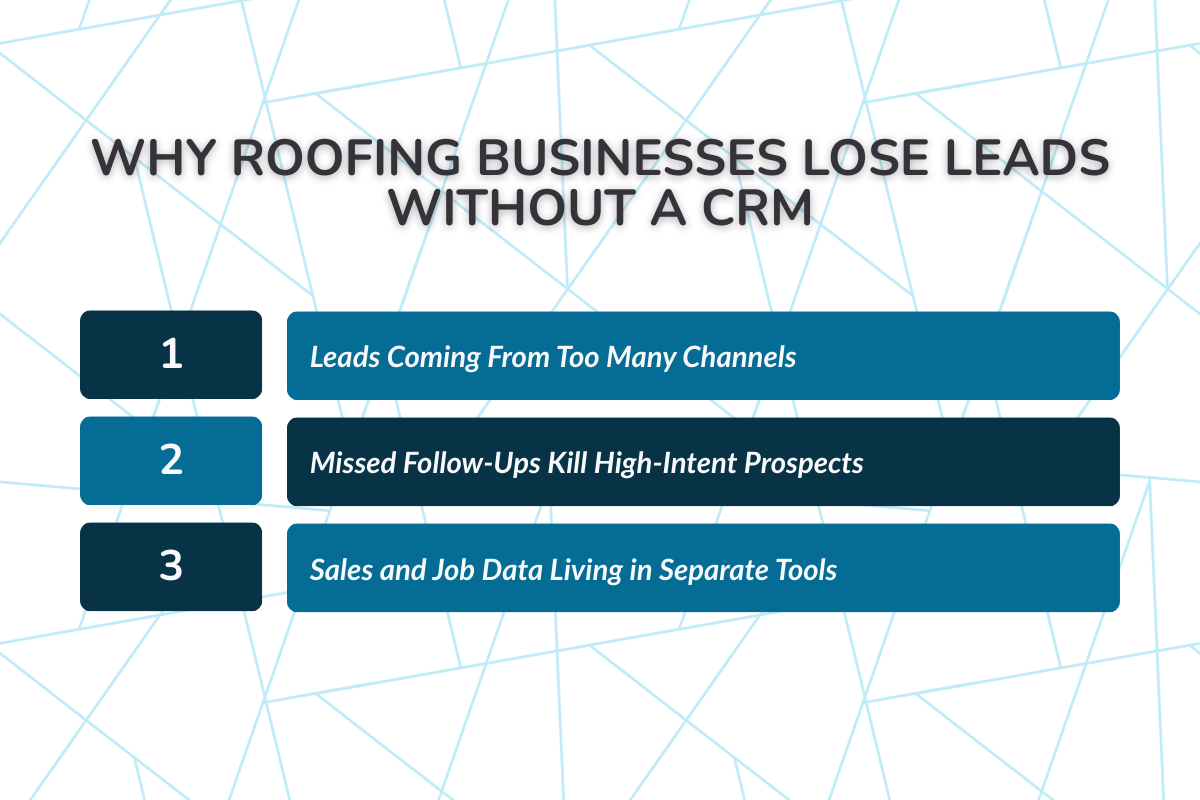
Lost leads usually aren’t about demand. They happen when systems can’t keep up with the pace of inquiries.
1. Leads Coming From Too Many Channels
Roofing companies receive leads from phone calls, website forms, ads, referrals, and social platforms. Without a single system to capture them all, important details get scattered or missed entirely.
- No centralized place to track every inquiry
- Slow or inconsistent responses across channels
- High-intent leads slipping through unnoticed
2. Missed Follow-Ups Kill High-Intent Prospects
Ever had a lead that sounded interesting, only to go cold?
That usually comes down to timing. When follow-ups rely on memory or manual notes, delays are inevitable. Meanwhile, competitors who respond faster win the job.
Without structured reminders and ownership, even strong prospects lose interest before a decision is made.
3. Sales and Job Data Living in Separate Tools
Once a lead turns into a job, information often gets split across different tools. That gap creates confusion and weak handoffs between sales and execution.
- No continuity from inquiry to job to payment
- Limited visibility once work begins
- Harder to track performance and outcomes
This is where lost leads turn into lost revenue, not because teams aren’t working hard, but because the system isn’t built to support them.
What is a Roofing CRM, and How Does It Solve This?
A roofing CRM is a central hub for managing leads, jobs, and follow-ups. It keeps the sales process organized and ensures no opportunity slips through the cracks.
This section explores how roofing companies can streamline operations, stay on top of every job, and grow sales efficiently.
1. Centralized Lead Management
A centralized approach helps roofing teams reduce wasted time and stay aligned on priorities. When every lead is logged and tracked, roofing contractors can focus on closing deals instead of chasing missing information.
- All new inquiries and leads captured in one platform
- Automatic lead assignment and tracking
- Easy access for office staff and field teams
2. Sales Pipeline Built for Roofing Workflows
Unlike generic CRM software, a roofing CRM maps naturally to the way your business operates. From first inquiry to signed contract, you can track each stage of the pipeline and spot stalled opportunities early.
Contractors gain visibility into sales performance across teams, making it easier to manage jobs at multiple locations.
3. Automated Follow-Ups That Prevent Lead Drop-Off
Timely follow-ups are critical in roofing operations, especially for busy contractors managing multiple jobs. A roofing CRM sends reminders, notifications, and task automation to ensure each prospect receives attention before interest fades. This helps teams increase conversions without adding more administrative work.
> Commission & Performance Tracking
- Built-in tools track sales, commissions, and team performance
- Provides clear metrics to reward top-performing sales teams.
- Encourages accountability while keeping the roofing business profitable
By combining lead management, automated follow-ups, and performance tracking, this system empowers companies to streamline operations, save time, and grow sales effectively.
Managing Roofing Jobs Seamlessly After the Sale
A roofing CRM delivers value well beyond closing the deal. After the contract is signed, it helps roofing companies manage jobs, teams, and timelines from one connected system.
Sales, production, and office staff stay aligned, reducing delays and keeping projects moving without unnecessary back-and-forth.
1. Job Details Linked Directly to the Original Lead
When a lead converts into a job, all related information stays in the same system. Customer details, scope of work, notes, documents, and material requirements remain tied to the original lead, so nothing gets lost between sales and production.
Moreover, because both sales and field teams work inside the same roofing CRM software, handoff issues are reduced. Team members can quickly review past conversations, approvals, and expectations, helping the business save time while maintaining industry standards.
2. Scheduling, Crew Coordination, and Job Status
With job details already organized, the focus naturally shifts to keeping crews, timelines, and daily work in sync. This is where a roofing CRM helps teams stay ahead rather than react to last-minute changes.
- Office teams can assign crews, set job timelines, and manage schedules from one place
- Progress is tracked from start to completion, making it easier to spot delays early
- Real-time job status updates keep office staff and field teams on the same page
- Integrations support billing workflows, integrated financing, and performance dashboards
- Fewer manual updates and phone calls mean better control over timelines and revenue
This structured approach helps contractors keep projects moving smoothly while reducing day-to-day coordination stress.
3. Better Visibility Across Active Roofing Projects
When you’re juggling multiple roofing jobs at once, it’s easy to lose track of what’s happening where. Which jobs are moving smoothly? And which ones need attention?
A centralized system answers those questions at a glance by showing what’s scheduled, in progress, or delayed. Instead of chasing updates through calls and messages, managers get a clear view of workloads and priorities in one place.
Fewer manual check-ins free up office teams to focus on higher-value work, while better visibility into materials and marketing efforts supports smarter planning and smoother execution across the entire roofing business.
Read this blog to explore how modern tools simplify roof measurements and estimates: Roof Measurements in Minutes: How Apps & Drones Improve Accuracy
Who Should Use a Roofing CRM?
A roofing CRM is built for roofing businesses that want better control over leads, jobs, and follow-ups as daily operations become more complex.
If your team is juggling multiple inquiries, projects, or crews, a roofing CRM quickly becomes essential rather than optional.
1. Growing Roofing Companies
Roofing businesses that are scaling beyond a handful of jobs per month benefit the most from a CRM. As lead volume increases, manual tracking and spreadsheets stop working. A roofing CRM helps growing companies manage more opportunities without losing visibility or creating operational chaos.
2. Residential Roofing Contractors
Residential roofers deal with high inquiry volumes, fast decision cycles, and homeowners who expect quick responses. A roofing CRM ensures every lead is captured, followed up on time, and converted into a scheduled job, improving close rates and customer experience.
3. Storm and Insurance-Based Roofing Contractors
Storm seasons generate a surge of leads that can overwhelm teams. A roofing CRM helps storm contractors prioritize inspections, track claims, manage documentation, and move jobs forward quickly without losing high-value opportunities.
4. Roofing Companies Managing Multiple Crews or Locations
When crews operate across different job sites or service areas, coordination becomes critical. A roofing CRM centralizes job details, schedules, and updates so office staff and field teams stay aligned, even across multiple locations.
5. Sales-Driven Roofing Teams
Companies with dedicated sales reps or commission-based teams benefit from CRM visibility. Managers can track performance, follow-ups, and conversions while ensuring accountability without micromanagement.
In short, any roofing company that wants to win more jobs, protect revenue, and grow without losing control will benefit from using a roofing CRM.
How Roofing CRM Improves Follow-Ups and Cash Flow?
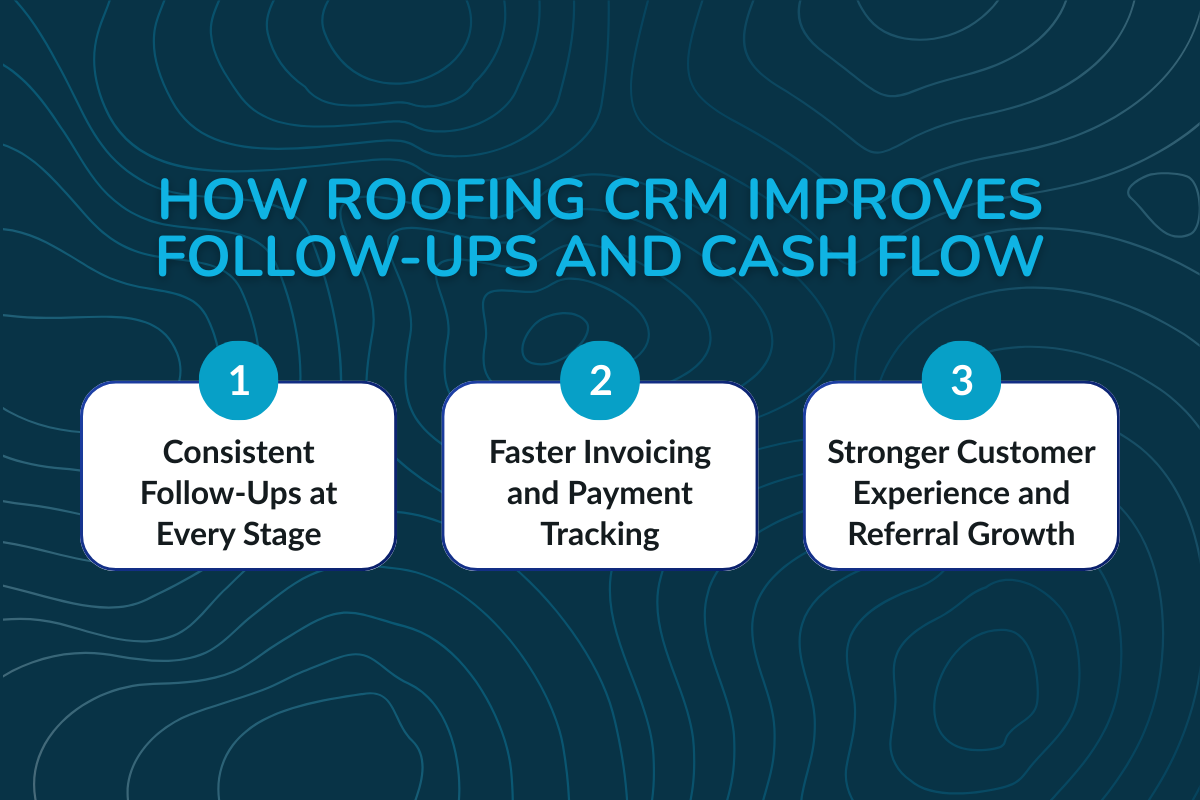
In a roofing business, follow-ups directly impact revenue. Missed calls, delayed estimates, and untracked payments slow down the sales process and affect cash flow. A roofing CRM brings structure to every interaction, helping businesses stay responsive and financially steady.
1. Consistent Follow-Ups at Every Stage
A roofing CRM keeps every lead and customer interaction visible, so nothing gets lost as jobs move forward.
- Track new leads, estimates sent, jobs completed, and payments pending
- Prevent missed touchpoints across the sales process
- Help roofing contractors save time by reducing manual follow-ups
This consistency allows roofing companies to move deals forward without overloading teams.
2. Faster Invoicing and Payment Tracking
Once a job is completed, delayed invoicing can quietly hurt cash flow. But a roofing CRM software gives contractors clear visibility into outstanding invoices, payment status, and commissions.
With numerous integrations that support billing workflows and reporting, businesses reduce delays and keep revenue more predictable without constant follow-ups or phone calls.
3. Stronger Customer Experience and Referral Growth
Beyond follow-ups and payments, a roofing CRM also shapes how customers experience your business from start to finish. When communication feels clear and professional, trust builds naturally.
- Centralized communication keeps customers informed without repeated phone calls
- Photo apps and job updates create transparency at every stage of the roofing project
- Commission tracking and performance visibility help teams stay accountable and motivated
- Powerful tools built specifically for the roofing industry reduce wasted time and errors
When customers feel informed and taken care of, referrals follow without being asked.
Read this blog to understand the difference between a generic CRM & a roofing CRM: Roofing CRM vs Generic CRM: What’s the Difference?
CRM Features Roofing Contractors Should Look For
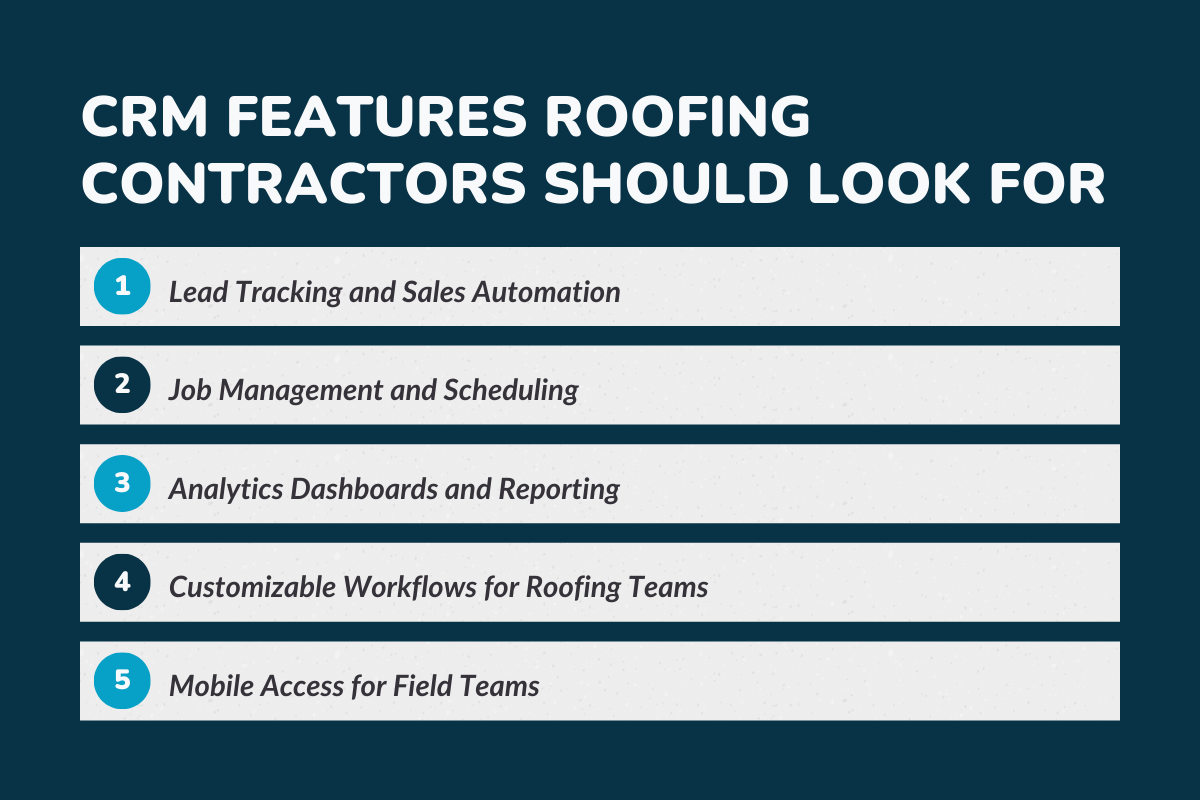
When choosing a roofing CRM, focus on features that directly improve efficiency, sales, and project delivery. The right tools help your team manage leads, stay on schedule, and make smarter business decisions.
1. Lead Tracking and Sales Automation
How are leads captured, assigned, and followed up on without manual effort?
A roofing CRM should track every lead from the first call to the signed contract, while automating routine sales tasks. It offers:
- Centralized lead capture from calls, forms, and ads
- Automatic lead assignment to the right sales rep
- Follow-up reminders to prevent lost leads
- Clear visibility into the sales process and stalled deals
This keeps the sales pipeline moving without relying on memory or spreadsheets.
2. Job Management and Scheduling
Once a deal is closed, can the system handle real job-site operations?
A strong roofing CRM connects sales with execution, so nothing gets lost after the contract is signed. This facilitates:
- Job details linked to the original lead
- Crew scheduling and timeline tracking
- Job status updates for office and field coordination
This reduces handoff confusion and keeps roofing jobs on schedule.
3. Analytics Dashboards and Reporting
Do you know what’s working, and what’s slowing revenue down?
Analytics dashboards give roofing contractors clear insights into performance without manual reporting. Dashboards facilitate:
- Lead conversion and close-rate tracking
- Job progress and revenue visibility
- Performance comparisons across teams or locations
Data-driven decisions help roofing businesses protect cash flow and scale confidently.
4. Customizable Workflows for Roofing Teams
Every roofing business works differently, so your roofing CRM should fit your process, not the other way around.
Customizable workflows let contractors manage leads, jobs, and follow-ups in a way that matches how their teams actually operate, keeping office staff and crews aligned as the business scales.
5. Mobile Access for Field Teams
Roofing teams are always on the move, and mobile CRM access keeps everyone connected. Field teams can update job details, capture photos, and access customer information from the job site, reducing delays and speeding up project progress.
Read this blog to learn how a roofing CRM helps track clients, jobs, and follow-ups in one place: Roofing CRM Essentials: How to Keep Track of Clients and Jobs
How Roofing CRMs Like RooferBase Support Sales-Driven Teams?
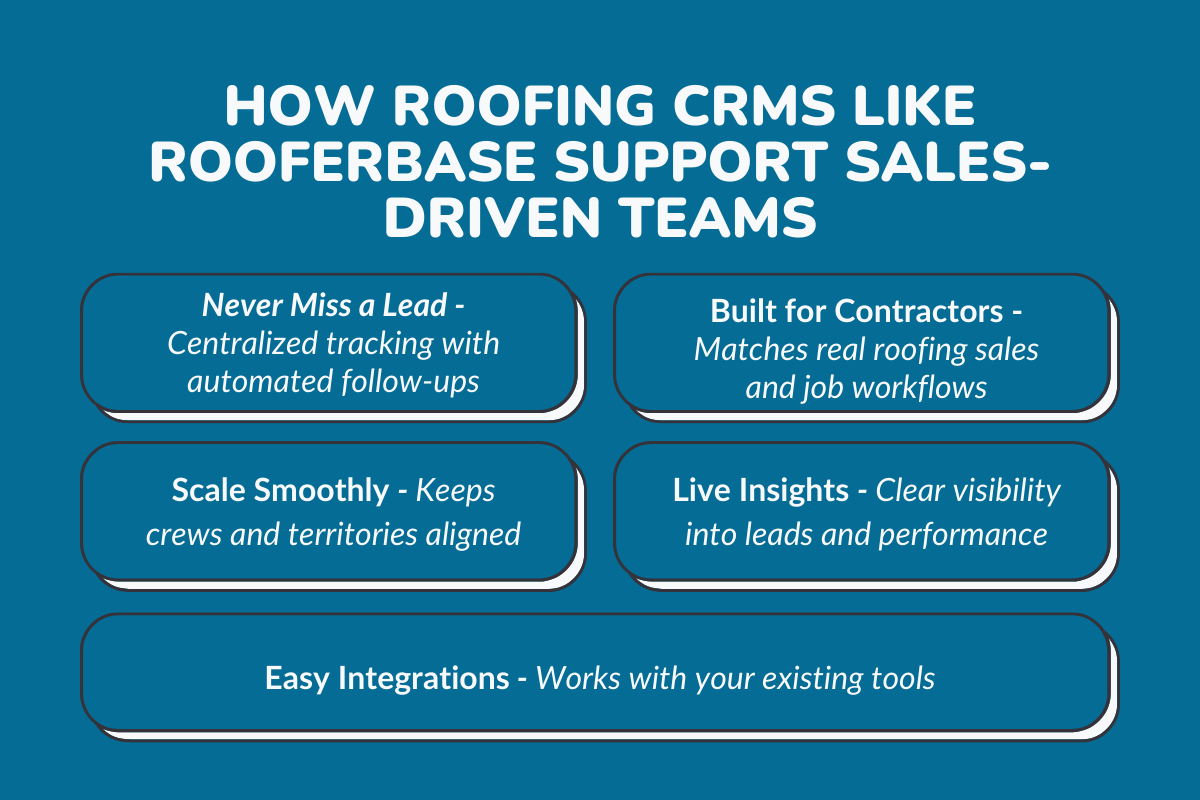
Tools like RooferBase help contractors capture every lead, streamline follow-ups, and keep growth from turning into operational headaches. It is:
- Built for Contractor Sales Workflows – Maps naturally to how roofing teams sell, schedule, and manage projects.
- Reduces Lost Leads – Automated tracking and reminders ensure no opportunity slips through the cracks.
- Supports Growth – Standardized processes and centralized data help multiple crews and territories run smoothly.
- Real-Time Performance Insights – Managers get instant visibility into active leads, jobs, and team performance for better decisions.
- Integration with Existing Tools – Connects with accounting, estimating, and communication apps to avoid duplicate work and save time.
Wrapping Up
Roofing CRM is the backbone of a roofing business that wants to scale without losing control. When processes are connected, teams can focus on selling and delivering quality work instead of chasing scattered notes or missed calls.
Beyond preventing lost leads, a good roofing CRM gives contractors actionable insights. From real-time job status to cash flow visibility and performance tracking, it helps you make smarter decisions, reward top performers, and grow your business sustainably.
Ready to grow your roofing business without losing control?
See how RooferBase helps you manage leads, jobs, crew schedules, and follow-ups in one platform, keeping your team organized and boosting sales efficiency.
Book a demo to experience RooferBase in action and start turning more leads into profitable roofing projects.
FAQs
1. Is roofing CRM software only useful for large roofing companies?
No. Small and mid-sized roofing businesses benefit the most because a CRM prevents chaos as lead volume grows and helps teams manage more jobs without hiring extra admin staff.
2. Can a roofing CRM prevent lost leads?
Yes, by automating lead capture, reminders, and follow-ups, a roofing CRM ensures no potential customer slips through the cracks, turning more inquiries into signed contracts.
3. Does a roofing CRM support multiple locations and teams?
Absolutely. Modern roofing CRM platforms allow contractors to manage leads, jobs, and crews across different service areas, maintaining consistency and visibility across the entire business.
4. What features should I look for in a roofing CRM platform?
Key features include centralized lead tracking, automated follow-ups, job scheduling, crew management, analytics dashboards, mobile access, and integration with accounting or material ordering tools.
5. How hard is it to set up a roofing CRM?
Most roofing CRM platforms can be set up in days, not months. Adoption is fastest when workflows match how roofing teams already sell and manage jobs.
6. Is a roofing CRM easy to use for my team?
Most roofing CRM solutions are designed for contractors, with intuitive interfaces, mobile apps for field crews, and customizable workflows, so your team can adapt quickly without disrupting operations.