November 6, 2025
Estimating a roofing project isn’t just about numbers; it’s about balance. It’s about finding that sweet spot where your bid wins the job without cutting into your profit.
The right roofing estimate tips help roofing contractors stay competitive, win trust, and protect margins.
Getting estimates right means fair pricing on roofing materials, fewer surprises, and stronger client trust. It's a key ingredient for running a successful roofing business.
Roofing Estimating Tips: How to Get Every Detail Right
Estimating a roof repair job is a balancing act. Go too low and you risk losing profit. Go too high and you scare off clients. A correct roofing estimate includes trust, winning bids, and keeping your business healthy.
For example, if a rep lands a job with a low bid, only to find hidden damage or extra material costs he didn’t plan for.
Suddenly, he's cutting into your overhead. Or maybe overshoot the estimate, and homeowners see reps as the pricey option, so they go elsewhere. This is what makes accurate roofing estimate tips essential.
In this article, we’ll look at the common mistakes contractors make, why accuracy matters, and a simple step-by-step process to help you bid smart without cutting corners.
Key Takeaways
- Roofing estimate tips help contractors strike a balance between winning bids and protecting profits.
- Underestimating leads to lost profits, while overestimating can cost you clients.
- Accurate roofing estimates improve efficiency, reduce human error, and help roofing companies deliver the transparent pricing that homeowners expect.
- Roofing software can automate complex calculations and eliminate overlooked details, saving time and stress.
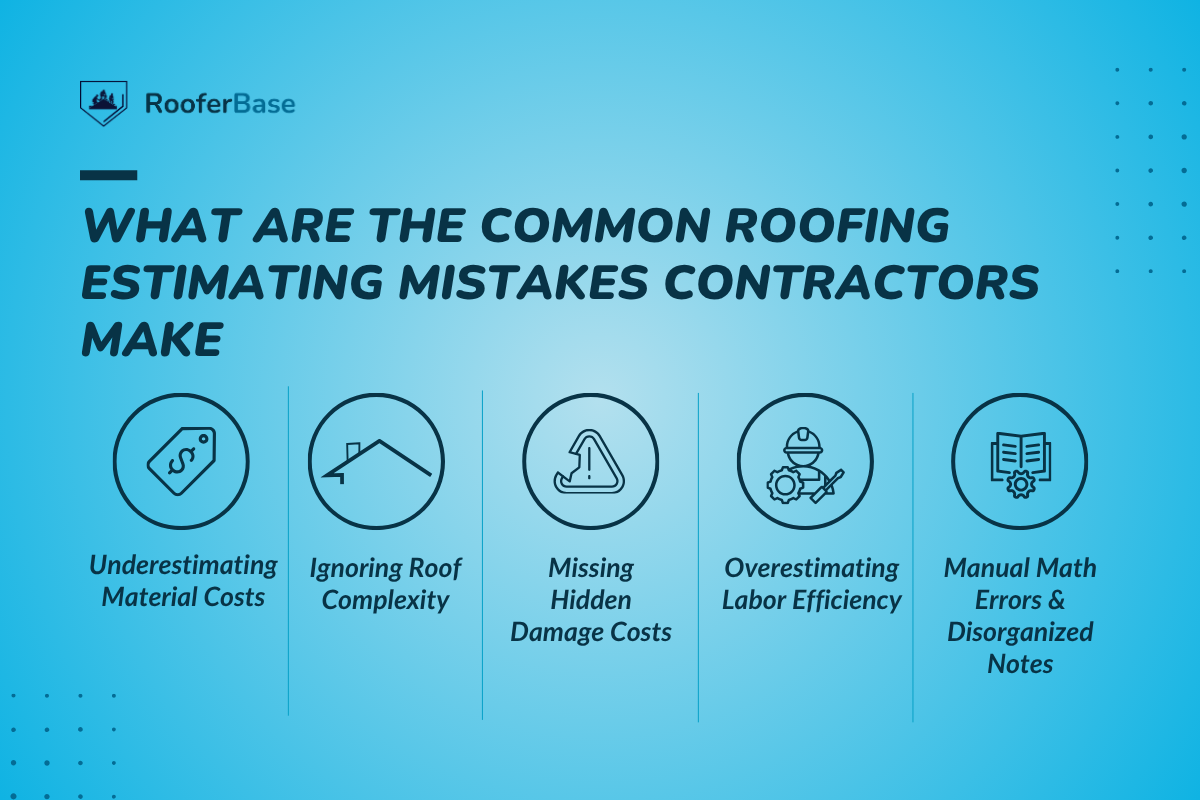
What Are The Common Roofing Estimating Mistakes Contractors Make
Every roofing contractor has faced an estimate that turned out to be more trouble than expected. Many roofing companies unknowingly repeat the same estimating mistakes that cost them time, money, and client trust.
Here are some of the most common pitfalls to avoid:
1. Underestimating Material Costs
One of the biggest mistakes in the roofing industry is forgetting to account for fluctuating material costs.
Asphalt shingles, drip edge, flashing, and other roofing materials don’t stay at the same price year-round.
Failing to account for waste or starter shingles can throw off your entire estimate, leading to major cost discrepancies and unexpected material shortages.
2. Ignoring Roof Complexity
Not all roofs are created equal. A flat roof is simple, but a steep roof with multiple valleys, ridges, and unique structures may require more labor hours and extra roofing shingles.
Skipping these details can make your roofing estimate inaccurate and cause delays.
3. Missing Hidden Damage Costs
A quick initial inspection might not reveal rot, mold, water damage, or the need to adjust attic ventilation.
These unforeseen issues can pile on extra costs if you didn’t leave room for them in the roofing estimate.
4. Overestimating Labor Efficiency
It’s easy to assume your crew members will work at top productivity, but factors like weather, tear-offs, accessibility, and the number of layers to be removed can slow things down.
Misjudging labor costs or the total job cost can also eat into your profit margin.
5. Manual Math Errors & Disorganized Notes
Relying on spreadsheets and handwritten notes may seem familiar, but it opens the door to costly human errors.
Even a small miscalculation in roofing measurements, square footage, or material estimates can throw off an entire project budget.
Why Accurate Roofing Estimates Matter for You
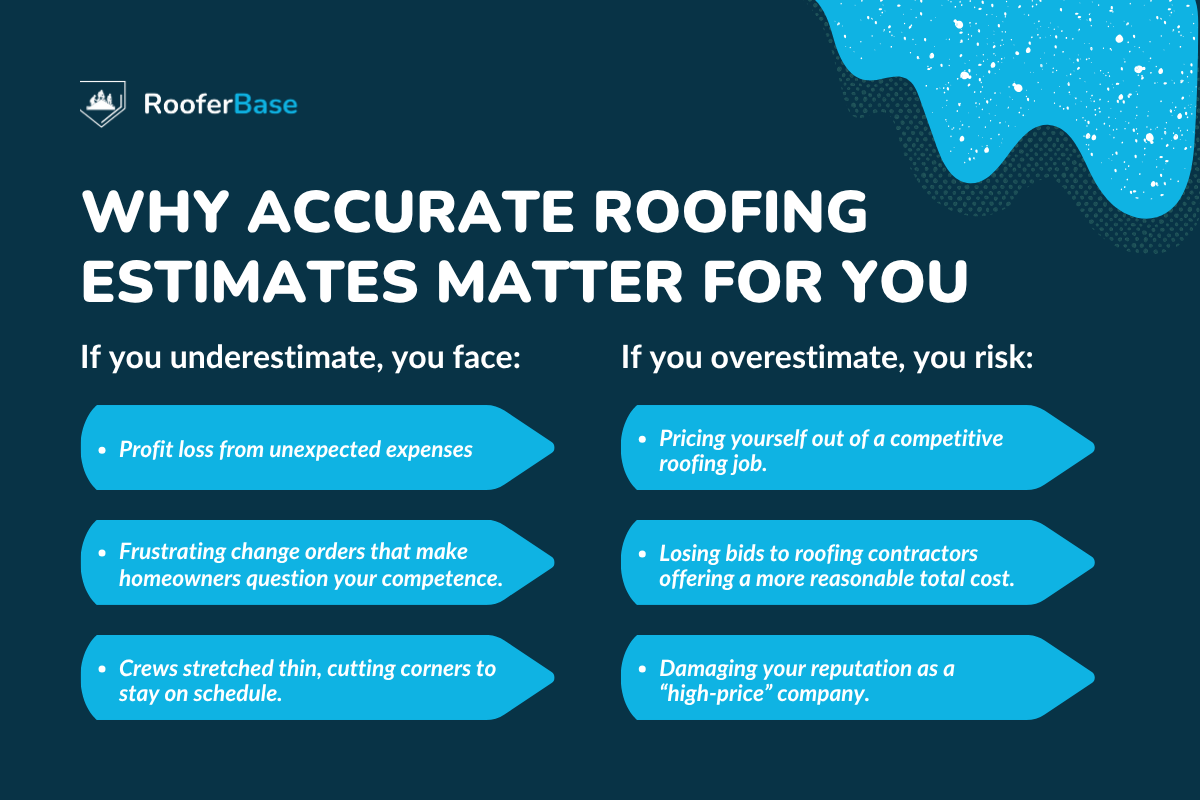
Getting an accurate roofing estimate is about more than payment terms and numbers; it’s about trust, transparency, and keeping your business profitable while delivering value to homeowners.
If you underestimate, you face:
- Profit loss from unexpected expenses: When surprise costs pop up, like extra materials or hidden damage, you end up paying out of pocket, which eats directly into your profits.
- Frustrating change orders that make homeowners question your competence: Constant revisions not only slow down the project but also make clients wonder whether you know what you’re doing or not.
- Crews stretched thin, cutting corners to stay on schedule: When budgets are too tight, workers often rush the job, leading to mistakes and unhappy customers.
If you overestimate, you risk:
- Pricing yourself out of a competitive roofing job: Homeowners typically collect multiple bids, and being the highest-priced option can quickly take you out of the competition.
- Losing bids to roofing contractors offering a more reasonable total cost: Even if you’re more experienced, customers often choose the contractor who provides the best balance of price and value.
- Damaging your reputation as a “high-price” company: Over time, word spreads that your roofing estimates are inflated, and you may start losing referrals before even getting them.
Always remember: Modern homeowners also expect transparency. They want a detailed description of what their new roof or roof repair involves, from materials needed to labor hours, not just a lump sum.
Written estimates that break everything down improve trust and give you an edge over competitors.
If you need to know exactly what goes wrong in your roofing estimation, go through this: Why Roofing Estimates Go Wrong And How to Fix It with Technology.
Understanding Roofing Estimates: A Step-by-Step Guide to Accuracy
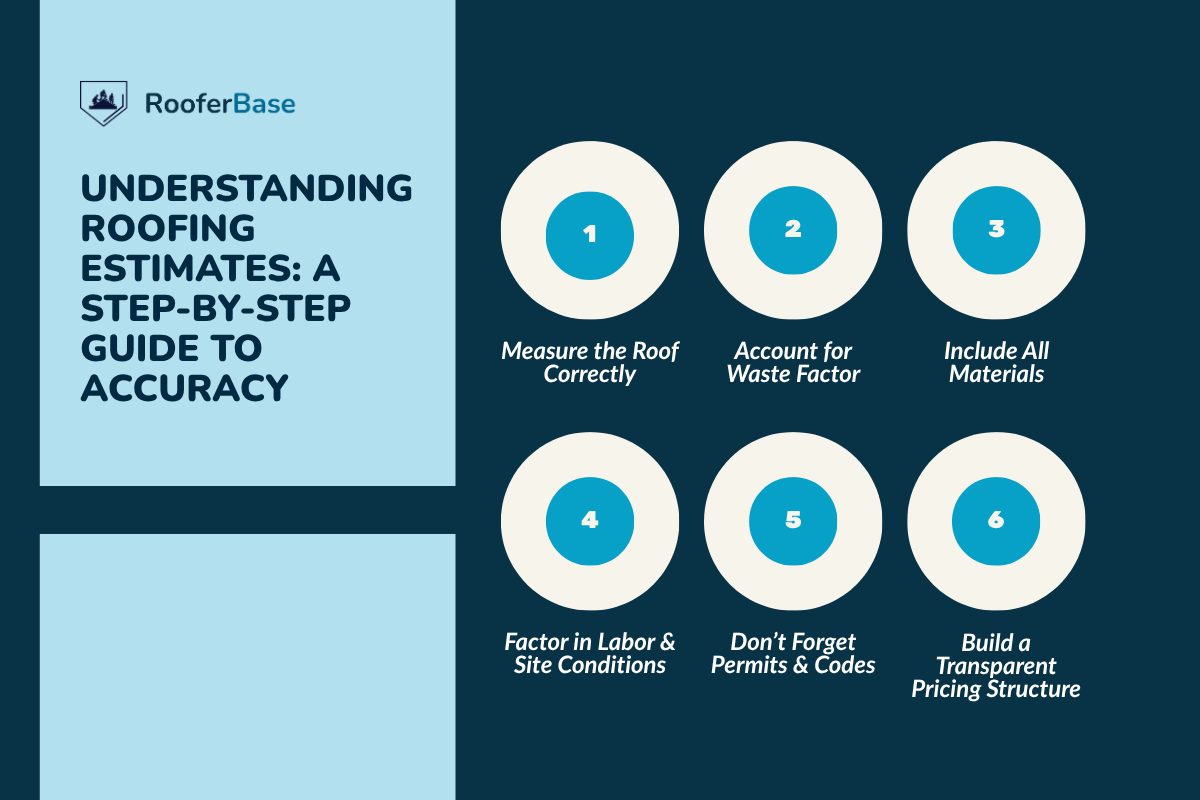
Getting an accurate roofing estimate isn’t rocket science, but it does require a clear process.
Let’s break it down step by step:
Step 1 - Measure the Roof Correctly
The first step to an accurate roofing estimate is getting your measurements right. Without precise numbers, every calculation that follows will be off.
Tools to Use
Tape measures and pitch gauges work, but drones or aerial measurement software can save time and reduce human error.
These tools help calculate square footage and account for roof pitch quickly.
What to Record
Make sure you note roof pitch, length, width, number of planes, and unique features. Flat roofs, multiple ridges, or special designs may require adjustments in your roofing estimate.
Step 2 - Account for Waste Factor
Once measurements are done, the next step is planning for waste. Every roofing project has material cut-offs, and ignoring them can throw your entire estimate off.
What “Waste” Really Means
Waste isn’t just about mistakes. Cut-offs from roofing shingles, starter shingles, ridge vents, and ridge caps all add up. Ignoring this means you’ll run short on materials.
Standard Waste Percentages
A simple gable roof may require around 10% waste, while complex multi-facet roofs can push this number higher. Not factoring this in might lead to underestimated material quantities.
Step 3 - Include All Materials
Shingles might be the star of the project, but they’re only part of the picture. A solid roofing estimate must cover every material needed to get the job done right.
Beyond Just Shingles
A comprehensive estimate should include underlayment, drip edge, flashing, vents, sealants, nails, and even safety supplies. Roofing work involves much more than shingles.
Commonly Forgotten Items
Many roofing contractors forget items like water shield, ridge vents, and sealants in their roofing estimate.
Overlooking these small details, including overhead costs, can result in lost profits in the future.
Step 4 - Factor in Labor & Site Conditions
Labor isn’t one-size-fits-all. The size, slope, and conditions of the job site can quickly change how much time and money a project requires.
Crew Productivity Variables
Labor costs vary widely based on roof pitch, height, the number of layers to be removed, and substrate repairs. These factors directly affect total labor cost and labor hours.
Site Challenges
Don’t forget about transportation costs, driveway distance, landscaping protection, or power lines near the site. These may require more crew members or additional safety precautions.
Step 5 - Don’t Forget Permits & Codes
Every roofing project has rules to follow. Permits, fees, and code requirements may seem small, but forgetting them can quickly cut into your profit.
Local Requirements
Most roofing projects require city or county permits before work begins. These permits often come with inspection fees or administrative costs that should be factored into your roofing estimate.
Missing these expenses can throw off your bid accuracy and reduce your profit per job.
Code-Driven Materials
Some local codes require materials such as ice and water shield or improved attic ventilation.
If you miss these during project management, you’ll either absorb the cost or have to renegotiate with the client.
Step 6 - Build a Transparent Pricing Structure
An estimate is also about presentation. A transparent pricing structure helps homeowners understand costs and makes your roofing estimate more professional.
Break Down Costs
Homeowners appreciate seeing a detailed description of material costs, labor costs, overhead costs, and markup. This level of transparency builds trust.
Presenting Options
Good, Better, Best packages allow you to give clients choices. Maybe asphalt shingles for the budget option, upgraded, unique materials for the premium option.
Presenting multiple options helps avoid low bids while maintaining competitiveness.
Want to know how modern roofing software is helping contractors in the industry measure roofs faster and create more accurate estimates in 2025? Go through this: What’s the Fastest Way to Measure Roof Dimensions in 2025?
What Does It Really Take to Price Roofing Labor Correctly?
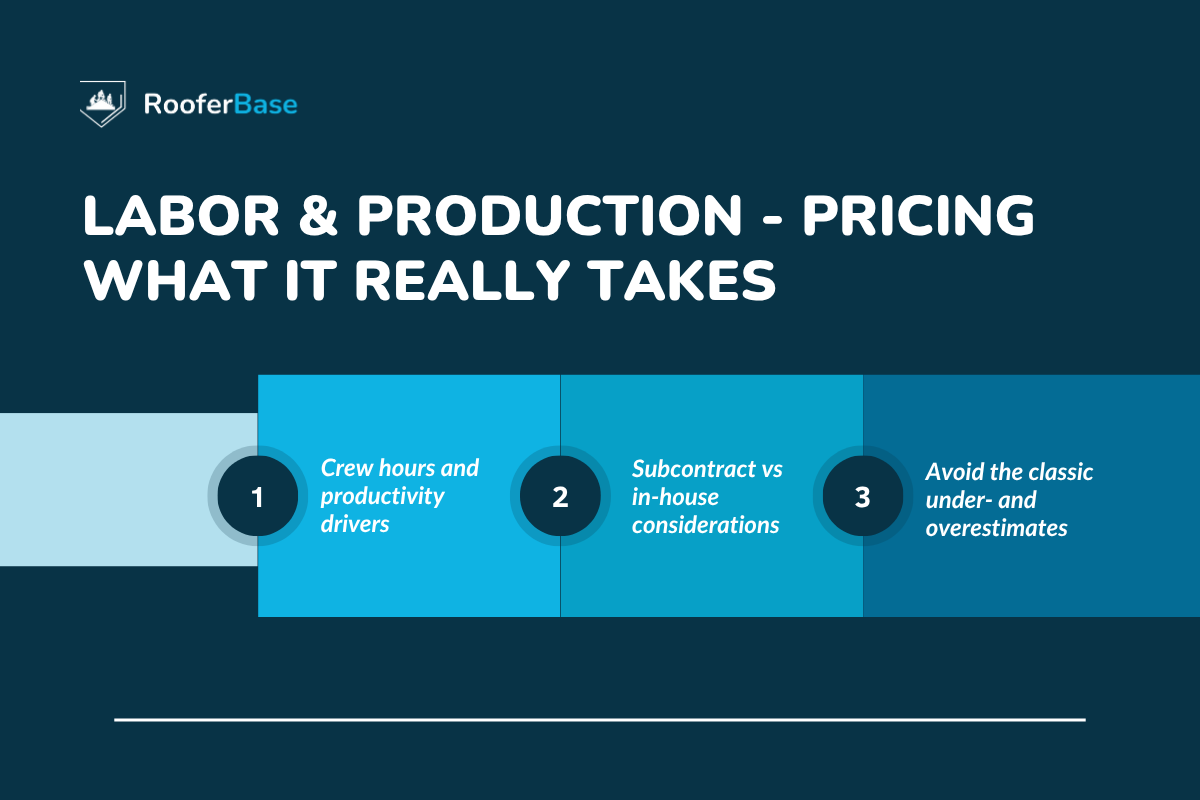
Labor makes up a big part of any roofing estimate, and it’s where mistakes happen most often. Pricing it right keeps projects on time and profitable.
1. Crew hours and productivity drivers
Factors like pitch, layers to tear off, substrate repairs, haul-off and disposal, and even weather conditions determine how long roofing work will take.
Extra costs from unforeseen circumstances like rain delays must be factored into the estimate.
2. Subcontract vs in-house considerations
Deciding between subcontractors and in-house crews changes your cost structure:
- Subcontractors: Include mobilization, travel, minimum charges, and warranties.
- In-house crews: Factor in hourly rates, workers’ compensation, and productivity variations.
3. Avoid the classic under- and overestimates.
The top reasons estimates miss are inaccurate material quantities and overlooked labor hours. Building verification steps into your process can help you avoid losing money or overpricing yourself.
With labor often representing a significant portion of your roofing costs, careful calculation and planning are essential to prevent lost revenue or overpricing your services.
A roofing contractor has a ~15% operating profit margin (EBITDA margin) after operating costs (cost of services, office expenses, etc.) have been incurred.
Introducing RooferBase: The Ultimate Roofing Software
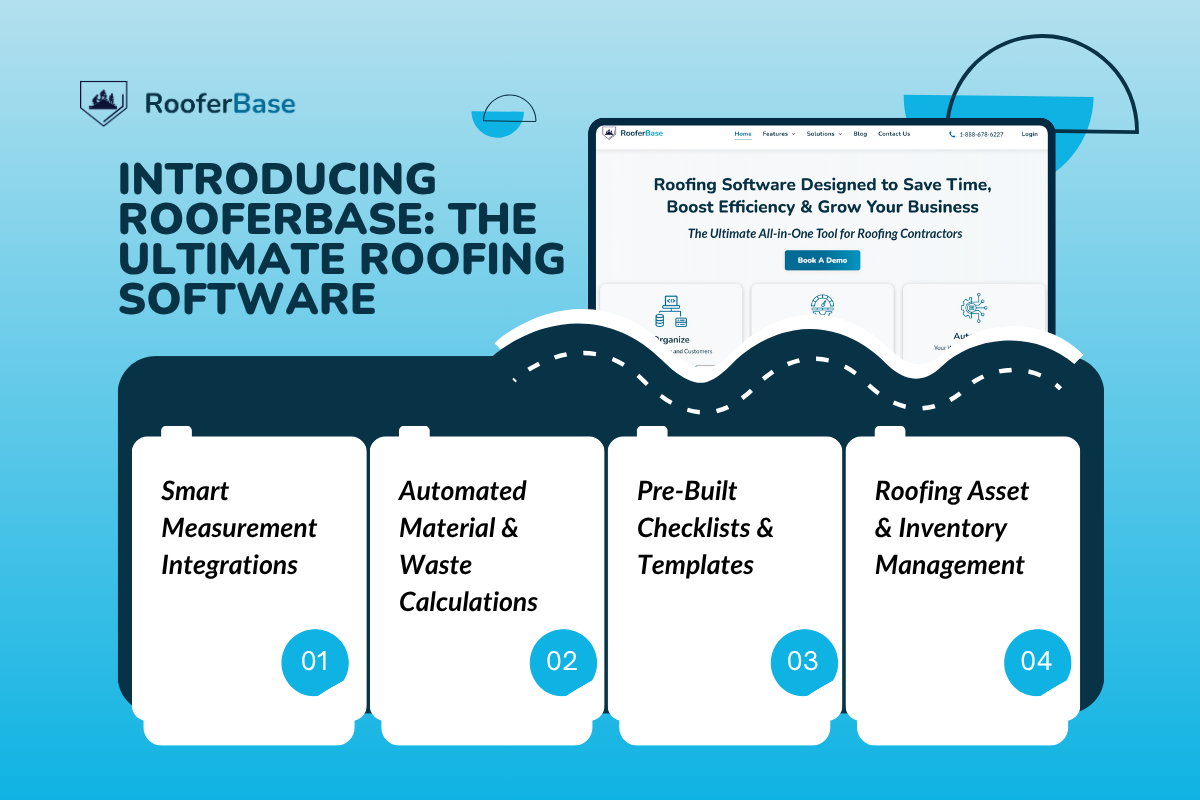
Great roofing estimates need more than skill; they need the right tools. That’s where RooferBase comes in, making every step of estimating faster, easier, and more accurate.
Smart Measurement Integrations
With RooferBase, aerial images and pitch multipliers are auto-applied, taking the guesswork out of roofing measurements.
Automated Material & Waste Calculations
Forget about wondering how many bundles of shingles you’ll need. RooferBase handles material calculations and applies standard waste percentages automatically.
Pre-Built Checklists & Templates
Never forget ridge vents, flashing, or starter shingles again. RooferBase’s templates ensure every roofing job includes all necessary materials.
Roofing Asset & Inventory Management
Upload a list of your products with information such as cost per unit, retail price, quantity in stock, descriptions, and much more.
When building quick quotes, you can select the item and quickly create estimates for roof work.
Integration with Roofing CRM & Proposal Software
RooferBase seamlessly connects with your roofing CRM and proposal software, creating a unified workflow from lead capture to project completion.
Mobile-friendly Access
With mobile-friendly access, field crews and sales reps can view project details, update job progress, capture photos, and submit reports from their smartphones or tablets.
Final Thoughts
At the end of the day, a roofing estimate is a promise to your client, and getting the details right means you stay competitive while keeping your profit margin healthy.
Manual processes can work, but in a roofing industry that demands speed and accuracy, software like RooferBase makes estimating nearly foolproof.
If you want to improve efficiency, reduce human error, and deliver detailed written estimates that homeowners trust, it’s time to rethink your process.
Ready to stop second-guessing your numbers and start winning more roofing jobs?
Try RooferBase today and discover how accurate and straightforward estimating can transform your roofing business.
Schedule your demo today, and let's get you started on your new, successful journey in your business.
FAQs
1. How do roofing contractors calculate square footage?
Most use tape measures, drones, or aerial measurement tools to get accurate roofing measurements. Square footage is then used to calculate the materials needed.
2. How many bundles of shingles do I need for a new roof?
It depends on the size and complexity of the roof. On average, three bundles cover 100 square feet, but waste factors and roof design may require more.
3. What’s the difference between underestimating and overestimating a roofing job?
Underestimating can lead to lost profits and additional costs, while overestimating can make your bid less competitive. Both hurt your roofing business.
4. Why are permits and local codes so crucial in a roofing estimate?
Local codes may require items like ice and water shield or attic ventilation upgrades. Skipping these in your roofing estimate to offer the lowest price means you’ll face unexpected expenses or failed inspections.