September 12, 2025
A homeowner calls because the roof is leaking, shingles are damaged, or a recent storm has exposed a problem. One of the first questions is usually the same: Can this roof be repaired, or does it need to be replaced?
For roofing contractors, answering that question requires more than identifying visible damage. Roof age, remaining service life, the extent and location of damage, previous repairs, budget, warranties, and the homeowner’s long-term plans can all affect the recommendation.
The contractor’s role is to help the customer understand those factors clearly without unnecessarily pushing toward the more expensive option.
A structured inspection, clear documentation, and side-by-side repair and replacement estimates can make that conversation easier and give homeowners the information they need to make a confident decision.
Roof Repair or Replacement? How to Help Homeowners Choose Confidently
Choosing between roof repair and replacement can be a tough decision for homeowners, as several factors influence the most viable option for an old roof.
A professional inspection is essential to assess the roof’s age, the extent of damage, budget considerations, and long-term plans. These insights help determine the most suitable solution with confidence.
Key Takeaways
- Roof repair is generally more appropriate when damage is localized, and the remaining roofing system is still in serviceable condition.
- Replacement becomes more practical when damage is widespread, problems keep recurring, or the roof is approaching the end of its expected service life.
- Contractors should consider roof condition, age, production requirements, warranty implications, homeowner plans, and total cost before recommending either option.
- Photos, inspection documentation, and clear side-by-side estimates can help homeowners understand why one solution may provide better value than the other.
- Roofing software can help contractors keep inspection details, estimates, proposals, customer communication, and follow-up connected throughout the decision process.
Why Homeowners Struggle with the Replace-or-Repair Decision
For homeowners, the decision is rarely based on roof condition alone. Cost, disruption, past repairs, outside advice, and uncertainty about long-term value can all shape how they respond to a contractor’s recommendation.
Understanding those concerns helps roofing professionals explain the options more clearly and avoid making the conversation feel like an upsell.
1. Cost Creates Immediate Resistance
Replacement requires a much larger upfront investment than a localized repair, so homeowners may naturally prefer the less expensive option even when the roof has broader issues.
Contractors should explain not only the immediate cost of each option, but also what the homeowner is likely to get from that investment. If a repair is only expected to address a limited problem, make that limitation clear rather than presenting it as a permanent solution.
2. Homeowners Receive Conflicting Advice
Customers may already have opinions based on neighbors, social media, previous contractors, or information they found online. That advice may not apply to the roof in front of you.
Instead of dismissing it, use inspection findings, photos, measurements, and documented roof conditions to explain why the recommendation fits this specific property.
3. The Long-Term Cost Is Hard to Compare
A repair may have a lower upfront price, while replacement may involve a much larger immediate expense. That can make the cheaper option feel automatically better.
The contractor should help the homeowner compare factors such as:
- Expected remaining roof life
- Likelihood of recurring repairs
- Extent of existing damage
- Warranty implications
- Future maintenance requirements
- How long the homeowner plans to stay in the property
The goal is not to push replacement. It is to make the trade-offs between the two options clear enough for the homeowner to make an informed decision.
What is the difference between roof replacement and roof repair?
Roof repair addresses localized damage while preserving the existing roofing system. Roof replacement involves removing some or all of the existing roof and installing a new system.
For contractors, the decision should depend on the roof's condition and the long-term value of each option, rather than on cost alone.
Roof Repair vs. Replacement: Factors Contractors Should Evaluate
Before recommending either option, assess the roof as a complete system and explain how each factor affects the recommendation.
1. Roof Age and Remaining Service Life
Roof age provides important context, but it should not be used as the only reason to recommend replacement.
Consider the material, installation quality, maintenance history, climate exposure, and current condition when estimating how much useful life may remain.
A relatively young roof with localized damage may be a good repair candidate. An aging roof with widespread deterioration or recurring problems may make replacement more practical.
2. Location and Severity of Leaks
A small, isolated leak may be repairable if the surrounding roofing system is still in good condition.
Multiple leaks, recurring leaks, widespread moisture intrusion, damaged decking, or problems occurring across different roof areas can indicate a broader system issue.
Document where water is entering and whether the visible leak is an isolated failure or part of a larger pattern before recommending a solution.
3. Extent of Roof Damage
The percentage of the roof affected matters as much as the type of damage.
Localized missing shingles, flashing problems, or minor storm damage may justify repair. Widespread shingle deterioration, multiple damaged sections, extensive decking issues, or repeated repairs across the roof can shift the economics toward replacement.
Photos and inspection documentation can help homeowners see the difference between an isolated defect and system-wide deterioration.
4. Local Weather and Exposure
Climate and recent weather events can influence both the condition of the existing roof and the suitability of the proposed solution.
Consider factors such as:
- High winds and storm exposure
- Heavy rain or snow
- Extreme heat
- Freeze-thaw cycles
- Coastal or high-moisture environments
The recommendation should reflect the roof’s actual exposure conditions rather than relying only on generalized material lifespan estimates.
5. Homeowner Plans for the Property
Ask how long the customer expects to stay in the home and what they want from the roofing investment.
A homeowner planning to sell soon may evaluate repair and replacement differently from someone expecting to remain in the property for many years.
That does not mean automatically recommending repair for a seller or replacement for a long-term owner. It means including their plans in the overall decision.
6. Repair Cost vs. Replacement Cost
Avoid comparing only the immediate price difference.
Help the homeowner consider:
- Cost of the proposed repair
- Likelihood of additional repairs
- Remaining service life after repair
- Cost of full replacement
- Warranty implications
- Whether repeated repair spending is delaying an eventual replacement
When both options are viable, presenting them side by side can help the homeowner understand the trade-off between lower upfront cost and longer-term value.
7. Existing Warranty Coverage
Check whether the roof still has applicable manufacturer or workmanship warranty coverage before recommending work.
Some repairs may be covered, while certain repair methods or unauthorized work could affect existing warranty terms. If replacement would create new warranty coverage, explain what that coverage includes and any conditions the homeowner should know.
8. Professional Inspection Findings
The final recommendation should be based on documented roof conditions rather than age, price, or appearance alone.
Use inspection notes, photos, measurements, moisture findings, and visible damage to show homeowners why repair, replacement, or further investigation is appropriate.
If both options are reasonable, explain the advantages and limitations of each instead of presenting one as the only possible choice.
Check Out: Roofing Software vs Manual Process: What’s Faster, Safer, and Cheaper?
Step-by-Step Guide: A Consultative Framework for Roofing Contractors
Contractors can make the repair-or-replacement conversation easier by following a consistent process from inspection through recommendation.
Step 1: Understand the Homeowner’s Concerns
Before discussing solutions, ask what prompted the service call and what the homeowner is most concerned about.
That may include:
- Active leaks or visible damage
- Recent storm damage
- Repeated repairs
- Budget limitations
- Warranty concerns
- Plans to sell or remain in the property
Understanding those priorities gives the contractor context before presenting repair or replacement options.
Step 2: Assess and Document the Roof Condition
Carry out a complete inspection and document the conditions that affect the recommendation, including:
- Roof age and expected remaining service life
- Missing, cracked, curled, or damaged roofing materials
- Flashing and penetration issues
- Signs of leaks or moisture intrusion
- Decking or structural concerns
- Previous repairs
- Storm or weather-related damage
- Ventilation and drainage issues where relevant
Photos, measurements, and inspection notes can help homeowners understand what was found without relying only on a verbal explanation.
Step 3: Ask Questions That Affect the Recommendation
The condition of the roof matters most, but the homeowner’s circumstances can also affect how viable each option is.
Ask:
- How long do you expect to stay in the home?
- Has this area of the roof been repaired before?
- Are there budget or financing constraints we should consider?
- Are there warranty or insurance considerations?
- Are you looking for a short-term solution or a longer-term investment?
These questions should inform the conversation, not predetermine the recommendation.
Step 4: Present Repair and Replacement Options Clearly
When both options are technically viable, show the homeowner what each one includes and where the trade-offs differ.
Compare factors such as:
- Scope of work
- Upfront cost
- Expected remaining service life
- Likelihood of future repairs
- Warranty coverage
- Project timeline
- Long-term maintenance requirements
Avoid presenting replacement as automatically better simply because it is the larger project. The goal is to show why each option may or may not make sense for the roof in its current condition.
Step 5: Document the Recommendation and Next Steps
Once the options have been discussed, provide the homeowner with a clear written estimate or proposal showing the recommended scope, pricing, assumptions, exclusions, and next steps.
If the customer needs time to decide, keep the inspection findings and proposal connected to the customer record so the sales team can follow up with the right context.
Addressing Repair vs. Replacement Objections Without Pressure
Homeowners may hesitate even when the inspection clearly shows that one option is more practical. The goal is not to push them toward the larger job, but to understand what is driving the concern and respond with evidence.
“Can’t You Just Repair It?”
If repair is technically possible, explain what that repair would address and what it would not.
For example, a localized repair may stop one active leak without resolving broader deterioration elsewhere on the roof. If replacement is being recommended instead, show the homeowner the conditions that make repeated repairs less practical.
Use photos, inspection findings, and scope details rather than relying on a generic “the roof is too old” explanation.
“Replacement Is Too Expensive”
Start by acknowledging the budget concern and separating the immediate price from the long-term trade-off.
If both options are viable, show the repair cost alongside the replacement cost and explain the expected scope, remaining service life, warranty differences, and likelihood of additional work.
Where financing is available, contractors can explain those options without presenting them as the only way forward.
“Another Contractor Said It Can Be Repaired”
Different contractors may reach different conclusions depending on what they inspected and what they consider acceptable.
Instead of criticizing the competing recommendation, walk the homeowner through your own findings. Show the areas of damage, explain what the proposed repair would cover, and identify any conditions that could remain unresolved.
“I Need Time to Think About It”
Avoid turning the follow-up into repeated pressure.
Make sure the homeowner has the inspection documentation, proposal, warranty information, and any alternative options discussed during the appointment. Then follow up with context, such as answering a specific question or clarifying the difference between the repair and replacement scopes.
A consultative approach gives homeowners room to make the decision while keeping the contractor available as a reliable source of information.
How does RooferBase Roofing Software assist Roofing Professionals?
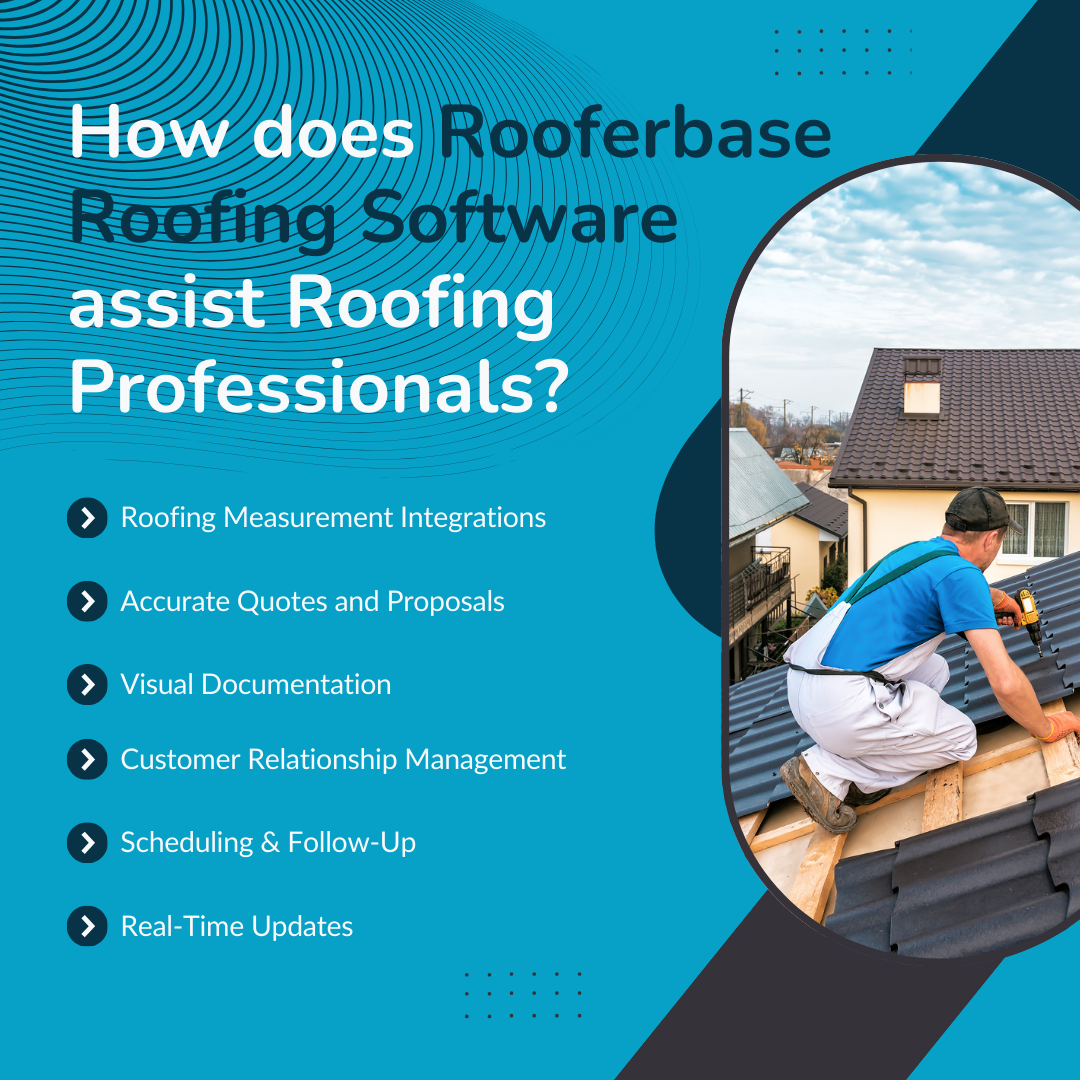
RooferBase helps roofing contractors keep inspection details, estimates, proposals, customer communication, scheduling, and follow-up connected throughout the repair-or-replacement decision process.
1. Keep Inspection and Customer Information Connected
Contractors can keep customer details, inspection notes, photos, measurements, and job information organized in one record, making it easier for sales and production teams to work from the same information.
2. Build Clear Estimates and Proposals
Estimating and proposal tools help contractors present repair or replacement scopes, pricing, materials, and project details in a consistent format that homeowners can review more easily.
3. Document Roof Conditions Visually
Photos and job documentation can support repair-or-replacement conversations by showing homeowners the conditions identified during the inspection and the areas included in the proposed scope.
4. Track Customer Communication and Follow-Up
CRM tools help teams keep track of proposal status, customer communication, reminders, and follow-up so repair and replacement opportunities do not get lost after the initial inspection.
5. Coordinate Appointments and Job Progress
Scheduling and workflow tools help contractors manage inspections, appointments, approved work, and job status as the customer moves from evaluation to the next stage of the project.
By keeping these steps connected, contractors can spend less time piecing together information across separate tools and more time helping homeowners understand their options.
Conclusion
By combining professional inspections, a thorough assessment of roof condition, and insights into costs, lifespan, and local weather factors, homeowners can make informed decisions that protect their investment.
A roofing professional can further leverage automated roofing software tools to gain real-time inspection reports, accurately measure roofing conditions, and compare repair versus replacement costs to help homeowners make the right choice.
It makes you a pro at managing roof measurements, documenting visual inspections, handling material orders for repairs or replacement, and providing seamless customer support with greater efficiency and fewer hassles.
About RooferBase
RooferBase is the ultimate stop for every roofing professional who wants to deliver accurate visual inspection reports, quick material order updates, transparent cost comparisons with precise quoting, and real-time reporting to elevate customer experiences.
Become a Pro Roofer Today: Book a Demo
FAQs
1. How can roofing software help contractors with repair vs. replacement decisions?
Roofing software can help contractors keep inspection notes, measurements, photos, estimates, proposals, and customer communication connected in one workflow. This makes it easier to document roof conditions, compare scopes, and explain repair and replacement options clearly to homeowners.
2. What should contractors consider before recommending roof repair or replacement?
Contractors should consider the roof’s age, remaining service life, location and extent of damage, previous repairs, production complexity, warranty considerations, homeowner plans, and the relative cost of repair versus replacement.
The recommendation should be based on the condition of the roofing system rather than one factor alone.
3. How should contractors explain repair vs. replacement options to homeowners?
Use inspection findings, photos, measurements, and clear written scopes to show what each option addresses. When both options are viable, explain the upfront cost, expected remaining service life, warranty differences, likelihood of future repairs, and limitations of each option without pressuring the homeowner toward the larger project.